As an Amazon Associate, we earn from qualifying purchases. Some links on this site are affiliate links at no extra cost to you. Our recommendations are based on thorough research and editorial judgment.


The Pot-in-Pot Method Explained: Cooking Rice and Chicken Simultaneously

Are you tired of juggling multiple pots and pans when cooking dinner? The pot-in-pot method might just be the solution you didn’t know you needed! It allows you to cook rice and chicken together in an electric pressure cooker, making your meal prep a breeze.
You may be interested


Start by pouring 2 cups of water into the inner pot of your pressure cooker. In a separate, oven-safe pot, mix 2 cups of rice with about 3 or 4 cups of water. This pot will sit above the chicken you’re cooking, so layer it carefully.
Once everything’s set up, simply lid it up and set the cooker to high pressure for about 10 minutes. After that, let the pressure release naturally—you’ll get perfectly cooked chicken and rice without the fuss.
What’s really great about this technique is the way it saves time and energy. You’re not just cooking one thing; you’re knocking out two essential parts of your meal at once. Plus, you can play around with the seasonings to amp up the flavors.
So, why does this matter? Because who doesn’t love a hearty meal without all the hassle? Frankly, one of the best parts is that you can customize this dish however you like.
Think about adding some herbs, spices, or even veggies to the rice to give it your own flair. Got a favorite marinade for chicken? Pour that on before you cook!
In a nutshell, the pot-in-pot method simplifies meal times by letting you cook rice and chicken together with minimal cleanup. What combinations will you try in your next meal?
Key Takeaways
- The Pot-in-Pot method allows cooking rice and chicken at the same time using an electric pressure cooker for efficiency.
- Use a water-to-rice ratio of 1.5:1 for optimal rice texture while the chicken releases flavors.
- Proper layering is essential: place marinated chicken on top and the rice with water in an oven-safe inner pot below.
- Ensure adequate water levels to prevent burn alerts and monitor cooking times based on chicken thickness and rice type.
- Enhance flavors by marinating chicken, using broth instead of water, and incorporating vegetables like bell peppers or peas.
Benefits of the Pot-in-Pot Method for Cooking Rice and Chicken

Are you tired of juggling multiple pots and pans when cooking dinner? The pot-in-pot method for rice and chicken might just be what you need. This technique makes your pressure cooker work overtime by letting you cook both your rice and chicken at the same time. It’s a real time-saver, and you won’t end up with a mountain of dishes to wash afterward.
Here’s the trick: when you cook chicken above your rice, the flavors meld together beautifully. That means your rice isn’t just a side; it’s soaking up all those delicious chicken juices, making for a meal that feels cohesive and well thought-out.
For the rice, sticking to a water ratio of 1.5:1 will help you nail that perfect texture. And if you’re feeling adventurous, try adding some veggies into the mix using stackable ekovana pans. You’ll end up with a full meal that’s not just healthy but pretty tasty, too.
Frankly, the natural pressure release feature in your cooker ensures everything stays tender and flavorful. So, why does this matter? Because making dinner doesn’t have to be a stressful race against the clock.
In a nutshell, the pot-in-pot method simplifies mealtime and manages to create a delicious dish without complicating things. Give it a shot next time you’re in the kitchen, and see how it transforms your cooking routine! What’s your favorite combo for pot-in-pot cooking?
Additionally, using a 3-quart Instant Pot can be ideal for this method, as its compact size is perfect for small meals and efficient cooking.
Essential Equipment for Pot-in-Pot Cooking
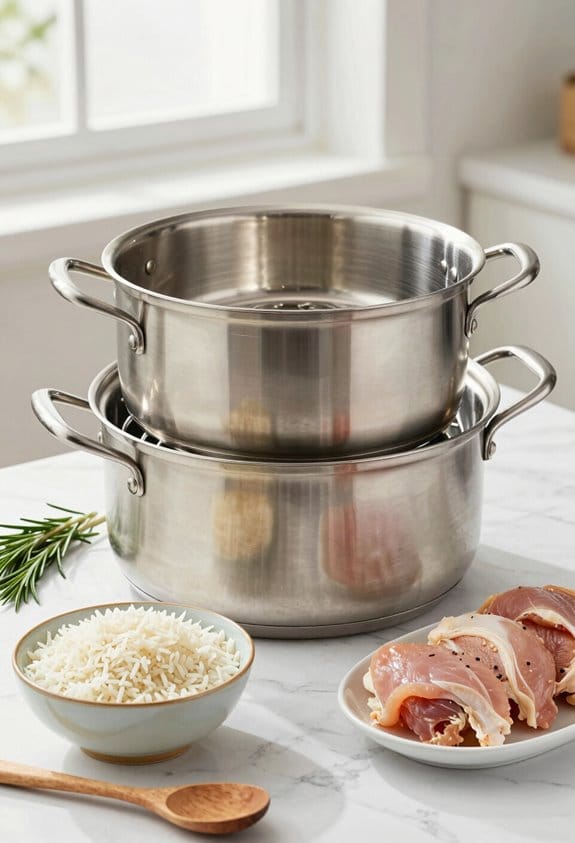
Ever tried cooking rice and chicken using the pot-in-pot method and felt confused about what tools you really need? Gathering the right gear can honestly make a difference in your cooking experience.
First on your list is an electric pressure cooker—this is the main player here. Then, you’ll need an inner pot that’s both oven-safe and fits snugly inside the cooker. It’s crucial for this pot to handle the heat well and fit securely. A trivet or rack is next; this keeps the inner pot above the water level, allowing steam to work its magic. It’s a good idea to grab a reusable sling made from silicone or aluminum foil too. This little helper makes it way easier to lift out that hot inner pot without burning your hands.
Don’t forget the water! Always add at least one cup to the main pot; that steam is key for cooking well. And when choosing your materials, go for heat-safe options like metal and ceramic—trust me, it really pays off in the long run. Many modern Instant Pot Pro models feature removable inner pots which simplify this whole process.
Preparing Your Instant Pot: A Step-by-Step Guide

Preparing your Instant Pot doesn’t have to feel like a daunting task. Ever tried marinating chicken breasts overnight? It’s a simple way to kick off a delicious meal. When you wake up the next day, you’ll want to gather all your essentials: the marinated chicken, some rice, water, and any extra seasonings that tickle your fancy.
First things first, give your Instant Pot a good clean. A fresh start always helps set the mood for cooking. Next, pour 2 cups of water into the inner pot. Now, for the rice—mix 2 cups with either 3 or 4 cups of water. It really depends on how you like your rice; do you prefer it fluffy or a bit creamier?
Here’s the trick: stack those ekovana pans smartly. Place the marinated chicken in the top pan and spread the rice mixture in the bottom. Once you’ve got everything set, make sure the lids are closed tightly. Just a heads up, set your Instant Pot to high-pressure cooking for about 10 minutes.
Truth is, allowing for Natural Pressure Release afterward is key for the best results. It gives everything time to mingle and ensures you’ve got tender, flavorful chicken and the perfect rice. So, what’re you waiting for? Dive into your Instant Pot adventure! This method is especially effective when using an 8 cups capacity rice cooker or similar appliance for simultaneous cooking.
What Ingredients Make Rice and Chicken Delicious?
Have you ever cooked chicken and rice only to find it a bit bland? You’re definitely not alone. The truth is, the right ingredients can transform your dish from ordinary to something you’ll actually look forward to eating.
To start, consider marinating your chicken. A mix of spices, sauces, and some citrus juice can work wonders. Not only does the marinade flavor the chicken, but it seeps into the rice during cooking, taking everything up a notch. So, why not give your chicken some extra love?
When it comes time to cook the rice, swap out plain water for broth. This little change can add so much depth to the flavor. Garlic and onions are also must-haves; they bring a rich aroma that enhances everything in the pot. Adding some colorful veggies—like bell peppers or peas—not only boosts the nutrition but also makes the dish visually appealing.
Now, let’s talk about spices. A sprinkle of cumin, a dash of paprika, or some turmeric can really elevate your meal. These spices blend well together and complement the chicken and rice in a way that feels comforting and satisfying.
With these tips and ingredients, you’re well on your way to making a delicious chicken and rice dish. So why not give it a try? What flavors will you experiment with next? For best results when transporting your meal, consider using an ice pack lunch box to keep your food fresh and maintain its deliciousness throughout the day.
Adjusting Cooking Times for the Pot-in-Pot Method: What You Need to Know
When it comes to using the pot-in-pot method, adjusting cooking times can feel a bit tricky. Have you ever found yourself with chicken and rice in the pressure cooker, wondering how to get both just right? Typically, you’ll need about 25-30 minutes for both, but there are a few things to keep in mind.
For instance, if you’re working with thicker chicken breasts, it’s a good idea to tack on a bit more time. The same goes for different types of rice; each one has its own water ratio which can really affect how long it takes to cook and the final texture. Adding vegetables? You’ll want to extend the cooking time a little more to ensure everything is tender and tasty.
And let’s talk about liquid levels—you really don’t want to run into that dreaded burn notice. A simple tip here is to keep an eye on your water level; even a small addition can make a big difference in how evenly everything cooks. Using materials that are durable and safe, like stainless steel or BPA-free plastics, can help maintain consistent heat distribution and ensure food safety during cooking.
Common Challenges in Pot-in-Pot Cooking and Their Solutions
Pot-in-pot cooking can sometimes feel like a maze. Have you ever struggled to get your Instant Pot to reach pressure? It can be frustrating, but there are some ways to make it easier. First, always check your water levels. You want to ensure there’s enough liquid at the bottom, and your inner dish has plenty of room to breathe. If there’s not enough liquid, you risk a burn notice. So, remember to add water and layer your ingredients carefully.
Now, let’s talk about cooking times. If you’re working with brown rice and larger veggies, consider chopping those veggies smaller or adjusting your cooking times. It’s easy to end up with undercooked ingredients if they’re too big.
Also, don’t forget to check the height of your pot! It needs to fit snugly under the lid to create a proper seal. Truth is, a tight seal makes all the difference in achieving that perfect cook. Keeping these simple tips in mind can really make pot-in-pot cooking a lot smoother. Additionally, using durable materials for your cookware can enhance heat distribution and improve your overall cooking experience.
Spice and Marinade Combinations for Enhanced Flavor
Are you tired of boring, bland chicken? You’re not alone. One of the easiest ways to amp up the flavor is by marinating your chicken breasts. Trust me, if you let them soak in a rich mixture overnight, you’ll be amazed at the difference.
Try this: For a tangy and flavorful marinade, mix yogurt, garlic, ginger, and spices like turmeric or cumin. This combo really infuses depth into the chicken. If your taste buds are leaning towards something with an Asian flair, go for soy sauce, honey, and sesame oil. Not only does this enhance the chicken, but it also makes the rice taste amazing as they cook together.
Now, if Mediterranean flavors tickle your fancy, a simple blend of olive oil, lemon juice, oregano, and garlic will do the trick. These ingredients create a fresh and vibrant marinade that’s hard to resist. And don’t overlook acidic ingredients like lime juice or vinegar—they’re great for tenderizing the chicken while adding that extra depth. It’s all about layering flavors!
For a little spice kick, think of grabbing some garam masala or Cajun seasoning. These spice blends can really take your dish from good to unforgettable. Honestly, taking a little time to marinate your chicken can make all the difference in the world, and it’s such a simple step.
To measure out your ingredients accurately for perfect flavor balance, consider using a set of measuring cups with clear markings for consistent results.
How to Add Vegetables for a Complete Pot-in-Pot Meal
Marinating chicken is just the start of making a tasty meal, but have you ever thought about how easy it is to toss in some veggies for a complete dish? You can place large chunks of carrots or bell peppers right in the top pan with your chicken. They’ll cook together and soak up that delicious chicken flavor, making everything taste amazing.
If you’re thinking about adding tomatoes, remember to keep it light. Too many of these tender, acid-rich veggies can turn mushy, and nobody enjoys that. Zucchini and spinach are great quick-cooking options too; just pop them in toward the end, and they’ll soften up perfectly.
Here’s the trick: be mindful of the liquid levels. More veggies mean more moisture, so you might need to adjust the water in the main pot. If you don’t, you could end up with a rice pudding texture, and that’s not what you want. With this technique, everything should be perfectly cooked in about 10-15 minutes. Using a versatile slotted ladle helps in easily managing and serving the veggies without losing any flavorful juices.
Tips for Perfecting Your Pot-in-Pot Cooking Technique
Ever find yourself struggling with pot-in-pot cooking? It can be a bit tricky, but with some simple adjustments, you can get perfect results every time. First off, make sure to add at least 1 cup of water to the main pot of your rice cooker. That steam is absolutely crucial for the pot-in-pot method to work properly.
When it comes to cooking rice, don’t forget the classic ratio of 1.5 cups of water for each cup of rice. But if you like your rice a little on the chewier side, feel free to tweak that water amount. Place your rice in the bottom pan and set the chicken on top. This way, the flavors blend beautifully, and you get that tasty outcome.
Now, let’s talk about timing. Don’t just rely on the standard cooking times, especially for larger cuts of meat; they usually need a little extra time. And after cooking, always allow for a natural pressure release. This step is key for achieving the juiciest chicken and the best texture. Using a slow cooker with programmable timer features can help you precisely control cooking times and improve results.
Meal Ideas: Bringing It All Together With Pot-In-Pot Cooking
Have you ever stared at your kitchen and wondered what to make for dinner? Cooking can be exhausting sometimes, especially when you want to whip up something tasty without spending hours in the kitchen. That’s where pot-in-pot cooking can really shine!
One of my go-to meals is Arroz con Pollo. It’s super easy: just layer some seasoned chicken over fabulous rice and let the flavors do their magic. If you’re in the mood for something a bit bolder, Biryani could be your answer. You can really amp up the flavor with all those spices and aromatics. The best part? You can toss in some veggies like carrots or peas right in the top pan with the chicken.
Here’s the trick: for perfect rice, stick to a 1.5:1 water-to-rice ratio. But if you prefer your rice a bit chewier, you can reduce the water to just 3 cups. It’s all about finding that sweet spot that works for you.
Honestly, this method simplifies meal prep, making weeknights a lot less hectic while keeping dinner exciting and delicious. With pot-in-pot cooking, you can treat yourself to a lovely meal without breaking a sweat. What are you excited to try out? Also, using a rice cooker with fuzzy logic technology can help ensure your brown rice cooks evenly and perfectly every time.
Frequently Asked Questions
Can You Cook Chicken and Rice at the Same Time?
Absolutely, we can cook chicken and rice at the same time! With the right technique, the chicken flavors infuse beautifully while we achieve perfect rice texture, making meal prep more efficient and delicious.
Is It Okay to Cook Rice in the Same Pan as Chicken?
Yes, it’s perfectly okay to cook rice in the same pan as chicken. We’ve found that this method enhances chicken flavor while ensuring rice texture remains perfect, creating a delicious, time-saving meal for everyone.
What Is the 123 Rice Rule?
So, here’s the deal: the 123 Rice Rule is our go-to rice cooking technique—1 part rice, 2 parts water, and 3 minutes at high pressure. It maximizes moisture retention for perfectly fluffy rice every time!
Can You Cook Meat and Rice Together?
Yes, we can cook meat and rice together! This method maximizes flavors and nutritional benefits while using effective cooking techniques, ensuring a delicious and satisfying meal that’s both hearty and healthy for us.


