As an Amazon Associate, we earn from qualifying purchases. Some links on this site are affiliate links at no extra cost to you. Our recommendations are based on thorough research and editorial judgment.


Cooking Dry Beans Without Soaking Using High Pressure

Ever find yourself in a pinch with dinner plans and no time to soak those dry beans? Cooking them without soaking is a great way to save you time in the kitchen.
You may be interested


First off, give one pound of dried beans a good rinse and make sure to sort through them. You want to remove any tiny stones or debris. Then, toss the beans into a pressure cooker with five cups of water. It’s that simple! Seal it up and crank up the heat to high pressure. Depending on the type of beans you’re using, you’ll typically cook them for about 20 to 40 minutes.
Here’s the trick: once the cooking time is up, let the pressure release naturally for about 20 minutes. This method not only saves time, but you’ll also end up with tender, flavorful beans without needing to soak them overnight.
So, why does this matter? If you’re short on time or simply forgot to plan ahead, this comes in super handy.
The best part is that you can use these beans in a wide range of recipes. Before you know it, you’ll have meals ready for chili, salads, or maybe even a hearty bean soup. Honestly, it’s a huge help when life gets busy.
In summary, cooking dry beans without soaking is quick and easy, freeing you up for the rest of your meal prep. What’s your favorite way to use beans in cooking?
Key Takeaways
- Use a pressure cooker, such as a 6- to 8-quart Instant Pot, to cook beans quickly without soaking.
- Rinse 1 pound of dried beans and use at least 5 cups of water for proper cooking.
- Seal the pressure cooker and cook beans under high pressure for 20 to 40 minutes based on the variety.
- Allow for a natural pressure release of 20 to 30 minutes for optimal tenderness and reduction of foaming.
- If beans are undercooked, reseal and cook for an extra 5-10 minutes, followed by a natural pressure release.
Why Cooking Beans Without Soaking Saves Time

Have you ever found yourself craving a hearty bean dish but realized you forgot to soak them the night before? Cooking beans without soaking can really save you time, especially when life gets hectic. Instead of waiting hours for dried beans to soften, you can use a pressure cooker to whip up perfectly cooked beans in about an hour. Depending on what variety you’re cooking, it might take just 20 to 40 minutes.
The best part is that cooking beans this way doesn’t just speed up the process; it also boosts the flavors. The high pressure helps infuse all those delicious seasonings right into the beans. When you make a pound of dried beans, you can end up with around five cups of protein-packed goodness—enough to get you through multiple meals.
No soaking means you can easily adapt your meal prep on the fly, giving you the freedom to cook spontaneously. So, why not give your pressure cooker a workout? It’s a simple and efficient cooking method that can make your weeknight dinners a breeze!
If you want to try this out, just remember to adjust your cooking time based on the type of beans you choose. Honestly, you’ll be surprised at how much easier life becomes when you don’t have to plan ahead for beans.
In the end, cooking beans without soaking is a straightforward way to save time in the kitchen. Using a pressure cooker with multiple cooking functions can also expand your meal preparation possibilities beyond just beans. What’s your favorite bean dish that you’re excited to make this week?
Essential Equipment for High-Pressure Bean Cooking

Have you ever struggled with cooking dried beans and thought soaking was a must? Well, you’re in for a treat. Cooking beans without soaking is not only easier but also lets you dive right into your culinary adventures. A pressure cooker, especially a 6- to 8-quart Instant Pot, becomes your trusty sidekick for this process.
Here’s how it works: start by tossing in 1 pound of rinsed dried beans and at least 5 cups of water. Make sure that the pressure regulator valve is in the sealed position; that’s crucial for cooking under high pressure. Honestly, time varies depending on the type of bean you’re using. For instance, black beans usually need about 20 to 25 minutes, while chickpeas can take around 35 to 40 minutes.
After the cooking time is up, don’t rush things! Give it a natural pressure release for 20 to 30 minutes. This step isn’t just a waiting game—it helps make the beans tender and avoids that annoying foaming when you release the pressure too quickly. Many Instant Pot models feature overheat protection and auto shutoff to ensure your cooking process is safe and hassle-free.
Types of Beans Perfect for Pressure Cooking
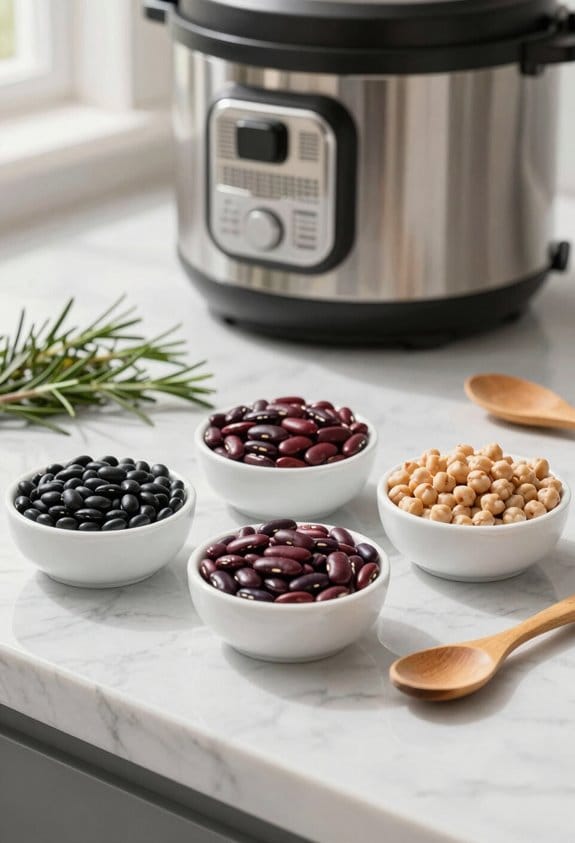
When it comes to cooking beans quickly and perfectly, pressure cooking is a fantastic method. But not every bean is going to give you the results you want—some work better than others in a pressure cooker. For dried beans, I’ve found that black beans, pinto beans, and navy beans are my go-tos. They typically take about 20 to 30 minutes at high pressure and come out just right.
Great Northern beans are another good option, fitting snugly into the same cooking time of 25 to 30 minutes. If you’re into chickpeas or cannellini beans, you’ll need to up the time a bit—those usually need around 35 to 40 minutes. Just a heads up, though: red kidney beans require a little extra attention. You need to boil them for about 10 minutes first, then pop them in the cooker for another 25 to 30 minutes to ensure they’re safe and tender.
So, why does this matter? The age of your beans can really mess with cooking times, which means you might need to do a bit of experimenting. It’s all about finding what works best for your taste. The best part is, once you nail the timing, you’ll have perfectly cooked beans ready for all sorts of dishes.
In short, knowing which beans are best for pressure cooking can really save you time and effort. Additionally, preserving your cooked beans properly using vacuum sealing can help keep them fresh longer, reducing waste and saving money. Are there any other bean varieties you’ve tried that work well in your pressure cooker?
Step-by-Step Guide to Cooking Dried Beans
Got dried beans sitting in your pantry, but not sure how to cook ’em? You’re not alone! Many folks wonder how to turn those hard little nuggets into a hearty dish. Let’s roll up our sleeves and dive into this step-by-step guide for cooking dried beans that’ll have you enjoying a delicious meal in no time.
First off, you’ll want to rinse and sort 1 pound of dried beans. This little step gets rid of any debris and ensures you’re cooking with only the good stuff. Next, grab a pressure cooker and combine those beans with 5 cups of water. Here’s a key point: make sure the water level is at least 1 inch above the beans to avoid any problems later on. Once you’ve got that all set, seal the pressure cooker up tight.
Now, it’s time to cook! Set your pressure cooker on high pressure—go for 20 to 30 minutes for smaller beans and 35 to 40 minutes for larger ones. The best part is you don’t have to babysit it; just let it do its thing. After the time’s up, don’t rush it—allow for a natural release for at least 20 minutes. If they’re not quite tender yet, just reseal and pressure cook for another 10 minutes.
For added flavor, why not toss in a bay leaf or a couple cloves of garlic? Trust me, it really amps up the taste! And about soaking beans overnight? Honestly, you can skip that. You’re going to have soft, delicious beans without the wait.
Using tools like a mortarpestle set can enhance your beans’ flavor by manually grinding fresh spices to accompany your dish.
In short, cooking dried beans is easier than you might think. So, what’s your favorite way to enjoy beans?
Tips for Achieving Perfect Bean Texture
Got a love-hate relationship with beans? You’re not alone. It’s frustrating to cook them and end up with a mushy mess instead of that perfect texture you’re hoping for. Let’s break it down so you can enjoy every bite.
First off, make rinsing and sorting your dry beans a priority. You don’t want any odd bits sneaking into your dish. After that, a good rule of thumb for water is about 5 cups for every pound of beans. If you’re after that softer texture, adjust the water a bit more.
Now, here’s the trick: cooking under high pressure is a must. For black beans, set your timer for 20 to 25 minutes. Chickpeas, on the other hand, usually take a little longer—35 to 40 minutes will do the trick. After the timer goes off, let the pressure release naturally for a solid 20 minutes. This extra time is key; it lets the beans finish cooking gently, giving them that ideal texture.
Want beans that hold their shape a bit better? Just shorten the cooking time to fit your taste. Honestly, it’s all about finding that sweet spot that works for you.
For added flavor and texture enhancement, consider using a granite mortar and pestle to freshly grind spices or crush herbs before adding them to your bean dishes.
Mistakes to Avoid When Cooking Beans
Cooking beans can be a simple task, but there are definitely a few common blunders that could leave you feeling frustrated. Ever tried cooking beans only to find them tough and chewy? One of the biggest mistakes is adding salt before cooking. Seriously, it toughens them up. Instead, wait until they’re cooked to season them!
Another tip? Don’t pack your pressure cooker too full. Think about it—overloading it can lead to a messy overflow, not to mention uneven cooking. To avoid this, aim for filling it no more than halfway. And always start with rinsed and sorted beans to clear out any dirt or debris.
Pay close attention to cooking times, too. Here’s the trick: black beans usually take about 20-25 minutes at high pressure, while chickpeas require around 35-40 minutes. After you’ve cooked them, let the pressure release naturally for at least 20 minutes. Trust me, this little detail ensures your beans get that perfect tender texture instead of turning into mush.
For the best results, consider using a probe thermometer to monitor the internal temperature and ensure precise cooking every time.
Quick Fixes for Undercooked Beans
Ever cook a batch of beans only to find they’re still tough after the timer goes off? It happens, and there’s no need to stress about it! The first thing you can do is reseal your pressure cooker and give those undercooked beans another round at high pressure—aim for about 5 to 10 minutes. If they’re still not soft enough after that, consider letting the pressure release naturally for 20 to 30 minutes. This extra time can really help with softening them up.
So, how can you prevent this from happening again? One trick is to keep an eye on the age of your dried beans; older beans tend to take longer to cook. If you’re finding yourself stuck with undercooked beans regularly, you might want to try reducing the total cooking time by 10 minutes and adding a little extra water.
Truth is, cooking beans shouldn’t be a hassle. If you hit a bump along the way, there’s always a way to fix it. Just keep experimenting and adjusting until you find your perfect method. Happy cooking! What are your go-to tips for cooking beans? Using the right kitchen tools, like an ergonomic handle, can make cooking and serving easier and more comfortable.
Tasty Recipes to Try With Your Cooked Beans
When you’ve got a batch of cooked beans sitting pretty in your fridge, what do you do with them? The options are really fantastic! One delicious idea is to whip up a hearty Chunky 3 Bean Chili. Just throw those cooked beans together with some spices, diced tomatoes, and your favorite veggies. It’s a satisfying meal that warms the soul.
Got a craving for something quick? Try blending those beans into a smooth bean dip! Just add garlic, lime juice, and a bit of spice—it’s perfect for snacking with some chips or fresh veggies. Honestly, who doesn’t love a good dip?
And then there are salads. A Mexican bean salad with corn, bell peppers, and avocado is not just healthy but also bursting with flavor. Imagine digging into that on a warm day! You could even toss your cooked beans into soups or stews; they’ll add both protein and fiber while making the broth a bit thicker. What’s not to love?
If you’re looking for a simple dinner option, consider a stir-fry. You can toss your cooked beans with a mix of veggies and drizzle on some soy sauce. It’s quick, satisfying, and packed with healthy goodness.
To make your cooking process easier, consider using heat-conductive materials in cookware to improve cooking performance and consistency.
Frequently Asked Questions
Can You Pressure Cook Dry Beans Without Soaking Them?
Yes, we can pressure cook dry beans without soaking! Exploring different cooking methods, we find that various bean varieties have unique cooking times, enhancing their texture and flavors while preserving their nutritional benefits. Let’s avoid common mistakes together!
Why Do Mexican Restaurant Beans Taste so Good?
Mexican restaurant beans taste great due to high ingredient quality, diverse bean varieties, and skilled seasoning techniques. They incorporate traditional recipes, unique flavor profiles, and complementary food pairings that highlight regional differences in Mexican cuisine.
How to Cook Beans Instead of Soaking?
Did you know 80% of cooks prefer pressure cooking beans? We can skip soaking by using a pressure cooker, adjusting cooking times for different varieties, enhancing flavor, and enjoying nutritional benefits for meal prep success!
How Long Does It Take to Cook Raw Beans in a Pressure Cooker?
Cooking raw beans in a pressure cooker varies. For instance, black beans need 20-25 minutes, while chickpeas require 35-40. We enhance flavor and texture through proper methods, ensuring safety and delicious servings for all bean types.


