As an Amazon Associate, we earn from qualifying purchases. Some links on this site are affiliate links at no extra cost to you. Our recommendations are based on thorough research and editorial judgment.


Weighing Raw vs. Cooked Meat: Which Number Should You Track?

When it comes to tracking your meat intake, ever wonder if you should weigh it raw or cooked? It’s a common question, and the truth is, weighing raw meat is usually the way to go.
You may be interested



When you cook meat, it tends to lose about 25% of its weight. So, if you’re aiming for a 4-ounce cooked portion, you’re better off starting with about 5 ounces of raw meat. This way, the numbers you track will line up nicely with what’s on the nutrition labels.
Consistency is key here, folks. By always weighing raw meat, you can keep your records accurate and reliable. Plus, it’s easier to manage your nutritional goals when you know what you’re starting with.
Ever thought about how different cooking methods can affect nutrition? You might be surprised by the changes. For example, grilling might retain more nutrients compared to boiling.
The best part is that once you get into the habit of weighing raw meat, it’ll become a second nature.
So, next time you’re planning a meal, remember to weigh before cooking. How will you change your meat prep now that you know this?
Key Takeaways
- Track raw meat weight for accurate alignment with nutrition labels and for calorie tracking consistency.
- Cooking typically reduces meat weight by approximately 25%, affecting portion sizes post-cooking.
- Use the formula: multiply cooked weight by 0.75 to find the required raw weight for desired servings.
- Inconsistent cooking methods lead to variable weight loss; maintaining a consistent cooking method enhances tracking accuracy.
- Investing in a kitchen scale ensures precise measurement of raw meat, supporting reliable dietary management and tracking.
Decoding Meat Nutrition Labels

When you’re checking out meat nutrition labels, have you ever stopped to think about what they really mean? A lot of these labels are based on the raw weight, so if you see a 4-ounce serving of ground beef, that’s before it gets cooked. Once it’s sizzling in the pan, it probably shrinks down to around 3 ounces because of the water that cooks off.
This is super important for tracking calories because even though the portion size changes, the calorie count stays the same. The nutrition facts don’t shift whether you measure it raw or cooked. Understanding this is essential if you’re looking to stick to your dietary goals. To make sure you’re keeping an accurate count of your macros, always refer to the raw weights on the labels. It’s a small trick that can keep you on track to reach your goals!
So, why does this matter? Knowing how to decode these labels means you’re on the right path for meal prep and planning. It helps you make informed choices rather than guessing how much you’re actually eating.
To sum it up, understanding meat nutrition labels is key for anyone serious about their diet. Also, just like a chef uses durable storage solutions to protect valuable tools, accurate label reading safeguards your nutritional goals.
Are you ready to keep your tracking game sharp?
How Cooking Affects Meat Weight and Nutrition
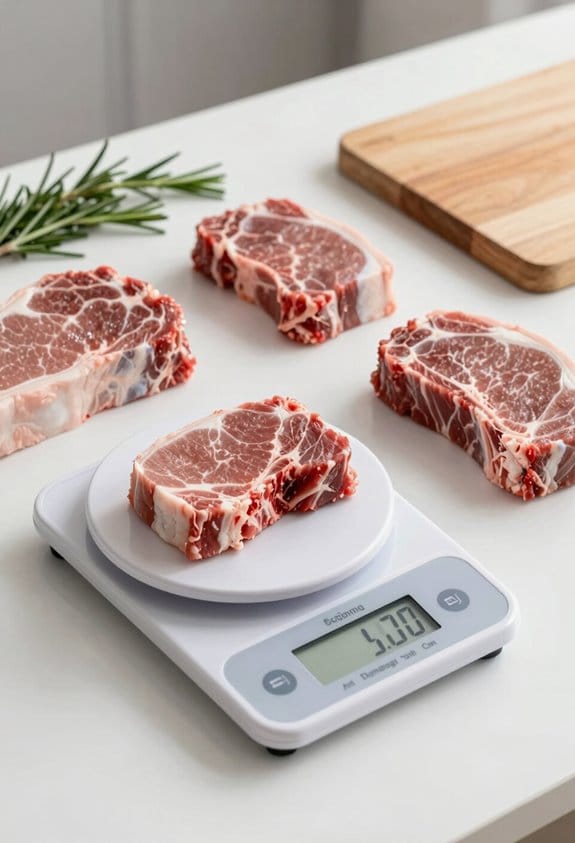
Have you ever noticed how much smaller your meat portions look after cooking them? It’s kind of surprising, right? When you cook meat, it typically loses about 25% of its weight. For example, that 4 oz piece of raw meat you started with shrinks down to about 3 oz once it’s done cooking. This is important to keep in mind, especially when you’re tracking your meals and planning diets.
Most nutrition labels provide info based on raw weight, which can definitely trip you up. Even though the caloric content stays the same whether you’re measuring it raw or cooked, the way it all breaks down changes. So, you might end up with more calories per ounce when you consider the cooked version of the meat.
Different cooking methods can also impact weight loss. For instance, grilling tends to lead to a greater shrinkage compared to steaming. So, if you’re trying to keep your portions consistent, you might want to consider how you’re cooking your meat. This really helps in keeping your nutrition tracking on point.
Honestly, it’s all about understanding how cooking alters what you’re eating. So next time you plan a meal, remember to adjust your expectations based on the final cooked size. Have you ever weighed your meat before and after cooking? It can be an eye-opening experience! Using meal containers made from BPA-free plastic can help keep your food safe and fresh when packing pre-portioned cooked meats for later meals.
The Importance of Weighing Raw Meat

Have you ever tried to keep track of your nutrition and wondered why the numbers just don’t seem to add up? One simple step that can make a huge difference is weighing raw meat. When you weigh your food in its raw state, you’re creating a consistent starting point. Nutrition labels are based on raw weights, so this practice helps you keep your calorie counts accurate.
Take chicken, for example. When you cook it, it can lose about 25% of its weight because of moisture lost during cooking. If you’re only recording the weight after it’s cooked, you could be way off in your calorie tracking.
So, what’s the best approach? Weigh your meat raw before cooking it. By doing this every time, you’ll make your tracking more reliable, which is key to hitting your dietary goals. Plus, it’s a simple habit to build. Just grab that scale and start measuring—it’s a straightforward way to keep yourself on track.
In the long run, you’ll find that this little change can lead to better clarity about your food intake. Using airtight food storage containers can also help preserve the freshness of your weighed meat for meal prep and cooking. Have you tried weighing your raw meat before? It might just be the adjustment you need!
How Cooking Methods Impact Nutritional Content
Have you ever wondered why your grilled chicken looks smaller than when you first put it on the plate? It’s all about how cooking affects the meat you love. Different cooking methods can really change how much nutrition and moisture are packed into that piece of meat.
When you start with raw meat, the weight can drop significantly. Cooking methods like grilling or frying often lead to a loss of about 25% of that weight due to burning off fat and water. If you’re working with a 4-ounce piece of raw meat, it’ll shrink down to around 3 ounces once it’s cooked. The conversion factor to keep in mind here is 0.75—it’s a quick way to remember how much you’ll end up with.
But don’t get discouraged! Steaming your meat is a totally different story, as it helps retain more moisture and could even keep the weight closer to what you started with. So, why does this matter? It’s essential for accurately tracking your nutritional intake, especially if you’re keeping tabs on things like protein or calories while meal planning.
Here’s the trick: no matter if you’re measuring raw or cooked meat, being aware of these changes can totally help you plan better meals and hit your nutrition goals. Truth is, understanding what happens to your food can make cooking more fun and rewarding. For precise tracking, using a milligram scale allows you to measure tiny weight differences accurately, ensuring your nutritional calculations are spot on.
Tips for Accurately Tracking Meat Portions
When it comes to tracking your meat portions, one common hiccup is not knowing how much you’re really eating. Have you ever thought about weighing your meat when it’s raw? Most nutrition labels are based on uncooked weight, so measuring raw chicken or ground beef with a food scale is a smart move.
Let’s break it down: if you’re aiming for a 4-ounce serving of raw meat, it usually shrinks to about 3 ounces once cooked due to moisture loss. To figure out how much raw meat you need based on what’s being served on your plate, just multiply the cooked weight by 0.75. This simple tip can prevent you from under-recording calories and nutrients, which is key if you’re serious about your health goals.
Consistency is vital here. Weighing your food raw not only helps with accuracy, but it also streamlines your tracking process in the long run. You’ll find it becomes second nature to keep on top of what you’re eating. Honestly, it’s all about making the right choices easier for yourself. To maintain the freshness of your tracked portions, it’s helpful to store them in airtight food storage containers which preserve quality and prevent contamination.
Converting Raw Meat Weights for Cooking
Do you ever wonder how much your raw meat actually weighs after cooking? It’s a common hassle in meal prepping, especially when you’re trying to keep track of your macros or calorie intake. When we cook meat, it loses about 25% of its weight because moisture evaporates. So, to estimate the cooked weight, just take your raw weight and multiply it by 0.75. For instance, if you start with a 4-ounce portion of raw ground beef, you’ll end up with roughly 3 ounces once it’s cooked. No guesswork needed!
Now, let’s say you’ve already cooked your meat and need to figure out the raw weight. Here’s the trick: simply divide your cooked weight by 0.75. Got 8 ounces of cooked chicken? That translates to about 10.67 ounces of raw chicken. Honestly, knowing these conversions can make meal planning a lot smoother, plus it helps you stick to your nutrition goals.
So, why does this matter? Cooking can be tricky, and getting accurate measurements makes a real difference in how much you’re actually eating. By keeping an eye on these weights, you can make informed choices about portion sizes and meal prep.
In the end, tracking your raw versus cooked weights isn’t just about numbers; it’s about being confident in what you’re putting on your plate. So, next time you’re prepping, remember these tips and give your cooking skills a boost! Using accurate measuring tools can enhance your portion control even more. What’s your go-to method for measuring out portions in the kitchen?
Avoiding Common Pitfalls in Meat Weighing
Are you keeping track of your meat intake the right way? It’s easy to make mistakes when weighing your meat, so let’s talk about how to avoid those common pitfalls. A big one is forgetting to weigh your meat before cooking it. Cooking can shrink it down by about 25-30%, which can totally throw off your calorie counts if you’re logging cooked weight instead of raw.
So, how do you make sure you’re measuring correctly? Start by looking at the nutrition label on the meat package; it gives you the uncooked weight in grams. Ground beef, for instance, typically loses about 25% of its weight when cooked. To keep your tracking consistent, it’s best to stick to one cooking method so you know exactly what portions you’re working with each time.
Honestly, weighing your meat properly is crucial for sticking to your dietary goals. Are you paying attention to these details? Remember, every bit counts when you’re trying to stay on track! Staying aware of these small things helps you make sure your tracking is working for you, not against you. Also, just like ensuring a proper gasket fit guarantees cooking effectiveness in pressure cookers, measuring meat accurately ensures reliable dietary tracking.
Strategies for Effective Macro Tracking
Ever struggled with tracking your macros? You’re not alone! Staying organized and accurate can feel like a challenge, but I’ve got some tips that can make it easier.
First off, when you cook chicken breast, weigh it raw. This step is essential because nutrition labels are based on raw weight, and you’ll get the most accurate macro and calorie counts this way. A lot of people don’t realize that cooked meat can lose about 25% of its weight due to the loss of water and fat. To get a sense of what your cooked servings will look like, just remember this simple calculation: multiply the raw weight by 0.75 to estimate the cooked weight.
Using a kitchen scale is your best friend in this process. It really helps you measure both the raw and cooked portions accurately, which is key. Stick to consistent cooking methods too; this can help you better predict how much meat you’ll lose in the cooking process. Try this: whether you grill, bake, or sauté, do it the same way every time so you can fine-tune your tracking.
So, why does this matter? If you’re trying to hit specific macros for weight loss or muscle gain, these small steps add up. They keep you accountable and ultimately make your goals feel more achievable.
In short, keeping your macro tracking simple can really support your health journey. Have you ever thought about how much those little details can impact your progress?
Also, investing in high-quality measuring tools like ergonomic kitchen scales and measuring cups can improve both accuracy and ease during your meal prep and tracking.
Frequently Asked Questions
Should You Weigh Meat Raw or Cooked to Track Calories?
We should always weigh meat raw for calorie tracking, as it guarantees accurate portion sizes and nutritional values. By doing this, we improve our diet accuracy and support our weight loss efforts, regardless of cooking methods.
How Much Does Cooked Meat Weigh Compared to Raw Weight?
Cooked meat’s like a balloon losing air—typically weighing 25% less than raw. Factors like moisture loss and fat content affect this. Understanding these cooked weight differences guarantees we’re accurate with serving sizes and protein retention.
Do I Weigh My Meat Before or After It’s Cooked?
We should weigh our meat before cooking it. Different cooking techniques affect weight and calorie density. For portion control and accurate meal planning, tracking raw meat guarantees we manage nutritional differences effectively.
What Is the 4 4 9 Rule?
The 4-4-9 rule simplifies calorie tracking by assigning 4 calories per gram of protein and carbohydrates and 9 for fats. Understanding this aids portion control and evaluates nutritional values during meat preparation, regardless of cooking methods.


