As an Amazon Associate, we earn from qualifying purchases. Some links on this site are affiliate links at no extra cost to you. Our recommendations are based on thorough research and editorial judgment.


Understanding the Tare Function: How to Weigh Ingredients Without the Bowl

Do you ever find yourself battling a messy kitchen while trying to measure ingredients? It can be a hassle, but there’s a neat little trick that makes it so much easier—using the tare function on your kitchen scale can really simplify the process.
You may be interested


Start by placing your empty bowl on the scale and press that tare button. This little step resets the scale to zero, so you’re only measuring the actual ingredients. It’s pretty handy—if you add another ingredient, just hit tare again to keep things accurate. This also means less fussing with different measuring cups, saving both time and cleanup.
Here’s the trick: always remember to tare the scale before each new ingredient. It’s like giving your scale a fresh start, so you know exactly how much you’re adding.
Plus, it keeps your workspace neat and organized—no more guesswork or messy counters!
Honestly, using this method can change the way you prep your meals. It not only helps with measurements but can also make cooking feel a lot more enjoyable. What could be better than knowing you’re on track with your recipe without the extra mess?
To recap, the tare function is simple and effective. It makes measuring ingredients easier and tidier, taking a lot of the hassle out of cooking.
Have you tried this technique yet, or is it something you’re eager to implement next time you’re in the kitchen?
Key Takeaways
- The tare function allows the kitchen scale to reset to zero after placing an empty container, simplifying ingredient measurement without the bowl’s weight.
- Use the tare function before measuring each new ingredient to ensure accurate individual measurements and prevent totaling weights.
- Taring is effective for both dry and wet ingredients, making it versatile for various recipes and cooking needs.
- Regularly re-taring throughout the cooking process minimizes measurement errors, leading to improved dish outcomes and reduced food waste.
- Common mistakes to avoid include forgetting to tare after placing the container or neglecting to re-tare for each new ingredient.
What Is the Tare Function and How Does It Work?

Ever found yourself in the middle of a recipe, trying to figure out how much flour you just added while also battling the weight of the bowl it’s in? It can be a hassle, right? That’s where the tare function comes into play, making your baking life a whole lot simpler.
So, what’s the tare function? Think of it as your kitchen hero. It lets you reset the scale to zero after you place an empty container, like a bowl or a measuring cup. This way, you’re only measuring the ingredients. To get started, just set your empty bowl on the scale and press the tare button. From there, as you scoop in your flour or sugar, the scale will show you exactly how much you’re adding, without requiring any extra math on your part.
But here’s the trick: you don’t have to stop at one ingredient! Let’s say you’re whipping up a cake. After measuring out your sugar, hit the tare button again before adding eggs or any other ingredients. This makes measuring a breeze, saving you time and energy.
Most modern kitchen scales come with this handy tare button, making precise measuring super easy for all of us, regardless of our cooking skills. The tare function is often integrated into scales with high-precision sensors to ensure accurate ingredient measurements.
So next time you’re in the kitchen, give it a try!
In the end, it all comes down to less fuss and more delicious results in your cooking. Why not make your measuring process as simple as possible?
Why Weighing Ingredients Enhances Precision

Have you ever tried baking a cake and thought, “Why does it feel like I’m missing something?” If you’ve ever been frustrated with a recipe not turning out quite right, weighting your ingredients could make a huge difference.
When you weigh your ingredients instead of measuring them by volume, you’re cutting out a lot of guesswork. Different measuring tools can give you varied amounts, so using a scale really helps get things accurate, especially in baking where precision is key. Every gram counts, and it can determine whether your cake rises or flops.
Here’s the trick: use the tare feature on your kitchen scale. This lets you measure multiple ingredients in one bowl, which saves time and makes cleanup easier. With consistent weight measurements, you can follow recipes more reliably and build your confidence in the kitchen. Plus, weighing your ingredients can assist with portion control, helping you keep track of what you eat and manage your serving sizes more effectively.
Honestly, it’s a small change that leads to impressive results. Weighing your ingredients paves the way for successful baking and cooking, so why not give it a try? You might find it opens up new possibilities in your kitchen adventures. Many modern digital kitchen scales offer precision to at least 1 gram or even 0.1 grams, ensuring highly accurate measurements.
How to Use the Tare Feature to Simplify Ingredient Weighing
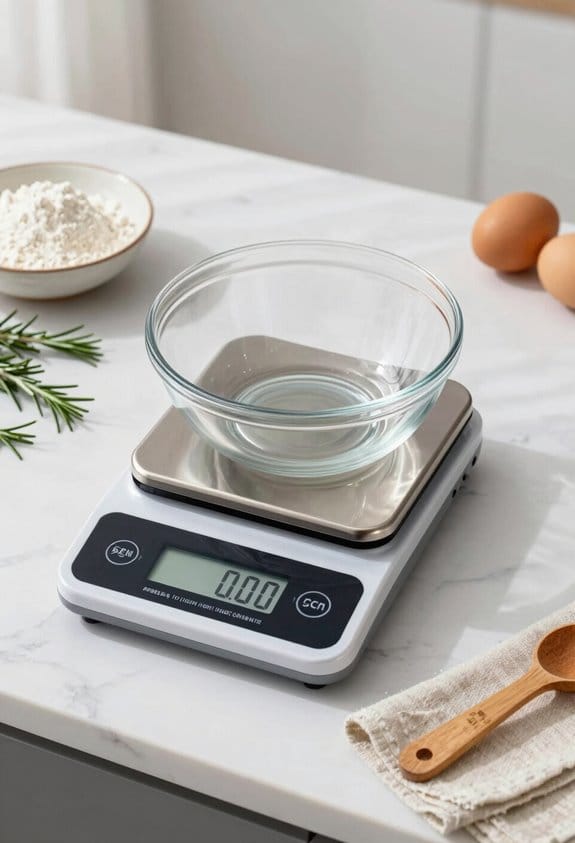
Have you ever found yourself frustrated while trying to weigh ingredients? You check your scale, and it’s just a mess of numbers after you add a container. The tare feature on your kitchen scale can be a lifesaver. Here’s the trick: just place your empty container on the scale and hit the tare button. That sets everything back to zero.
Now, as you add your first ingredient, the scale is only measuring what’s inside that container. You won’t have to worry about doing any mental math—just keep adding! When it’s time for the next ingredient, hit that tare button again. This little step prevents any confusion and helps you be precise in your baking or cooking.
It doesn’t matter if you’re working with dry ingredients like flour or wet ones like oil; this method works like a charm. Frankly, I always recommend taring the scale with each new container to ensure your measurements are spot on.
In short, using the tare feature really simplifies the weighing process. Many kitchen scales include tare functionality to provide real-time readings for gradual ingredient addition. So, are you ready to give it a shot next time you’re in the kitchen? It’s easier than you might think!
Important Benefits of Tare in Recipe Preparation
Have you ever found yourself frustrated, trying to get your measurements just right while cooking? It’s so easy to lose track with the weight of the bowl throwing you off. That’s where the tare function shines. By simply pressing that tare button before you add each ingredient, you skip the annoying task of mentally subtracting the bowl’s weight, ensuring you’re only measuring what really counts.
Think about it: accurate measurements are key, especially for those tricky recipes that demand precision. No more guessing! Plus, when you measure multiple ingredients in the same bowl, life gets a whole lot easier. It saves time not just in prep, but also when it comes to cleaning up afterward.
Here’s the trick: if you’re cooking something that requires several ingredients, just weigh them right in the bowl. It simplifies the process and boosts your confidence in the kitchen. The more you practice with the tare function, the better you get.
Honestly, mastering this little feature can have a huge impact. It’s one of those small changes that really enhances your cooking experience, whether you’re just starting out or already a kitchen pro. So give it a try next time you’re whipping up a dish—you might be surprised at how much smoother things go!
Using tools with high-quality materials, like tempered glass or silicone seals, can further improve the precision and durability of your cooking equipment.
Measure Multiple Ingredients With Ease Using Tare
Measuring multiple ingredients in the kitchen can feel like a real juggling act at times, can’t it? That’s where the tare function on your scale comes to the rescue. By pressing the tare button before adding each ingredient, you reset the scale back to zero. This way, you’re only getting the weight of the new ingredient. It’s a nice way to keep things tidy and avoid a mountain of bowls.
Let’s say you need one cup of flour and then half a cup of sugar. Just place your mixing bowl on the scale, hit tare, add the flour, and then tare again before adding the sugar. No mess, no fuss. It’s all about keeping your workspace clean while you bake. And trust me, mastering this tare trick can make a huge difference in how precise your measurements turn out each time.
Honestly, who wants to deal with a lot of dishes when you can just measure everything in one bowl? It’s efficient, and it cuts down on cleanup time, which is always a win in my book. So, the next time you’re in your kitchen whipping up something delicious, give the tare function a try. You might just find it makes your cooking experience a whole lot easier! Plus, using a scale with a backlit LCD display can really help ensure you get those measurements just right.
Common Tare Mistakes to Avoid
Have you ever found yourself frustrated because your recipe didn’t turn out quite right? It might be due to a simple mistake: not taring the scale after putting down your empty bowl. When you skip this step, you end up blending weights, and that can really mess up your baking or cooking.
Another thing to keep in mind is where you set your scale. Make sure it’s on a flat, stable surface; an uneven countertop can lead to wonky readings. None of us wants to end up with extra flour going into the mix because the scale was wobbling.
Now, here’s the trick: when you’re adding new ingredients, make sure to hit that tare button again. If you don’t, all you’re doing is tracking the total weight instead of measuring individual ingredients. Oh, and a quick tip: if your container is big, it might block your view of the display. So, double-check that the tare reset worked before you keep going!
Finally, don’t forget to recalibrate your scale every so often. It’s easy to overlook, but it’s essential for getting those accurate measurements we all need. Regular maintenance, including proper calibration, will extend the life and reliability of your scale.
Avoid these common missteps, and you’ll be well on your way to nailing those perfect portions. Have you made any of these mistakes before? Let’s get cooking!
Essential Tips for Taring Dry, Liquid, and Solid Ingredients
Taring ingredients accurately is crucial for anyone who loves to cook at home. Have you ever poured in too much flour or liquid and felt that panic when it spills over? To avoid those messy moments, it’s super simple. When measuring dry ingredients, just set your empty container on the scale and hit the tare button to zero it out. Then, add your ingredient until you hit your target weight. Easy, right?
For liquid ingredients, the process is similar. Start with your empty measuring cup, tare it, and then pour in your liquid. This little step can save you from some frustrating clean-up later. With solid ingredients like fruits and veggies, be sure to weigh the empty bowl first to get just the right amount of food weight.
So, why does this matter? Taring frequently while measuring can make things a lot smoother, especially when you’re working with multiple ingredients. It means you don’t have to fuss with finding different containers for each item.
Truth is, these small but meaningful tweaks can enhance your cooking experience. By keeping your measurements accurate, you’ll find that your recipes turn out better and you’ll waste less food. Happy cooking! Have you tried taring your ingredients yet?
Using the tare function is especially helpful when your scale has high capacity and precise measurement capabilities, allowing you to measure multiple ingredients without removing previous ones.
How Tare Boosts Cooking Precision and Workflow
Have you ever found yourself in the middle of a recipe, struggling to keep track of the measurements? It’s frustrating, right? That’s where the tare function on your kitchen scale comes to the rescue. When you press that tare button, it resets to zero so you only measure the weight of your ingredients. This simple action can really boost your cooking precision.
Another benefit of using tare is how it streamlines your workflow. Instead of measuring each ingredient in separate containers—which can eat up your prep time—you can add everything to one bowl or pot. How much easier is that? Plus, it helps keep your workspace tidy, reducing the chance of spills and messes.
Whether you’re measuring flour for cookies or liquid for a sauce, the tare function ensures your measurements are spot on. Truth is, once you get the hang of it, you’ll feel more confident in your kitchen skills. So, why not give it a try? It might just make your cooking experience smoother and more enjoyable!
In short, using the tare function can really enhance your cooking routine. Many digital kitchen scales also include features like auto shut-off to conserve battery life and improve convenience. Are you ready to take the plunge and see how it can help you?
Practical Applications of Tare in Baking
When you’re baking, isn’t it frustrating when your measurements aren’t spot on? The tare function on your kitchen scale can really simplify things. It allows you to measure out multiple ingredients right in one bowl, which means much less mess on your countertop. Just set your bowl on the scale and press that tare button to zero it out. After that, you can toss in your flour and sugar without a thought to any tricky math.
For liquids, it keeps everything precise. Even slight weight variations can throw off your final product, so it’s great to tare between each ingredient. This ensures that you’re measuring accurately every time, which is crucial for baking success. So, why does this matter? Because staying consistent with your measurements can help you create those perfect cookies or cakes you’ve been dreaming of.
Honestly, once you get the hang of this, baking becomes a lot smoother. It lets you concentrate more on your creativity in the kitchen and less on the cleanup afterward. Besides, you know how baking can be messy enough as it is!
To wrap up, using the tare function is a simple way to keep your baking precise and enjoyable. Have you tried it in your baking routine yet, or is there a baking challenge you’re facing that I can help with? Many quality coffee scales and kitchen scales are equipped with this tare function to make multi-ingredient measurements easy and accurate.
Why Mastering Tare Builds Cooking Confidence
Have you ever found yourself in the middle of a recipe, struggling to keep track of your ingredients because you didn’t measure them right? You’re not alone! Many home cooks feel overwhelmed by the idea of precision when it comes to cooking. That’s where the tare function on your kitchen scale comes in handy.
Using tare makes measuring out ingredients a whole lot simpler. You can easily reset the scale with each new item you add, which eliminates the hassle of doing calculations in your head. Plus, this approach helps reduce the mess on your countertop, making clean-up a breeze.
So, why does this matter? Essentially, it helps you become more accurate in your cooking and baking. When you’re precise about measurements, your dishes turn out better. And as you gain confidence using tare, you’re also likely to make fewer mistakes in your recipes. This boost in confidence is invaluable for anyone, whether you’re just starting out or have been cooking for years.
Try this: start incorporating tare into your routines. Rather than adding ingredients to a bowl one by one, weigh them directly on the scale with the tare feature engaged. You’ll notice how quickly you can move through a recipe, and before long, you’ll establish a solid measuring practice.
Frankly, mastering this simple skill can really change how you approach cooking. It encourages a more organized and intentional way to prepare meals, which can be especially helpful during busy weeknights.
In short, embracing tare can streamline your cooking process and help you feel more at ease in the kitchen. So next time you’re ready to whip up something delicious, why not give it a try? You’ll be amazed at how your confidence begins to blossom! Additionally, using tools with automatic keep-warm functions can complement precise ingredient measurements by maintaining optimal food temperature until serving.
Frequently Asked Questions
How to Weigh Ingredients Without a Weighing Machine?
We can weigh ingredients without a machine by using measuring cups, substitution methods, or balancing known weights, like sugar bags. It’s essential to adapt recipes based on these techniques for accurate results in our cooking.
How Do You Calculate Tare Weight?
To calculate tare weight, we weigh the container first and then subtract that weight from the total. This tare calculation guarantees we focus solely on the ingredient’s weight, leading to more precise cooking results.
How to Tell the Weight of Something Without a Scale?
We can estimate weight by comparing items to our known references, like using a paperclip or bread slice. Our body, like a thumb, can help too, making weight estimation easier without a scale.
Can I Use My Phone as a Gram Scale?
We might wish our phones could magically turn into digital weighing scales, but they’re far from precise. For accurate measurements, let’s stick with dedicated kitchen scales designed for the task. Trust us, it’s worth it!


