As an Amazon Associate, we earn from qualifying purchases. Some links on this site are affiliate links at no extra cost to you. Our recommendations are based on thorough research and editorial judgment.


Thermal Shock Explained: Why Glass Containers Break and How to Avoid It

Have you ever been heating up some soup, only to watch in horror as your glass container shatters? That’s a classic case of thermal shock, and it can catch anyone off guard. Understanding why it happens can save you from a potential mess and wasted food.
You may be interested


So, here’s the deal. Glass doesn’t all react the same way to temperature changes. Take float glass, for instance—it can crack just from a 40°C change. On the other hand, toughened glass is way tougher and can handle shifts of up to 200°C. That’s quite a difference, right?
To prevent breakage, try this: always preheat your glass containers with some warm water before you pour in hot liquids. It’s a simple trick that makes a huge difference.
And don’t forget to give your glass a quick once-over for any chips or cracks before you use it, as they can turn a glass jar into a disaster waiting to happen. Even a gradual temperature change can be incredibly helpful.
The best part? By choosing the right glassware and handling it with a little care, you can significantly reduce the risk of thermal shock.
So, the next time you’re pouring that steaming hot coffee, just remember to give your glass a bit of TLC. It’s worth it to keep your kitchen safe and mess-free.
Isn’t it great to have simple steps to avoid those frustrating moments? Just think about how much easier cooking can be when you’re not worrying about your glass-breaking mid-soup!
Key Takeaways
- Thermal shock occurs when rapid temperature changes cause internal stress, leading to glass breakage or shattering.
- Float glass is highly susceptible to thermal shock, failing at temperature differences over 40°C.
- Toughened glass can manage up to 200°C temperature swings, while borosilicate glass withstands even higher stresses.
- Prevent thermal shock by preheating glass, avoiding sudden temperature changes, and inspecting for flaws before use.
- Choosing heat-resistant glassware and gradually acclimating it to temperature changes minimizes the risk of breakage.
What Is Thermal Shock and Why Does It Happen?
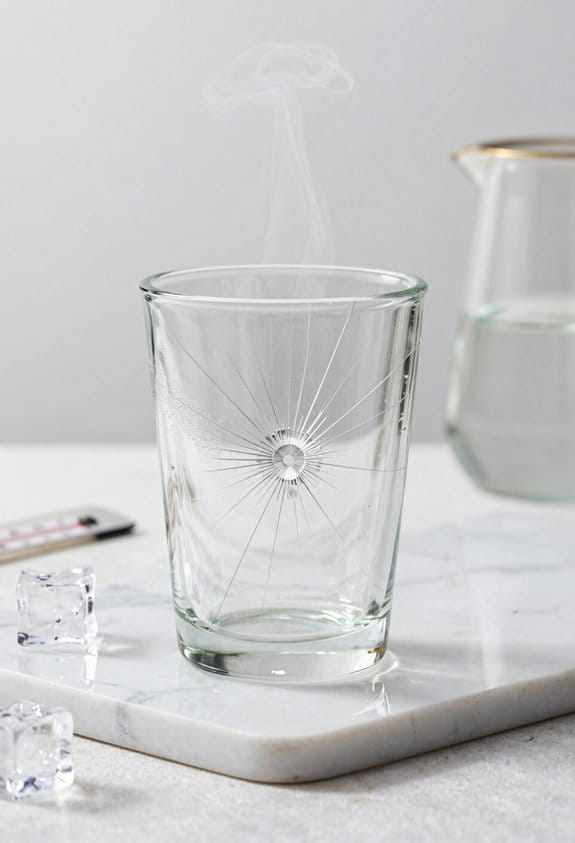
Have you ever experienced the frustration of a glass item breaking after you poured a hot drink into it? It’s not just bad luck – it’s called thermal shock, and it happens when glass suddenly changes temperature. This is especially true for certain types of glass, like soda-lime-silicate, which can start cracking if the temperature difference hits more than 42°C.
So, what really happens? When you pour in that steaming cup of coffee, the temperature inside the glass spikes. This rapid change creates internal stress: compressive stresses form inside the glass, while the outside experiences tensile stresses. This uneven distribution of stress is what makes your glass so vulnerable to cracking or breaking. And, if you throw in the threat of nickel sulphide, you could be facing even more problems.
Worried about your glassware? Here’s the trick: try pre-heating it before use. Just warming the glass a bit can help minimize that shock. Another smart move is to pick glass materials with lower coefficients of expansion, which means they won’t expand or contract as much with temperature changes. Choosing borosilicate glass containers can significantly reduce the risk since they have high temperature resistance and better durability against thermal shock.
Understanding thermal shock is key if you want to keep your glass containers intact. That way, you can enjoy your drinks without worrying about sudden breakage. What’s your experience with glassware and temperature changes?
The Science Behind Glass and Temperature Changes

Ever poured hot coffee into a cold glass and instantly felt that twinge of worry? You’re not alone! Thermal shock is a real deal when it comes to glass, and understanding it can save you from a messy disaster. When glass heats or cools too fast, it builds up thermal stress, which can lead to cracking or breaking.
Take float glass, for example; it can start to fail at just 40°C! On the other hand, toughened glass is a bit more resilient and can withstand up to 200°C. So, why does this matter? Well, when you pour that steaming hot liquid into cold glass, the hot spots expand quickly while the cooler areas contract. This uneven movement can create serious pressure, increasing your chances of thermal shock.
Try this: before using your glass, especially when it’s cold, give it a little warm-up. Just run some warm water over it or let it sit in a warm place for a bit. This simple trick helps minimize dramatic temperature changes, easing that thermal stress and helping to keep your glass intact.
Honestly, no one wants to deal with the aftermath of shattered glass—not to mention the safety hazard. So, next time you’re reaching for your favorite glassware, remember to give it some love first. It’s a small step that can prevent big headaches down the line.
It’s also wise to use containers made of borosilicate glass, as their higher temperature resistance reduces the risk of thermal shock during oven or microwave use.
Next time you grab that cold glass, will you think twice before pouring in the hot brew?
Everyday Scenarios That Cause Thermal Shock in Glass

Are you the type of person who loves a hot cup of coffee but frequently forgets to take your glass out of the fridge first? You might want to rethink that. Pouring a hot beverage into a cold glass can lead to thermal shock, and that could mean a shattered glass on your kitchen counter.
Here’s the trick: when you pour boiling water into a freezing cold glass, you’re inviting trouble. The glass experiences rapid temperature changes, which can cause cracks almost instantly. Even just moving a glass from the freezer to hot liquids can lead to the same disaster. Passionate about washing your delicate glassware with hot water? You might want to reconsider, as that could be the tipping point for stress fractures due to sudden temperature shifts.
So, why does this matter? Different types of glass handle temperature changes differently. For some, a mere 40-degree difference can cause a break, while others are built tougher and withstand a bit more.
To keep your glass safe, consider warming it up first, especially if it’s been chilling in the fridge or freezer. A little warm water can go a long way before you add that hot liquid.
In short, handling glassware requires a bit of caution. A simple move can save you from a messy situation. What are your tricks for avoiding broken glass? Remember, maintaining material durability is as important in kitchen tools like scales to ensure longevity when exposed to varying conditions.
Easy Ways to Prevent Thermal Shock in Glass
Ever had a glass container crack when you poured in hot liquid? It’s more common than you think, and it all comes down to thermal shock. Thankfully, there are some straightforward ways to prevent this from happening, and you don’t need a degree in science to do it!
First off, preheating your glass containers is a simple trick that really makes a difference. Just warm them up a bit before pouring in hot liquids. This helps keep the temperature difference at bay and reduces stress on the glass.
Another thing to keep in mind is to regularly inspect your glassware for any chips or scratches. Those tiny little imperfections can actually create weak spots, making your glass more likely to crack. So, if you notice any, it might be time to retire that piece.
Also, if you live in a particularly cold area, remember to store your glass containers indoors when the temperature dips. Rapid changes in temperature can lead to thermal shock, and you really want to avoid that.
The production process also plays a role. Manufacturers often run tests to ensure that glass can handle thermal stress. So, when you’re shopping for glassware, look for brands that guarantee their products can withstand heat.
Here’s the trick: sometimes, special ingredients are added during the glass-making process to make it much more resistant to thermal shock. It’s worth checking the label!
Additionally, choosing containers with temperature resistance designed for extreme conditions can further reduce the risk of glass breakage due to thermal shock.
Recognizing Signs of Thermal Stress in Glass
Have you ever seen tiny cracks pop up in your favorite glassware? Those little hairline fractures might seem minor, but they’re usually signs of thermal stress. This often happens around the edges or bases of the glass. If you notice cracks that radiate out or circle the base, it could mean your glass has faced some thermal shock from sudden temperature changes. Believe it or not, just a 40-degree temperature swing can crack fragile glass.
To keep your glass safe, it’s good practice to check for surface imperfections because they can make your glass more vulnerable to thermal stress. Sudden changes, like pouring boiling water into a cold glass, really increase the risks. So, what can you do?
Try this: always warm up your glass with warm water before pouring in something hot. It’s a simple trick that can save your glassware from a lot of heartache. Remember, the key is to recognize those warning signs early. If you spot cracks, it might be time to retire that piece or at least use it with caution.
Using containers with a temperature tolerance range designed to withstand extreme cold and heat can also help prevent damage.
In short, keeping an eye out for these issues can help you protect your glassware from bigger problems down the road. Have you had your own experiences with thermal stress in glass?
How Different Glass Types Handle Thermal Shock
Have you ever had a glass dish shatter after switching from the fridge to the oven? It’s frustrating, and it happens more often than you’d think. The reason? Not all glass can handle sudden changes in temperature. Let’s break it down so you can make smarter choices next time you shop for glassware.
Float glass is the most fragile when it comes to thermal shock, cracking with just a 40°C change. That’s pretty low compared to what you might expect if you’re using it in the kitchen. Toughened glass offers a step up in durability, withstanding temperature swings of about 200°C. It’s a better option for hot liquids or baking, but don’t let that fool you into thinking it’s invincible.
Now, if safety’s your primary concern, laminated glass is a solid option, but it still shares float glass‘s vulnerabilities. If you’re thinking about glass for cooking or food storage, borosilicate glass is where it’s at. It can resist temperatures up to 820°F (that’s 438°C for the metric fans), making it a champ in the kitchen.
The best part is, heat-strengthened glass provides another layer of durability. It can handle moderate thermal stress, which is perfect for everyday use. So, how do you choose? Think specifically about how you’ll be using the glass and what temperature changes it might face.
In the end, picking the right type of glass can save you from accidents and breakage. Next time you’re in the market, just keep thermal shock resistance in mind. Using airtight seals can also help maintain the integrity of food stored in glass containers, preventing moisture and air from causing damage. What’s your go-to glass for cooking?
The Importance of Coefficient of Expansion in Glass Durability
Have you ever wondered why some glass dishes shatter when you put them in the oven, while others hold up just fine? Choosing the right type of glassware can make all the difference, especially if you’re into cooking with heat. One key factor you should keep an eye on is the coefficient of expansion. This number tells you how much glass will expand or contract with temperature swings, and it’s more important than you might think.
Here’s the trick: different types of glass react to heat in various ways. For example, borosilicate glass, like the kind you see with Pyrex, has a low coefficient of expansion. This means it can handle serious heat—up to 820 °F (438 °C)—without breaking. On the flip side, soda-lime-silicate glass is far more temperamental. It can crack if it experiences a temperature change as small as 42 °C. So, why does this matter? If you want to whip up a hot dish without risking shattered glass, it’s incredibly helpful to know what you’re working with.
Manufacturers have ways to tweak glass recipes to boost durability, but not all of them do. When you’re out shopping, it helps to choose items made with heat-resistant glass, especially if you’re often cooking with boiling liquids or throwing something hot into the oven. Keep these tips in mind when you’re selecting your kitchenware.
In a nutshell, look for that low coefficient of expansion to avoid any unpleasant surprises in the kitchen. Additionally, selecting products with durable materials can significantly enhance your kitchenware’s resistance to thermal shock. Do you have a favorite type of glassware that you’ve found to be especially durable?
How Manufacturing Quality Affects Glass Resilience
Choosing the right glassware can be a bit overwhelming, can’t it? But it’s not just about selecting a stylish cup; durability is equally crucial. You see, how the glass is made plays a huge role in how strong it is and how well it handles sudden temperature changes.
Let’s break it down. First off, properly annealed glass has a special cooling process that makes it tougher against thermal stress, which can lead to cracks. You also want to watch out for surface flaws. Scratches or little bits of imperfections can really weaken the glass, making it more likely to break when you least expect it. This is why quality control in manufacturing is so important—fewer flaws mean more reliable glassware.
Now, if you’re looking for something that stands up better to heat, check out borosilicate glass. It’s got excellent thermal shock resistance, so it’s great for making those hot drinks without worrying too much about cracks. Another tip? Modern techniques like heat strengthening can offer extra protection by adding compressive stresses that help the glass withstand temperature shifts. Moreover, many high-quality measuring cups use high borosilicate glass because it combines durability with heat resistance for everyday kitchen use.
Safety Tips for Handling Glassware to Avoid Breakage
Got a favorite glass that you love but it seems to break at the slightest provocation? You’re not alone! Keeping glassware safe from breakage takes a bit of thought and care, but trust me, it’s worth it. One major thing to know about is thermal shock. It sounds technical, but it just means that extreme temperature changes can make glass shatter. To avoid that heart-stopping moment when your favorite mug breaks, always heat or cool glassware gradually. If the temperature difference is over 35°C, you might be tempting fate.
Don’t even think about pouring hot coffee into a cold glass! That’s one recipe for disaster. Instead, keep an eye out for any chips or cracks in your glass before using it. A tiny imperfection can make a big difference later on. And if you’ve stored your glass in the freezer, let it sit for a few minutes before you hit it with hot water to help it adjust.
Here’s a smart move: choose heat-resistant glassware like borosilicate. It can handle serious temperature swings without breaking a sweat. Using tools with good heat resistance ratings can help maintain safety in the kitchen. If you’re ready to enjoy your glassware without worry, just remember these easy tips! What’s your go-to glass item that you can’t live without?
Frequently Asked Questions
How to Prevent Thermal Shock on Glass?
To prevent thermal shock on glass, we should use proper glass selection along with gradual temperature changes, heat distribution methods, and thermal insulation techniques. Following cookware safety tips and avoiding direct flames can enhance our cooling strategies.
What Can You Use to Avoid Breakage When Heating a Glassware?
To avoid breakage when heating glassware, we should use thermal shock-resistant glass types, guarantee gradual heating, monitor temperature changes, and focus on proper heat distribution, taking advantage of safe usage guided by material properties.
Is Glass Resistant to Thermal Shock?
Yes, glass’s thermal properties vary widely. Different glass types, like borosilicate, boast better resistance factors. However, thermal expansion can create dangerous temperature gradients, risking shattering if we don’t mind heat distribution properly. Let’s be cautious together!
How to Heat Glass Without It Shattering?
To safely heat glass, we should utilize glass heating techniques like pre-warming, select heat resistant glass types, and focus on gradual temperature changes, while considering thermal conductivity factors and following microwave safety tips for ideal results.