As an Amazon Associate, we earn from qualifying purchases. Some links on this site are affiliate links at no extra cost to you. Our recommendations are based on thorough research and editorial judgment.

Restoring Clarity to Cloudy Plastic Containers

Is your favorite plastic container looking more cloudy than clear? It happens to the best of us, and luckily, restoring that clarity is simpler than you might think.
You may be interested


Try this: mix three tablespoons of baking soda with a bit of water to create a paste. Spread it over those cloudy areas and let it sit for about 20 minutes. After that, gently scrub with a non-abrasive pad and rinse it off thoroughly.
For those stubborn spots that just won’t budge, the best part is you can soak your containers overnight in a warm water and vinegar mix. Just imagine waking up to clear containers—sounds good, right?
So, why does this matter? Keeping your kitchen items looking fresh not only makes cooking more enjoyable but also keeps your containers in good shape for longer.
Honestly, maintaining clarity in your plastic doesn’t have to be a chore. With a few easy tricks, you can enjoy shiny, clear containers for all your meal prepping and storing needs.
What’s your go-to tip for keeping plastic kitchen gear looking brand new?
Key Takeaways
- Create a baking soda paste with three tablespoons of baking soda mixed with water, and apply it to cloudy areas.
- Let the baking soda paste sit in containers for 20 minutes to allow it to work on cloudiness.
- Gently scrub the affected areas with a non-abrasive pad to avoid scratching the plastic.
- For tough cloudiness, soak containers overnight in warm water mixed with vinegar.
- Regular cleaning with a baking soda and vinegar mixture maintains clarity and prevents future cloudiness.
Why Does Plastic Get Cloudy Over Time?
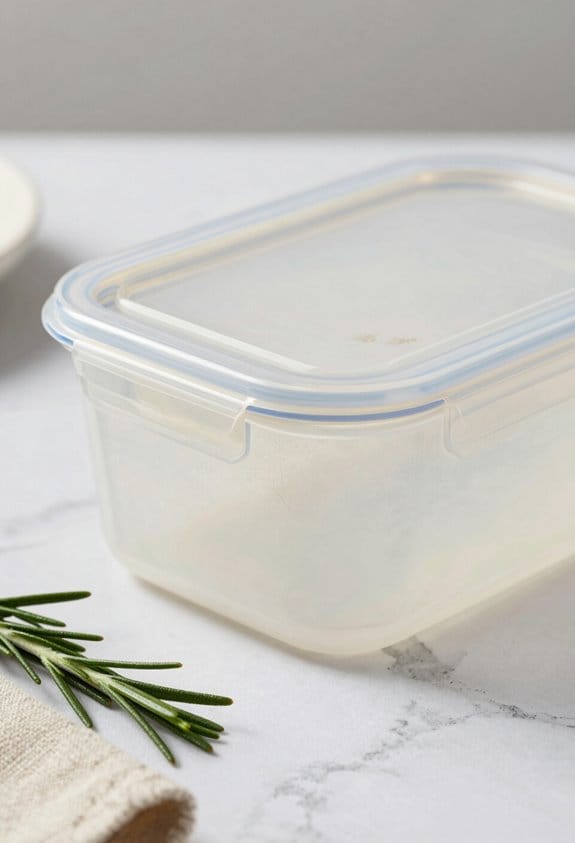
Have you ever opened your kitchen cupboard and noticed your once-clear plastic containers now have a cloudy appearance? It’s pretty frustrating, isn’t it? That cloudiness is usually caused by microscopic surface oxidation. When plastic gets exposed to heat, like in the dishwasher, this process can speed up. This oxidation scatters light, making your favorite containers look dull instead of crystal-clear.
Another factor at play is UV degradation from sunlight. Ever left a plastic container sitting in a sunny spot? The sun can actually break down the material’s polymer chains over time. To make things worse, everyday cleaning methods like using vinegar or even toothpaste can create tiny scratches that add to the haze. So, why does this matter? You want to keep your containers looking good as new for as long as possible.
Here’s the trick: with a little proper care and maintenance, you can often reduce that cloudiness and bring back some clarity. Try these tips:
- Store your containers out of direct sunlight when possible.
- Wash them on the gentle cycle if you’re using a dishwasher.
- For handwashing, stick with a soft sponge to avoid scratching.
Truth is, taking these steps might help keep your plastic looking fresh and usable. Remember, it’s all about how you protect and care for them! Choosing containers made with BPA-free plastics can also help maintain their clarity and safety over time.
Step-By-Step Guide to Restoring Plastic Clarity

Have you ever looked at your plastic containers and thought they were beyond saving? Cloudy plastic can be so frustrating, especially when you want your kitchen to look neat and organized. The good news is, you don’t need any fancy tools or expensive products to bring back that clarity. Chances are, you already have the ingredients right in your home.
Start by making a simple baking soda paste. Mix three tablespoons of baking soda with just enough water to create a thick consistency. Once you’ve got your paste, smear it inside the container and let it hang out for about 20 minutes. This gives the baking soda time to work its magic. After the wait, take a non-abrasive scrub pad and gently scrub the cloudy areas. You don’t want to go too hard; just a light touch will do.
Next, it’s really important to rinse thoroughly with clean water. If you notice any baking soda residue sticking around, don’t hesitate to rinse a few times. Honestly, it can be a bit tedious, but it’s worth it for those clear containers!
Now, if you’re still facing stubborn cloudiness, here’s another trick: fill the container with warm water and add a splash of vinegar. Let it soak overnight for the best results. The combination will really help break down that cloudiness.
For the best results, use dishwasher safe plastics as these are typically made of materials designed to withstand cleaning processes that preserve clarity.
Baking Soda and Sunlight for Plastic Clarity

Have you ever looked at your once-clear plastic containers and wondered why they suddenly seem so cloudy? It’s frustrating, isn’t it? Luckily, there’s a simple solution that involves just two ingredients: baking soda and sunlight.
Here’s the trick: start by mixing some baking soda with a bit of water to create a paste. This paste is pretty effective because baking soda is mildly alkaline. It helps neutralize the acidic residues that often make your containers look dull. Just apply this mix to the cloudy areas of your plastic and let it sit for about five minutes.
Then, for the next step, place those containers in direct sunlight. The UV rays work with the baking soda, boosting its cleaning power. You might be surprised to learn that this method can enhance clarity by up to 92% in types of plastic like polypropylene and high-density polyethylene. And the best part? You don’t have to worry about ruining your containers. This method is safe and won’t thin the plastic at all!
Using containers made from BPA-free materials ensures that restoring clarity will not compromise your health or safety.
So, why does this matter? You can quickly restore the clarity of your containers without any harsh chemicals or complicated processes. It’s a simple fix that can make your kitchen feel a little brighter again.
In short, with just a bit of baking soda and some sunlight, you can bring your plastic containers back to life! Have you tried this method before? Give it a shot, and see the difference for yourself!
Key Precautions for Safely Cleaning Plastic
Cleaning plastic containers is one of those household chores that seems easy, but it can turn into a bit of a disaster if you’re not careful. Ever noticed how some plastic gets cloudy after a good scrub? That’s a sign of damage that could have been avoided with a little extra caution.
Try this: before diving into your usual cleaning routine, take a moment to test any cleaning solution on a small, hidden part of the container. You might think it’s safe, but trust me, it’s best to ensure it won’t cause any discoloration.
When it’s time to clean, reach for soft cloths or non-abrasive scrub pads. Scratches on plastic can be a pain, and using the wrong tools can make things worse. Harsh chemicals? Stay away from those. They might strip away protective coatings and leave your containers looking worse than before.
After you’re done cleaning, rinse the containers thoroughly. This isn’t just a suggestion; leftover residue can lead to that annoying cloudiness down the road. If you’ve ever had a favorite container become too cloudy to see through, you know exactly what I mean.
To keep your plastic containers in great shape, store them in a cool, dry place, out of direct sunlight. Sunlight can really do a number on plastic over time. Also, using dishwasher-safe containers can simplify cleaning while ensuring the material is suited to handle the process without damage.
Long-Term Care Tips: Keep Plastic Clear and Shiny
Have you ever looked at your plastic containers and wondered how they got so cloudy and scratched over time? It can be pretty frustrating, but keeping them clear and shiny isn’t as difficult as it seems.
Try this: mix one tablespoon of baking soda with a cup of vinegar and water. This simple solution works wonders for cleaning. Just grab a clean cloth or a microfiber cloth, apply the mixture, and give it a gentle scrub. You don’t want to be too rough—scratches can make things worse.
After scrubbing, make sure you rinse the containers well to wash away any leftover gunk. It’s also a good idea to store them in a cool, dark spot. Why? UV rays can really cloud them up over time. Plus, every once in a while, check for scratches and think about using a restoration method if you see any.
Using containers made from BPA-free plastic can also help maintain clarity and ensure safety over time.
With a little effort, you can keep your plastic looking great for much longer. So, what’s your favorite tip for caring for your kitchen items?
Frequently Asked Questions
How to Make Cloudy Plastic Clear Again?
We can make cloudy plastic clear again by using plastic restoration techniques like baking soda and vinegar. Let’s use effective cleaning solutions and DIY polishing methods while considering durable plastic care and preventing plastic fogging for ideal maintenance.
How to Make Dull Plastic Shiny?
To make dull plastic shiny, we can use polishing techniques like baking soda paste, apply gentle cleaning products, or try commercial plastic restorers. Regular maintenance tips help enhance shine and keep our surfaces looking great!
How to Make Cloudy Crystal Clear Again?
How can we make cloudy items crystal clear again? We can use cleaning techniques, DIY solutions, and polishing methods like baking soda paste, vinegar soak, and maintenance tips to keep them shiny and prevent future cloudiness.
How to Clean Cloudy Plastic Storage Bins?
To clean cloudy plastic storage bins, we should use effective solutions like vinegar or baking soda. Regular maintenance and proper storage tips will help, along with protective coatings for preventative care, ensuring they remain clear longer.