As an Amazon Associate, we earn from qualifying purchases. Some links on this site are affiliate links at no extra cost to you. Our recommendations are based on thorough research and editorial judgment.


Descaling Your Kitchen Appliances With Vinegar: a Maintenance Guide

Ever notice how our kitchen appliances can start acting up if we don’t give them a little TLC? Descaling them with vinegar is an easy, eco-friendly way to keep everything running smoothly. Plus, it saves you from buying expensive cleaners packed with chemicals.
You may be interested



For your coffee maker, here’s the trick: mix equal parts vinegar and water, pour it into the reservoir, and let it sit for about an hour. After that, just run a brew cycle. You’ll be amazed at how much cleaner your coffee comes out.
If you need to give your dishwasher a refresh, just pour two cups of vinegar into it and run a cycle. It gets rid of all that annoying soap scum that can build up over time.
And for washing machines? The same vinegar mixture works wonders to clean the drum.
A quick note: you might want to avoid using vinegar on aluminum and certain electronic parts. It’s not a one-size-fits-all solution.
So, why does this matter? Keeping your appliances in check not only helps them run effectively but can also extend their lifespan. Honestly, who doesn’t want appliances that last longer and perform better?
Remember, it doesn’t take much effort to maintain what you already have. Just a few smart cleaning hacks can make a world of difference!
Have you tried descaling your appliances yet? What’s your go-to cleaning tip?
Key Takeaways
- Regular descaling with vinegar prevents limescale buildup, improving appliance efficiency and extending lifespan.
- Mix equal parts vinegar and water for effective descaling in coffee makers, washing machines, and kettles.
- For dishwashers, pour one cup of undiluted vinegar and run a full cycle without dishes.
- Avoid using vinegar on aluminum appliances and check user manuals for safety on stainless steel.
- Schedule descaling every 1-3 months based on water hardness and appliance usage frequency.
Why Regular Descaling Is Essential for Your Kitchen Appliances

When was the last time you thought about descaling your kitchen appliances? It’s one of those tasks that often falls off our radar. If you live in an area with hard water, you might notice that appliances like coffee makers and dishwashers just don’t work as well over time. Those stubborn limescale deposits can not only reduce how well your appliances heat up but can also lead to higher energy bills—up to 15% more, in fact!
So, what’s the solution? Descaling with vinegar is a great option! It’s eco-friendly and really gets rid of calcium and magnesium build-up. Try this: mix equal parts vinegar and water, run it through your appliance, and don’t forget to rinse thoroughly afterward. It might sound simple, but doing this every 1 to 3 months can save you from costly repairs down the line.
Honestly, who wants to deal with a broken dishwasher or coffee maker? By keeping up with this routine maintenance, you’re not just extending the life of your appliances; you’re also keeping your kitchen running smoothly. Regular maintenance techniques like using vacuum sealer machines can also preserve food longer and reduce waste.
Let’s make sure we take care of those hardworking gadgets! Have you scheduled your next descaling yet?
Overview of Appliances Suitable for Vinegar Descaling
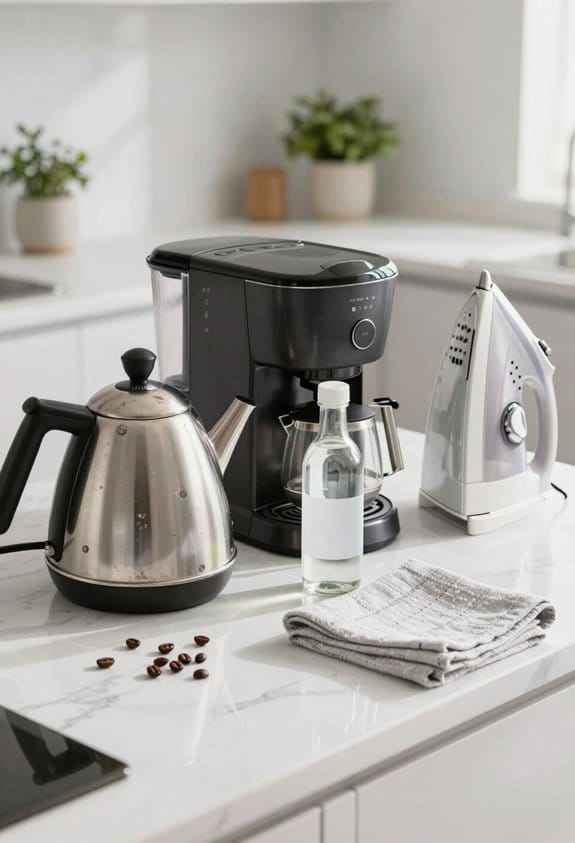
Descaling your kitchen appliances might feel like a daunting chore, but it’s not as tough as you think. If you’re dealing with pesky mineral deposits or hard water stains, vinegar is a trusty ally. For example, try this: pour two cups of white distilled vinegar into your dishwasher and run a low-heat cycle. This simple step helps break down soap scum and keeps your appliance running smoothly.
Think about your coffee maker for a second. You can give it a good clean by mixing equal parts water and vinegar. Just let that solution sit in the reservoir for 30 to 60 minutes before brewing. It’s a quick and effective way to keep the coffee flowing without the bitterness of old coffee oils and minerals.
Don’t forget about your washing machine! A cleaning cycle using the same vinegar mix can zap away detergent and mineral buildup. It’s like giving your washer a refreshing spa day. Just be cautious with aluminum parts or stainless steel surfaces—vinegar can do a number on those.
For organizing your cleaning schedule and tracking maintenance, using self-adhesive food storage labels on your appliances can help remind you when it’s time to descale again.
Step-by-Step Guide to Descaling Your Coffee Maker

Are you tired of sipping coffee that just doesn’t taste right? Chances are, your coffee maker needs a little TLC. Descaling it can be quick and easy, and it makes a big difference in the flavor of your brew.
Let’s dive into how to do it. Start by mixing equal parts white vinegar and water for your cleaning solution. You’ll want to fill the coffee maker’s reservoir with that mixture. Then, let it sit for about 30 to 60 minutes. This waiting time is crucial—it allows the vinegar to break down all that pesky mineral buildup that can affect your coffee’s taste.
After waiting, it’s time to run a brew cycle. This part helps flush out the grime while the solution works its magic. Once you’ve done that, don’t forget to run two more cycles with just plain water. This step is super important to make sure there’s no lingering vinegar flavor in your coffee. Seriously, you don’t want your morning cup tasting like a salad dressing!
For best results, aim to descale your coffee maker every one to three months. And here’s a quick tip: always give your coffee maker’s user manual a glance for any specific cleaning instructions it might have. Additionally, regular cleaning and maintenance is essential to ensure the longevity and optimal performance of your kitchen appliances.
How to Effectively Clean Your Dishwasher With Vinegar
Ever notice how your dishwasher can start to smell a bit funky? It’s definitely time to give it a little TLC. Cleaning your dishwasher with vinegar is super simple and really effective. Just grab a cup of undiluted white vinegar and pour it right into the bottom of your dishwasher, or put it in a bowl on the top rack. Then, run a full wash cycle—no dishes and no detergent needed.
The vinegar’s acidity works wonders, breaking down soap scum and mineral deposits that can build up over time. Honestly, doing this once a month can make a huge difference by keeping odors at bay and preventing hard water buildup. After the cycle is done, take a damp cloth and wipe down the inside. You’ll be surprised at how much debris comes loose!
So, why does this matter? Keeping your dishwasher clean not only helps it smell fresh but can also help it last longer. You don’t want to end up shelling out cash for repairs or a new machine when a quick clean can often do the trick. Regular maintenance like this supports durability and longevity of your appliances.
How to Safely Descale Your Washing Machine
Are you tired of your clothes not coming out as clean as you’d like? It might not be your detergent’s fault—it could be your washing machine. Just like our clothes, these appliances need a little TLC too. If you want to keep yours running efficiently, it’s time to descale it. Here’s a simple method that works wonders.
Try this: mix equal parts vinegar and water. This combo is surprisingly effective at breaking down mineral deposits and soap buildup that can can accumulate over time. Once you’ve got your solution ready, pour it right into the drum. For both front load and top load machines, running a regular wash cycle will do the trick.
Thinking about how often to do this? It’s a good idea to descale your washing machine every one to three months. Don’t skip checking your user manual for any specific instructions since some machines might have unique needs. After you’ve run the vinegar wash, pop in an extra rinse cycle with just plain water to wash away any residual vinegar. Keeping up with this cleaning routine can keep your washer running smoothly for years to come. Regular maintenance like descaling not only improves efficiency but also helps prevent buildup that can damage appliance components over time.
Best Practices for Maintaining Your Kettle and Teapot
Are you tired of your kettle or teapot looking a little worse for wear? If you’re using these appliances often, mineral buildup can sneak in and mess with how well they work. The good news is that keeping them clean doesn’t have to be a chore!
Here’s the trick: mix equal parts water and white distilled vinegar. For your kettle, fill it up with this solution, let it sit for about 30 minutes, and then boil it to dissolve all that pesky limescale. With teapots, just soak the inside with the vinegar solution for an hour; it’ll lift stains and odors from all those previous brews.
You might be wondering how often to do this. Aim for every 1-3 months to really keep that mineral buildup at bay and boost heating efficiency. After you’ve descaled, it’s crucial to rinse everything thoroughly with clean water. This simple maintenance could extend the lifespan of your kettle and teapot by as much as 50%! Using heavy-duty materials for your appliances can also help resist buildup and prolong their use.
Appliances to Avoid for Vinegar Cleaning?
Cleaning your kettle and teapot is pretty essential, but have you thought about what you shouldn’t clean with vinegar? It might seem like a go-to cleaner, but it’s not always the right choice for every appliance.
For instance, steer clear of using vinegar on aluminum appliances. It can actually corrode and damage the surface over time. As for stainless steel? Prolonged exposure to vinegar can lead to pitting, which is something you definitely want to avoid.
Microwaves can also be tricky. Specifically, the control panels are best kept away from vinegar. The acidity might harm the electronic components, leading to malfunctions. Internal electronics are particularly vulnerable; if some vinegar seeps in, it could spell disaster with corrosion or short circuits. Always double-check your user manuals to see if vinegar is a safe option for cleaning. So, why take the risk?
In the end, it’s all about keeping your appliances safe and sound, so make smart cleaning choices! What’s your go-to natural cleaner? Remember, certain materials, like high-carbon stainless steel, require careful maintenance to avoid damage during cleaning.
Tackling Common Cleaning Challenges With Effective Solutions
Cleaning kitchen appliances can seem like a daunting task, right? But don’t sweat it—vinegar is here to save the day. For your coffee maker, try mixing equal parts vinegar and water. Just let that solution sit for about 30-60 minutes before running a brew cycle. It’ll tackle those pesky coffee stains and build-up like a champ.
Now, if your dishwasher needs some TLC, here’s the trick: pour two cups of vinegar into the bottom and run a low-heat cycle. This helps dissolve soap scum without the need for harsh chemicals. And don’t forget to wipe down the surfaces with a soft cloth afterward! Keeping our appliances clean not only helps them work better but also saves us from costly repairs down the line.
So why does regular descaling matter? Honestly, it keeps everything running smoothly for a long time. Just a heads up—be mindful of aluminum parts, as vinegar can damage them. Also, using rust-resistant materials in your kitchen tools can prolong their lifespan when regularly cleaned.
In the end, tackling even the toughest cleaning challenges can be simple with the right approach. Have you tried using vinegar on your appliances? Give it a go, and you might be surprised at the results!
Other Kitchen Appliance Cleaning Solutions
Cleaning your kitchen appliances can feel like a daunting task, right? But it doesn’t have to be! If you’re tired of using the same old cleaning products, there are plenty of natural alternatives that can tackle the job just as well.
For starters, have you ever tried baking soda? It’s not just for baking! Mixing it with a little water creates a paste that’s perfect for scrubbing the insides of your oven and refrigerator. Just let it sit for about 15 minutes before rinsing off. You’ll be amazed at how fresh everything can smell!
Citric acid is another hidden gem. It works wonders as a descaler. Simply mix it with water and run it through your appliances to break down stubborn mineral build-up. It’s such a simple solution that often gets overlooked in favor of harsher chemicals.
And don’t forget about lemon juice. It has many of the same descaling benefits as vinegar. Just add two cups to your dishwasher and run a cycle. It’s a nice way to deal with soap scum, while also leaving a lovely scent!
Want another tip? Keep these natural cleaners on hand for routine maintenance. They’ll help keep your appliances running smoothly and looking their best. Steaming food with a bamboo steamer is also a fantastic eco-friendly cooking method that retains flavor without relying on oils. So, what’s your go-to method for keeping your kitchen tidy?
Incorporating Descaling Into Your Regular Cleaning Routine
Have you ever noticed how quickly mineral buildup can ruin your kitchen appliances? It feels like one day they’re working just fine, and the next, you’re dealing with strange tastes in your coffee or slow boiling kettles. Adding descaling to your regular cleaning routine can really help keep things running smoothly.
Here’s the trick: mix equal parts vinegar and water in a solution. It’s a simple and effective way to tackle those stubborn deposits that come from hard water. You might want to think about scheduling this every 1-3 months depending on how hard your water is and how frequently you use your appliances.
When you run this vinegar solution through your coffee maker, dishwasher, or kettle, it can do wonders. It not only helps dissolve those annoying mineral deposits but also freshens things up, getting rid of any lingering odors from previous uses. You’ll probably notice your dishes tasting better and heating efficiency issues disappearing as well.
So, if you’re looking for an easy way to keep your appliances in top shape, try setting a reminder to incorporate this little step into your cleaning routine. It’s such a simple fix that’ll really help your appliances last longer and function better.
How often do you check and clean your appliances? Making descaling a regular part of your routine can really pay off in the long run! Ensure you follow proper cleaning and care methods to maintain appliance longevity and efficiency.
Frequently Asked Questions
Can You Clean Kitchen Appliances With Vinegar?
Think of vinegar as our kitchen’s gentle rescue squad! Yes, we can clean our appliances with it. It’s an eco-friendly, cost-effective solution that boosts kitchen hygiene while ensuring appliance safety without harmful chemicals.
How Long Does It Take for Vinegar to Dissolve Limescale?
Vinegar’s effectiveness in limescale removal typically ranges from 30 minutes to 2 hours, depending on buildup severity. Regular cleaning every few months guarantees appliance safety, while heating time can enhance its descaling power.
What Appliances Need Descaling?
Did you know that nearly 80% of households deal with hard water? We need to descale our coffee machines, dishwashers, electric kettles, steam irons, and water softeners regularly to guarantee they perform efficiently and last longer.
What Is the Ratio of Vinegar to Water to Clean Stainless Steel?
To clean stainless steel, we recommend a 1:1 dilution ratio of vinegar to water. This eco-friendly solution enhances appliance longevity while utilizing vinegar benefits for effective cleaning metals and minimizing environmental impact. Let’s keep our appliances shining!