As an Amazon Associate, we earn from qualifying purchases. Some links on this site are affiliate links at no extra cost to you. Our recommendations are based on thorough research and editorial judgment.


Keto Meal Prep: Storage Tips for High-Fat Foods

When it comes to prepping keto meals, the struggle is real when it comes to storage. You want your high-fat foods to stay fresh without spoiling too quickly, right? Here’s the trick: opting for airtight containers made of glass or BPA-free plastic can really make a difference. They’re perfect for locking in freshness and keeping everything organized.
You may be interested

If you’re thinking about freezing some of your meals, I can’t stress enough how important it is to cool things down first. Sticking them right in the freezer at 0°F or lower without letting them cool can lead to freezer burn and nobody wants that!
Plus, don’t forget to take a moment to label your containers with their contents and dates. It’s a small step that helps avoid confusion when you’re rummaging through the freezer later.
Also, consider using vacuum-sealed bags for those meals you want to store for a longer period. They can significantly extend shelf life and keep your meals tasting great.
So, why does this matter? Because nobody has time for food waste or mystery meals when hunger strikes!
Follow these storage tips to make your meal prep a breeze and save yourself from any last-minute scrambling. In short, proper storage is vital for keeping your keto meals fresh.
What’s your go-to tip for meal prep?
Key Takeaways
- Use airtight glass or BPA-free plastic containers to prevent oxidation and maintain the quality of high-fat foods during storage.
- Vacuum-sealed bags can significantly extend shelf life by eliminating air and reducing the risk of freezer burn.
- Label containers with meal names and dates to track freshness and ensure timely consumption of stored meals.
- Cool meals to room temperature before freezing to minimize condensation and avoid ice formation.
- Store high-fat foods like cheeses and avocados separately to prevent moisture transfer and maintain optimal freshness.
Importance of Proper Storage for Keto Meal Prep
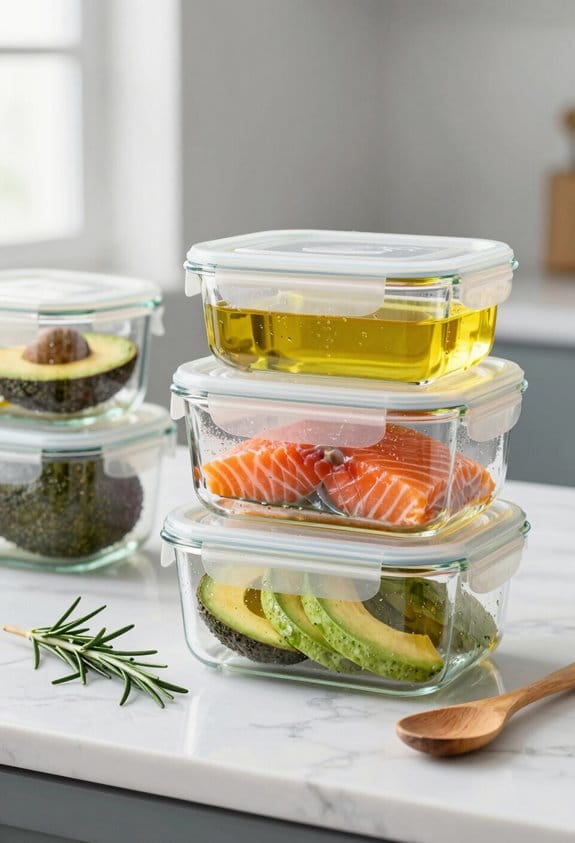
When you’re prepping keto meals, have you ever thought about how important proper storage really is? High-fat foods can spoil pretty quickly if they’re not stored correctly. Keeping everything in airtight containers is a must; it helps to lock in the quality and limits air exposure that can lead to rancidity.
It’s also smart to store things like avocados, cheeses, and nut butters separately. Why? Because moisture transfer can really mess with the freshness of these items. Make it a habit to keep your refrigerator at 40°F or below to slow down any bacterial growth.
Here’s the trick: when you’re freezing meals, be sure to label everything and remove excess air from bags or containers. This simple step can help extend their shelf life significantly. And don’t forget to check your food regularly for any signs of spoilage.
Storing your foods the right way not only keeps them fresh but also helps maintain their nutritional value. For best results, choose containers with airtight seals to preserve freshness and prevent leaks. So, how will you store your next keto meal prep?
Best Containers for Storing High-Fat Keto Foods

Ever wonder how to keep your keto meals fresh and tasty? When it comes to storing high-fat foods, choosing the right container can make all the difference.
Glass containers are a solid choice if you want to avoid any lingering smells. They can also handle temperature changes without a hitch, so you won’t have to worry about them breaking when you move them from the fridge to the oven. If you’re looking for something lighter, try airtight plastic containers. Make sure to get ones with secure lids to keep air out.
One option that shouldn’t be overlooked is vacuum-sealed bags. These work wonders for extending shelf life since they remove all the air, which really helps prevent freezer burn. Silicone storage bags are worth considering too—they’re reusable, easy to clean, and they create airtight seals for your food.
So, why does this matter? It’s all about freshness and keeping your high-fat foods safe to eat. Remember to label each container with the contents and the date you froze it. This little trick helps you keep track of what you’ve prepped and ensures nothing gets lost in the back of your freezer.
Choosing containers with a stackable design can also help you maximize your storage space and keep your kitchen organized.
In short, make the right choices with your containers, and you’ll soon have a solid system for storing your keto meals! What’s your go-to method for keeping your food fresh?
Tips for Preventing Oxidation and Moisture Loss
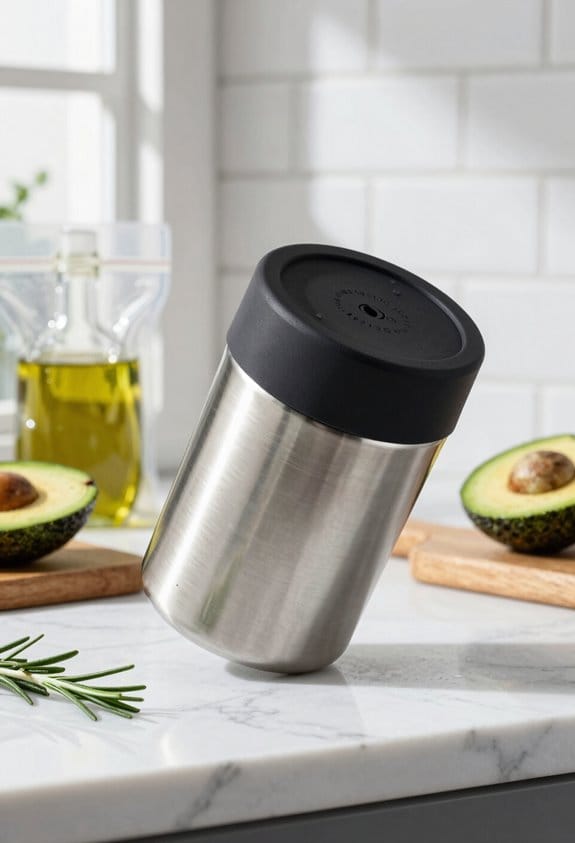
Have you ever opened your fridge to find your favorite avocado looking sad and brown? It’s frustrating, right? That’s why it’s super important to keep our high-fat foods as fresh as they can be by preventing oxidation and moisture loss.
One of the simplest tricks is to use airtight containers for your meal prep. They really do limit air exposure, which is a big culprit in spoilage. Vacuum-sealed bags are also fantastic. They not only eliminate air but can keep your food tasting fresh way longer. If you’re storing high-fat foods in the fridge, that’s a smart move! It helps slow down both oxidation and moisture loss, which can really extend their shelf life.
When it comes to things like sliced avocados, there’s an easy fix—just add a little lemon juice! This creates an acidic barrier that helps prevent browning. Remember, it’s always a good idea to check the packaging dates and consume your foods before they expire to keep that quality up. Using appliances with precise temperature control, such as sous vide machines, can further enhance food preservation by maintaining optimal cooking and storage conditions.
Quick and Safe Ways to Thaw Frozen Keto Meals?
Thawing frozen keto meals can sometimes feel like a race against time. We’ve all been there—staring at a frozen dish when you’re hungry and ready to eat. So, what’s the best way to thaw that food quickly and safely?
The microwave’s defrost setting is probably the quickest option, but keep in mind you need to cook the food right after. This is all about preventing bacterial growth, which isn’t something anyone wants to deal with.
If you prefer a method that doesn’t involve the microwave, give the cold water method a shot. Just make sure your meal is sealed in waterproof packaging. Submerge it in cold water and remember to change the water every 30 minutes to keep it chilly.
For those really busy days, you can also cook your meals straight from the freezer, but just be ready for longer cooking times—about 50% more than usual. And whatever you do, steer clear of using warm or hot water for thawing. It can mess with food safety, and nobody wants that drama.
One last tip: if your meals include sauces, try to thaw those separately. It helps maintain a better texture overall.
Additionally, using a pressure cooker with multiple safety features and precise temperature control can help you cook frozen keto meals efficiently and safely. This approach often reduces cooking time while maintaining food quality thanks to pressure cookers’ versatility.
In short, thawing frozen keto meals doesn’t have to be a hassle. It’s all about choosing the right method for your schedule. What’s your go-to approach for thawing meals?
Essential Freezing Tips for High-Fat Foods
When it comes to freezing high-fat foods, a little prep can make a big difference. Have you ever pulled something out of the freezer only to find it’s not quite what you remember? That’s why packing these foods in airtight containers is essential to protect against oxidation and freezer burn.
If you’re freezing meats like bacon or ground beef, it’s a good idea to separate them into individual portions. This makes thawing much easier down the road when you’re ready to cook up something tasty. And here’s a tip: before you pop any rich meals in the freezer—like casseroles or soups—make sure they cool to room temperature. This helps cut down on condensation, which can lead to that dreaded freezer burn.
Don’t forget to label your freezer bags with the meal name and the date you froze them. You know how it is—you might not remember what you made a month later! Most high-fat foods can be stored comfortably for about six months, but check that you’re using the oldest ones first to avoid waste.
Now, about those dairy-heavy dishes: they can get grainy when you thaw them out. So, what’s the better option? Consider freezing sauces separately. They’ll still add that creamy goodness to your keto meals without the hassle of weird textures.
In the end, these tips can really help you enjoy your favorite high-fat foods without any surprises. Have you tried freezing high-fat meals before? If not, why not give it a shot?
Using airtight sealing mechanisms in your containers is key to extending freshness and preventing freezer burn, so be sure to choose containers that seal tightly.
How to Store Meals at the Right Temperature
Have you ever popped a meal in the freezer, only to discover it’s lost its flavor by the time you’re ready to eat it? Storing high-fat meals isn’t just about shoving them into a container; it can make or break your keto game. You want to keep your fridge at 40°F or lower. This helps stop any nasty bacteria from growing in your fatty foods. For the freezer, aim for 0°F or below to keep everything tasting fresh.
When you’re ready to store your meals, go for airtight containers. They’re a lifesaver when it comes to locking in moisture and keeping out any unwanted smells. And here’s a tip: always label your meals with the date and what’s inside. It makes tracking expiration simple and guarantees you enjoy your meals at their peak freshness. Opting for BPA-free plastic containers ensures meal safety and reduces exposure to harmful chemicals during storage.
Frequently Asked Questions
How to Eat High Fat on Keto?
So, we’re not just munching on bacon, right? For keto goodness, let’s embrace healthy fat sources, practice portion control, and explore recipe ideas. From grocery shopping to dining out, flavor enhancers make all the difference!
What Are Common Keto Meal Prep Mistakes?
We often face keto meal prep mistakes like rushing, ignoring macros, and underestimating portion sizes. We shouldn’t forget nutrient balance or adequate meal variety, while being mindful of excessive snacking and poor food storage.
Can You Store Fat While in Ketosis?
Yes, we can store fat while in ketosis! Understanding ketosis misconceptions helps us navigate fat storage options, ensuring metabolic flexibility and energy sources balance. With proper dietary fat, we maximize ketogenic benefits and address ketosis challenges effectively.
What Are the Best High Fat Foods for Keto Diet?
When it comes to the keto diet, we’ve got our favorites! Think avocados for their benefits, coconut oil, delicious cheese varieties, fatty fish, nut butters, olive oil, dark chocolate, diverse seeds, yogurt types, and pork belly.


