As an Amazon Associate, we earn from qualifying purchases. Some links on this site are affiliate links at no extra cost to you. Our recommendations are based on thorough research and editorial judgment.

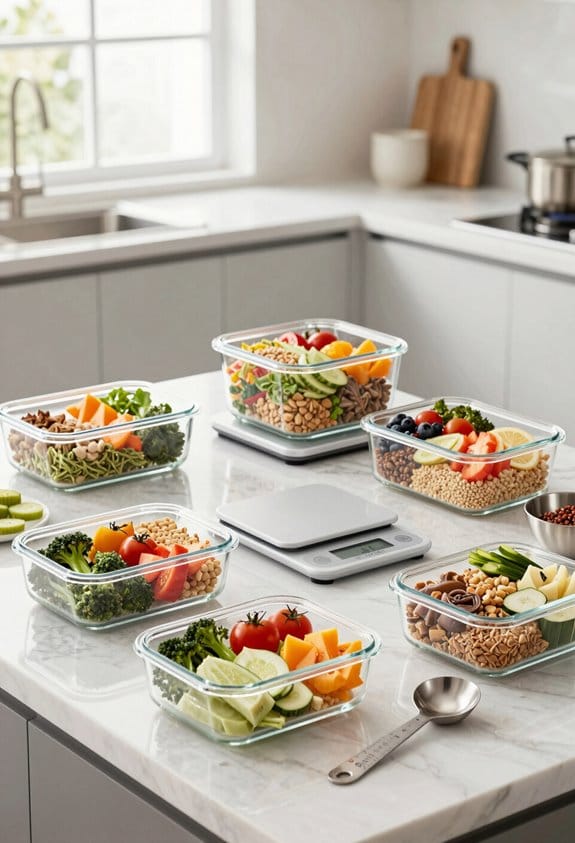
How to Portion Bulk Meals Evenly Across Multiple Containers

Have you ever found yourself overwhelmed with cooking a big batch of food, only to struggle with how to divide it evenly into containers? It can be a real headache trying to get the portions just right, but I’ve got some tried-and-true tips to make it easier.
You may be interested

To start, grab a kitchen scale and weigh your total food. It’s simpler than you might think! Once you have that number, divide it by the number of containers you plan to use. For instance, if you’re working with 2 pounds of food and you have 4 containers, you’re looking at about 8 ounces per container.
Just remember to use the tare function on your scale to ignore the weight of the containers themselves—that’s a handy feature!
After you’ve portioned everything out, double-check the weight of each serving. It’s honestly one of those small steps that can save you some frustration later on. Doing this will help ensure that everyone gets a fair share and no one’s left feeling shortchanged at mealtime.
So, why does this matter? Well, meal prepping can be a real time-saver during busy weeks. And by mastering this skill of portioning, you’ll not only save time but also help manage your grocery budget better.
In the end, it might take a little practice, but it’s worth it. Remember, dividing meals doesn’t have to be stressful. What’s your go-to method for portioning meals?
Key Takeaways
- Weigh the bulk meal on a kitchen scale to determine the total weight before portioning.
- Calculate the target weight per portion by dividing the total weight by the number of containers.
- Use the tare function to exclude the container’s weight when measuring each portion.
- Fill each container while adjusting portions to meet the target weight, checking accuracy along the way.
- Label each container with contents and expiration dates for effective organization and food safety.
The Importance of Portioning Bulk Meals
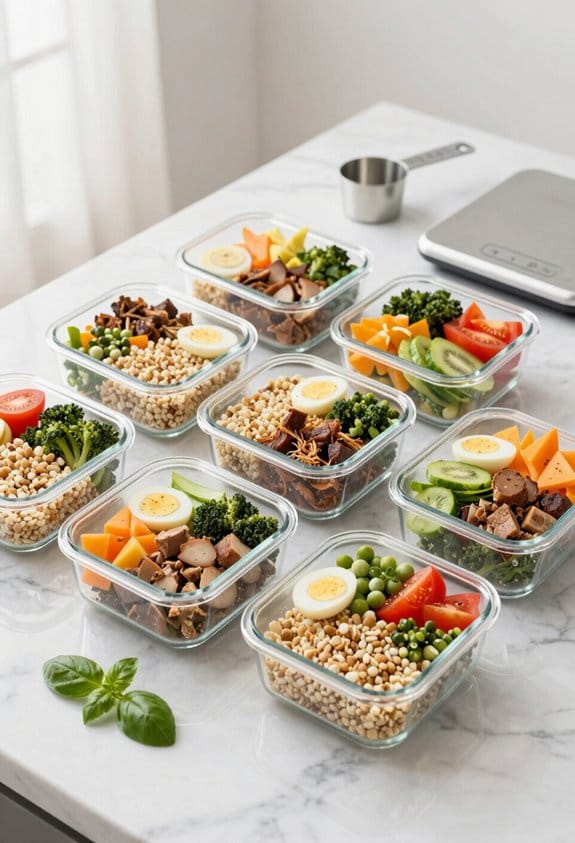
Ever find yourself staring into a massive pot of food, wondering how to make sure you don’t end up munching way more than you should? Portioning bulk meals is trickier than it sounds, but it’s all about understanding everyone’s needs to keep meal times balanced and healthy.
When you’re in the kitchen, it helps to think about the right portion sizes. Using kitchen scales to measure your ingredients can really make a difference. It’s easy to accidentally overdo it, especially when you’re serving yourself from a big pot. By weighing out your food, you’ll avoid that sneaky habit of overindulging.
Meal prepping is where the magic happens. When you set aside time to divide meals into equal portions, it means you’re less likely to snack mindlessly throughout the week. You can pack those balanced meals into containers, ready to go whenever hunger strikes.
Here’s a quick tip: Think about how you want to split your meals. Some people prefer three larger meals a day, while others do better with five smaller ones. Whatever works for you, just make sure those portions stay consistent. And you know what’s great? Once you have those meals portioned out, it’s a lot easier to stick to them without feeling tempted to go back for seconds—or thirds!
Using airtight food storage containers can help maintain the freshness of your pre-portioned meals throughout the week.
Step-By-Step Methods for Evenly Dividing Your Dishes

Ever tried portioning out your meals only to end up with some containers filled to the brim and others barely half full? It can be a real hassle, especially when you’re trying to stick to a meal plan. Thankfully, I’ve got a simple method to help you divide your dishes evenly every time.
Start by weighing your bulk meal; a kitchen scale is your best friend here. Once you know the total weight, divide that number by how many meal prep containers you have. This will give you a target weight for each portion, making it a whole lot easier to stay on track.
Now, here’s the trick: use the tare function on your scale. By doing this, you can weigh each container on its own without worrying about its weight messing with your meal’s measurement. As you pour the meal into each container, adjust the amounts as necessary to hit that target weight. It might take a little back and forth, but soon you’ll have everything balanced out.
After you’ve filled them all up, double-check that every container matches your target weight. This step is super important, not just for portion size but also for food safety. Now you’re all set with your delicious batch-cooked meals, ready to enjoy throughout the week! Choosing microwave and dishwasher safe containers can make reheating and cleaning your meals even more convenient.
How to Use a Kitchen Scale for Perfect Portions
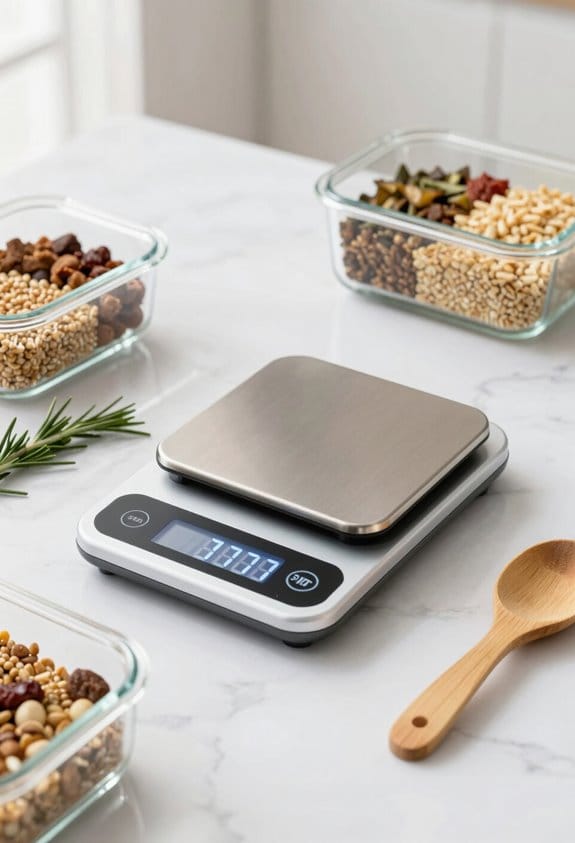
Portioning meals can feel like a hassle, especially when you’re trying to get everything just right. That’s where a kitchen scale comes in handy! First, weigh your empty containers to know their tare weight. Trust me, this is crucial; you only want to measure the food itself, not the container.
Next, weigh the entire batch of your meal. It’s a simple step, but jotting down that total weight really pays off later. To get the weight per serving, just divide the total weight by how many servings you want. For example, if you’ve got 1500 grams of food and you’re aiming for 5 servings, that means you need 300 grams in each container.
As you start filling those containers, check your portions with the scale. Don’t hesitate to adjust as needed; it’s part of the process. And honestly, with a bit of practice, you’ll find meal prep becomes a lot quicker and more accurate. Using a scale with a tare function simplifies these measurements by allowing you to reset the weight to zero after placing each container.
Visual Estimation Techniques for Quick Portioning
Ever find yourself stuck trying to portion out food quickly? It can feel like a real hassle, especially when you’re juggling meal prep for the week. One technique that really helps is the Eye Method. It’s all about starting with small amounts and learning to adjust based on what you see. As you keep practicing, you’ll get a better feel for those portion sizes.
For items like muffins or other baked goods, an easy trick is to divide the whole mixture into equal sections. This way, you know each portion’s going to be the same, which is great for presentation and for consistency in taste.
Another tip? Consider using different-sized containers for different food groups. It’s a simple way to keep your bulk meals balanced, whether you’re dishing out proteins, carbs, or veggies. Sure, getting those portions perfect might take a little trial and error, but with practice in your batch cooking and meal prep, you’ll find your rhythm.
Using mixing bowls that come in variety of sizes can greatly assist in measuring and organizing ingredients for portioning.
How to Adjust Portions for Different Meal Types?
When it comes to preparing meals, adjusting your portions can often feel like a puzzle. Have you ever cooked a big batch of casserole only to realize you have no idea how to divide it up? For dishes like casseroles, just divide the total weight by how many servings you want. This way, every container has the same amount, and you won’t end up with one person getting a massive helping while someone else gets a tiny bit.
Now let’s talk about soups and stews. Those can get tricky because they can lose moisture as they cook. That’s why it’s a smart idea to re-weigh your dish before dishing it out. This helps you stay accurate with your portions based on the final weight, not just what it was before you popped it in the pot. And if you stick to uniform container sizes, you’ll breeze through this whole process and reduce waste, which is a win-win!
A kitchen scale can really be a lifesaver for this. It helps you measure portions accurately, making sure each serving is similar in calories and nutrients. And don’t forget, you need to adjust your volumes based on the texture of your food; measure liquids in milliliters and solids in grams. This simple practice keeps your servings consistent, making meal prep less stressful overall.
Honestly, it all boils down to being mindful of what you’re serving. When you start tracking portions like this, you’ll notice how much more balanced your meals become. So next time you whip up something delicious, remember, a little attention to detail can make a huge difference in your meal planning! Using airtight containers can also help maintain portion freshness and prevent spills when storing your meals. What changes can you make to keep your portions on point?
Best Practices for Keeping Meals Fresh and Safe
Have you ever opened your fridge and found yesterday’s leftovers turned into an unrecognizable mess? Keeping bulk meals fresh and safe can be a real challenge, but with a few simple strategies, you can avoid those culinary surprises.
First off, proper storage techniques are key. It’s a good idea to invest in some airtight containers. These really do help keep moisture and air out, which is crucial for preventing spoilage and bacteria growth. Trust me: you don’t want to deal with that!
When you’re packing up those meals, make sure to label them with the date you prepared them. This isn’t just for fun; it ensures food safety and helps you use older meals first. Try to eat leftovers within 3-4 days to reduce the risk of foodborne illnesses. If you’re thinking about freezing portions, go for freezer-safe containers. They’re a great way to avoid freezer burn and keep your meals delicious.
Here’s a trick: consider using color-coded labels to make organizing even easier. This can really help you quickly identify what’s inside each container, saving you time when you’re hungry and ready to eat.
For even longer preservation, consider using vacuum sealer bags which remove air and help extend shelf life.
So, why does all this matter? It’s about enjoying your meals while keeping them safe and fresh for longer. Following these practices can make a big difference in how your food lasts in your fridge or freezer.
In the end, a little effort in storage can go a long way. What’s your go-to method for keeping leftovers fresh?
Tips for Storing and Organizing Meal Prep Containers
Are your meal prep containers taking over your fridge? It’s so easy for things to get chaotic, especially when you’re trying to juggle leftovers and meal prep. One simple way to tackle this is by using consistent container sizes that fit your meals. Sticking to similar sizes can help cut down on waste and makes it so much easier to find what you need. While glass containers are fantastic for reheating and work well with acidic foods, lightweight plastic options are convenient for meals on the go.
You might find it helpful to create a color-coded system for your containers. It’s a practical way to keep track of what’s in each one. Plus, it makes life easier when you label each meal with waterproof write-on labels, so you know what’s in there and when it expires. Here’s the trick: designate specific spots in your fridge for different categories, like proteins, veggies, and grains. This not only improves accessibility but also keeps your food fresher longer.
Honestly, a little organization can save you so much time and stress when you’re trying to eat well. So, next time you’re packing up your meals, think about how you can streamline your system. Using leakproof containers will also help in maintaining meal quality during storage and transport. What’s your best tip for keeping meal prep containers in check?
Frequently Asked Questions
What Is the 5 4 3 2 1 Food Rule?
The 5 4 3 2 1 food rule guides us in healthy eating by promoting balanced nutrition through portion control. It recommends we include five veggies, four grains, three proteins, two healthy fats, and one fruit in meals.
What Is the 2 2 2 Rule for Food?
Ever wondered how we can simplify our meal sizing? The 2 2 2 rule helps us achieve balanced nutrition with portion control by incorporating two proteins, two carbs, and two veggies for effective food management.
What Is the 80 20 Rule for Meals?
The 80/20 rule for meals means we prioritize healthy eating, ensuring 80% of our food comes from nutrient-dense sources. This nutrition strategy allows us portion control while enjoying treats without feeling deprived during meal planning.
What Is the 40/30/30 Meal Plan?
The 40/30/30 meal plan promotes meal macronutrient balance, emphasizing carbohydrates, protein, and fats. It’s a great approach for meal prep strategies, providing balanced diet benefits through nutritious food choices and aligning with various nutritional guidelines comparisons.


