As an Amazon Associate, we earn from qualifying purchases. Some links on this site are affiliate links at no extra cost to you. Our recommendations are based on thorough research and editorial judgment.

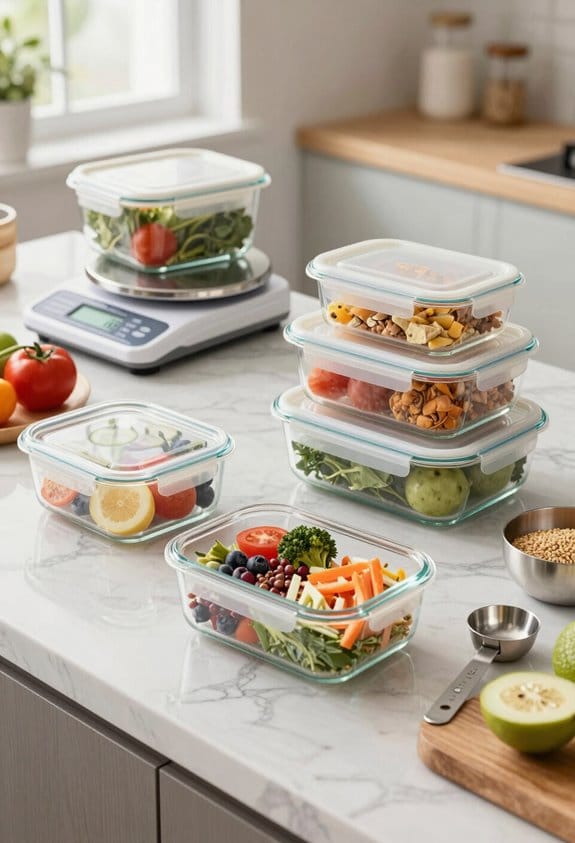
How to Identify if Your Leftovers Have Gone Bad (Look, Smell, and Taste Test)

Have you ever opened your fridge, stared at those leftovers, and wondered if they’re still safe to eat? It’s a common dilemma. Knowing how to tell if food has gone bad can save you from a nasty surprise, so let’s break it down.
You may be interested



First up, take a good look at your leftovers. If you spot any slimy film or odd discoloration, that’s a strong sign it’s time to say goodbye. We’ve all been there, thinking, “It looked fine yesterday!” But trust me, looks can be deceiving.
Next, give it a sniff. You know that foul odor? Yeah, if it’s wafting towards you, it’s usually a clear sign to toss it out. Our noses can be pretty reliable when it comes to detecting spoiled food.
When it comes to texture, feel for anything sticky or mushy. If it doesn’t feel right, it probably isn’t. Unfortunately, we can’t rely on taste here—better to chuck it than to risk an upset tummy.
So, why does this matter? Following these simple checks can help you avoid food poisoning and keep your meals safe. If you still aren’t sure, play it safe and get rid of anything questionable.
In the end, it’s all about being smart with your food. What’s your favorite tip for ensuring your leftovers stay fresh?
Key Takeaways
- Inspect leftovers for any unusual textures, such as sliminess or stickiness, indicating spoilage.
- Trust your nose; funky or rancid odors are strong indicators that food has gone bad.
- Look for discoloration in food, with pale or greenish tones often signaling that it should be discarded.
- Check for mold on the surface and under lids; toss soft foods with visible mold to avoid health risks.
- Always err on the side of caution and discard any food that seems suspicious or has been in the fridge for over 3-4 days.
Signs of Food Spoilage: How to Spot a Slimy Film
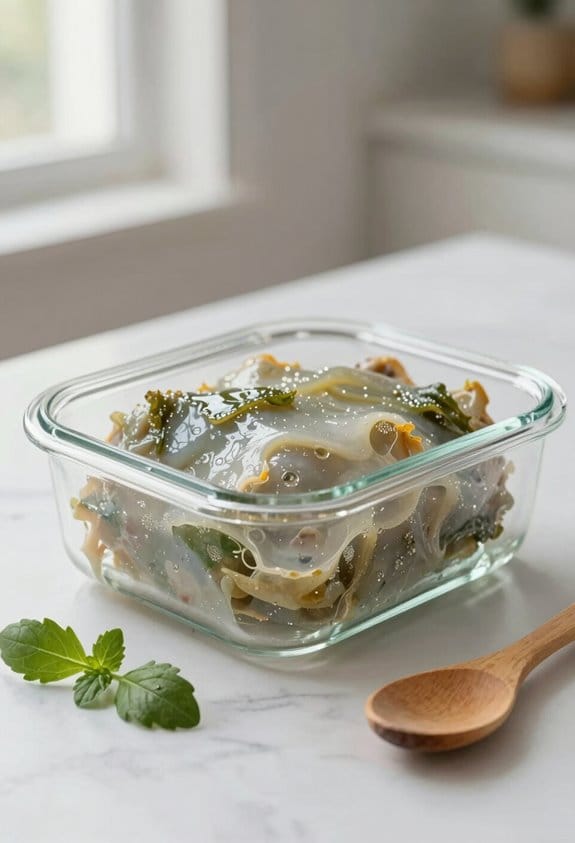
Have you ever opened your fridge and spotted a weird, slimy film on your leftovers? Trust me, it’s a real bummer, especially when you realize it’s a sign that your food has gone bad. This slick coating often pops up on things like lunch meats, roasts, and even veggies. If you see that texture, it’s pretty clear that it’s time to say goodbye to that meal.
Foods that have a glossy sheen might also be giving you hints they’re no longer fresh. Here’s the trick: Take a second to touch your leftovers. If they feel slick or slimy, don’t hesitate—just toss them out. Bacteria might be having a party on that food, and you definitely don’t want to join in. To help keep your leftovers fresh longer and avoid spoilage, consider storing them in leakproof reusable bags that maintain airtight conditions and reduce contamination risk.
Trust Your Nose: Recognizing Funky Odors
Ever opened your fridge and cringed at some leftover food? It’s a common dilemma, and figuring out if those leftovers are still good can be tricky. Trust me, your nose is one of the best tools you have for this.
Funky odors are often a telltale sign that something’s gone bad. If you catch a whiff of something unpleasant, it’s probably time to toss that food. Harmful bacteria can thrive in spoiled food, and you don’t want to risk a stomach ache or worse. A rancid smell? That should definitely raise some red flags. In most cases, you really can’t rely on just looking at the food to judge its freshness; that bad smell often points to spoilage that isn’t visible yet.
So, what should you do? Make it a habit to give your leftovers a good sniff before you dig in. If it smells way worse than when you first stored it, err on the side of caution and say goodbye to it.
Honestly, this little habit can save you from potential foodborne illnesses. Remember, when it comes to food safety, your senses can be your best defense. So, the next time you face that fridge full of leftovers, take a moment to trust your nose. What’s the worst that could happen if you take a whiff?
Also, maintaining your refrigerator at ideal temperatures below 40F can help slow down spoilage and keep food fresh longer.
Identifying Mold: What to Look For
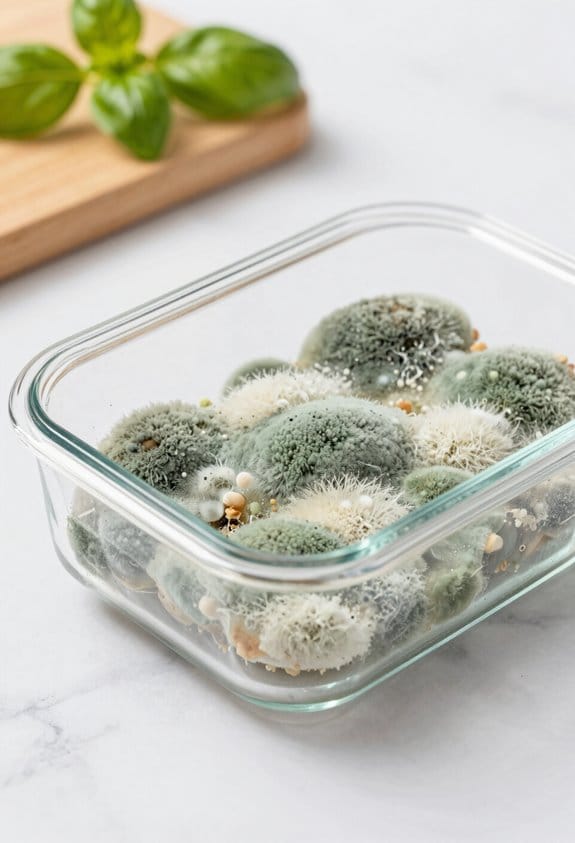
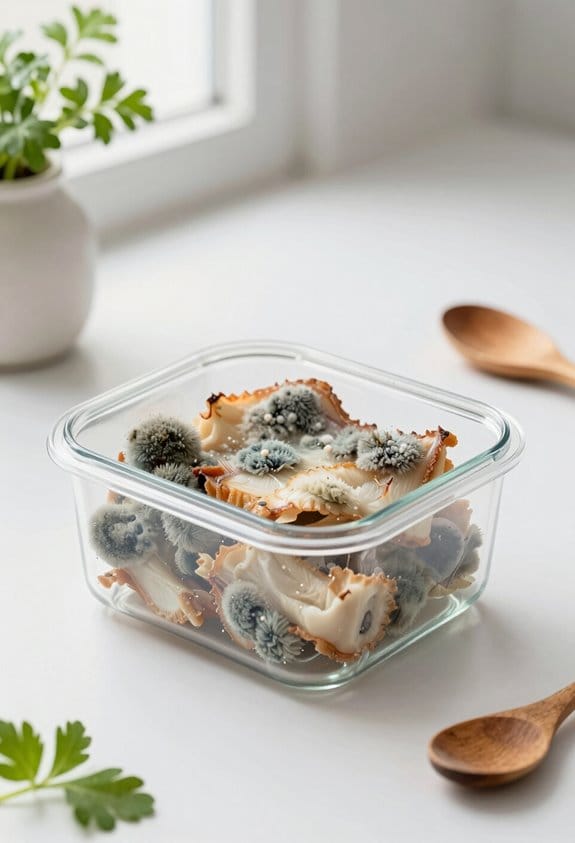
Identifying mold on your leftovers can feel like a daunting task. Have you ever opened up your fridge, only to be met with a fuzzy surprise on last week’s dinner? Mold can show up in all sorts of colors, like white, green, or black, and it loves to hide in tricky places.
When you’re checking for mold, don’t just peek at the tops of your food. Take a moment to check under containers and Tupperware lids too. Mold can easily find a cozy spot to grow where it’s not so obvious.
Now, if you find mold on soft foods—think of your leftover pasta or some ripe berries—just toss them in the trash. It’s a good rule of thumb to discard these entirely. On the other hand, if you spot mold on firm fruits and veggies, like carrots or apples, you might be able to cut away the moldy part. But be cautious! Truth is, eating moldy food can have health consequences you definitely want to avoid.
So, why does this matter? Keeping an eye on your leftovers not only helps reduce food waste but also keeps you safe. Nobody wants to deal with an upset stomach because of a bite of moldy food! Be diligent, and remember that if it looks suspicious, it’s better to be safe than sorry. Proper cleaning and maintenance of food storage containers can help prevent mold growth.
Assessing Off Textures in Leftovers
Ever opened your fridge and found leftovers that looked kind of sketchy? Trust me, you’re not alone. It’s easy to get busy and let things linger a bit too long, but checking your leftovers is crucial to avoid foodborne illness. One of the key things to look out for is the texture.
Spoilage is often revealed through unexpected texture changes. Take, for instance, soft or mushy fruit—if that apple feels less like a crisp snack and more like a soggy sponge, it’s probably time to toss it. And if you’ve got leftover pasta that’s sticky or clumped together, that’s another sign that you might want to let it go. You also need to watch for that slimy feeling in veggies or salads; that’s a clear warning that they’re no longer safe to eat. Plus, gritty or unusual textures can indicate even more spoilage, so trust your senses. If something feels off, don’t hesitate—better safe than sorry!
Here’s the trick: always assess the texture alongside how your food looks and smells. If you notice anything that just doesn’t sit right, listen to that gut feeling. It could save you from a nasty surprise later. Keep in mind, just because something smells okay doesn’t mean it’s still good to eat if the texture is off.
All in all, checking your leftovers should become part of your routine. It not only helps keep you safe but can also make your fridge a much friendlier place! So, next time you’re rummaging through, ask yourself: does this still feel right? You’ve got this!
For efficient food preservation, consider using tools like compact citrus juicers that help extract fresh juice to add flavor and acidity, which can prolong freshness.
Discoloration: Signs Your Food Has Lost Freshness
Have you ever opened your fridge to find leftovers that looked a little off? It’s not just about the smell or texture—color can tell you a lot too. Discoloration is often a big red flag that your food has gone bad. For example, if you spot pale or greenish-tinted dishes, that usually means it’s time to toss them. And while avocados do brown, if you notice significant discoloration beyond that, it’s probably better to say goodbye to them as well.
Fresh foods usually have vibrant colors—think bright greens or deep reds. They’re more likely to be fresh and safe to eat. So, if you see any inconsistency in color and it’s paired with strange smells or weird textures, it’s best to ditch those leftovers. Trust me, it’s not worth taking a chance when it comes to your health.
So, why does this matter? Discolored food isn’t just unappetizing; it can be a signal that it’s spoiled. Honestly, it’s always a good idea to err on the side of caution in your kitchen. You don’t want to risk foodborne illnesses over something that might seem benign at first glance. Using proper vacuum sealer bags can help extend the freshness and prevent discoloration of your stored leftovers.
Are Frosty Frozen Foods Still Safe to Eat?
Ever find yourself wondering if the frozen foods in your freezer are still safe to eat? It can be a bit of a puzzle, right? Just because you see some frost or ice crystals doesn’t automatically mean they’re a no-go. Sure, frost might hint at freezer burn, but it doesn’t always mean food is spoiled.
When you pull items out of the freezer, take a good look. Are there any off odors? Does the texture seem odd? These can be signs of spoilage. It might feel tedious, but inspecting each item is worth it to avoid surprises at mealtime. And for the future, remember that proper packaging can really help keep that frost at bay and flavors intact.
When it comes time to reheat your frozen treats, make sure everything reaches the proper cooking temperatures. This step is crucial because it kills any bacteria that might be hanging around. If, after thawing, something smells funny or looks off, don’t hesitate—it’s best to toss it. Your health is too important to gamble with. Using vacuum sealer bags can significantly extend the shelf life of frozen foods and reduce freezer burn.
When in Doubt, Should You Throw It Out?
Ever stood in front of your fridge, staring at those questionable leftovers and wondering if they’re still good to eat? It can be a little nerve-wracking trying to figure out what to keep and what to toss. When I see food that’s been sitting for more than 3-4 days, I generally decide it’s time for it to go.
Trusting your senses is important here. If something looks discolored or has a slimy texture, that’s a clear sign it’s past its prime. Similarly, if it smells funky or rancid, just toss it. And let’s clear this up: the five-second rule? It’s a myth. If food hits the floor, it’s better to err on the side of caution and throw it away.
Here’s the trick: when in doubt, don’t take the risk. Foodborne illnesses aren’t a joke, and it’s simply not worth it. Keeping these tips in mind can really help you enjoy safe, tasty meals without the worry of lurking leftovers. So, next time you’re faced with the fridge dilemma, just remember: a little precaution goes a long way! What’s your go-to rule for handling leftovers?
Frequently Asked Questions
How to Tell if Leftovers Are Spoiled?
To tell if leftovers are spoiled, we should check expiration dates, look for visual cues like mold growth, and trust our senses. If anything seems off, it’s best to discard the leftovers for safety.
What Is the 2 2 2 Rule for Leftovers?
Think of our fridge as a safety net. The 2 2 2 rule for leftovers emphasizes proper storage: refrigerate within 2 hours, consume within 2 days, and reheat to 165°F for ideal food safety.
What Are the 4 C’s of Food Poisoning?
The 4 C’s of food poisoning are Clean, Cook, Chill, and Cross-contaminate. By following these food safety principles and maintaining good hygiene practices, we can minimize contamination sources and keep our meals safe and healthy.
What Is a Simple Way to Identify Spoilage of Food?
To identify spoilage, we should check for visible spoilage signs like discoloration or moisture. Proper food storage is essential for safe consumption; always trust our senses, especially smell, to guide us in choosing safe food.


