As an Amazon Associate, we earn from qualifying purchases. Some links on this site are affiliate links at no extra cost to you. Our recommendations are based on thorough research and editorial judgment.


Low-Sodium Meal Prep: Using Spices Instead of Salt in Slow Cookers

Cooking with a slow cooker is a lifesaver when you’re trying to cut down on sodium. But if you’re used to reaching for the salt shaker, you might be wondering how to keep your meals flavorful. Instead of salt, think spices! For a tasty mix, try garlic powder, paprika, and pepper. You’d be surprised at how much flavor they can bring.
You may be interested


Here’s a little tip: Adding a splash of citrus juice, like lemon or lime, can brighten up your dish. It’s a refreshing kick that doesn’t come with added sodium.
And let’s not forget about herbs! Tossing in fresh parsley or basil right at the end can really elevate the dish.
So, why does this matter? Because experimenting with different seasonings and techniques can make low-sodium cooking not just healthier, but fun, too! Try different combos and see what you like best.
Honestly, cooking without salt doesn’t mean sacrificing taste; it opens up a whole new world of flavor.
So, are you ready to explore new flavor profiles in your slow cooker? Give these ideas a shot, and you might just be surprised at how tasty low-sodium meals can be!
Key Takeaways
- Use low-sodium chicken broth as a flavorful base for slow-cooked meals, reducing overall sodium content.
- Enhance flavors with herbs and spices like garlic powder, paprika, and fresh herbs without adding salt.
- Incorporate acids such as citrus and vinegar to brighten dishes and replace the need for salt.
- Experiment with grating ingredients for texture and flavor, elevating your dishes creatively while keeping sodium levels low.
- Plan and prep meals ahead to ensure you stay within sodium guidelines, making smart ingredient choices easier.
Reasons to Love Low-Sodium Meal Prep in Your Slow Cooker
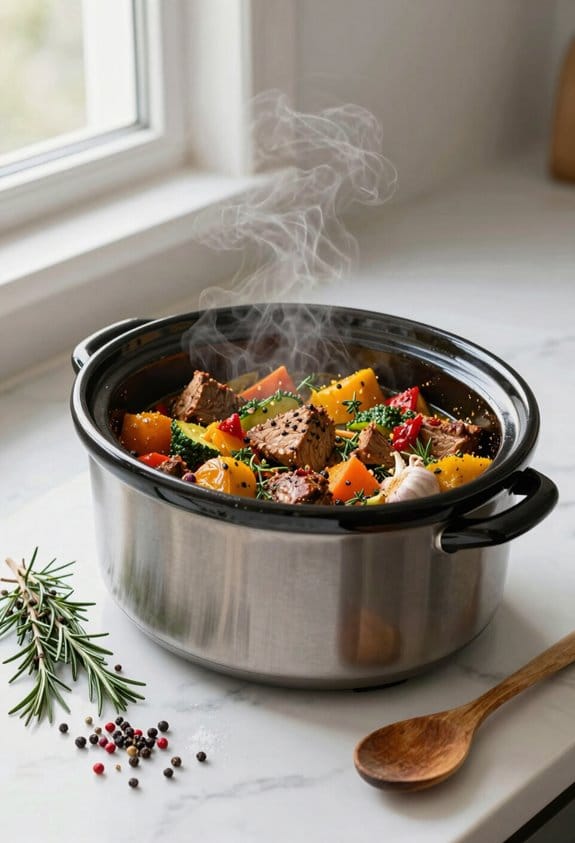
When you’re trying to eat healthier, keeping an eye on sodium can feel overwhelming. So, have you thought about using your slow cooker for low-sodium meal prep? It’s a pretty handy way to whip up hearty, home-cooked dishes without loading up on salt. Start with a low-sodium chicken broth as your base; it’s a great way to add flavor without all the extra sodium.
Here’s the trick: pack your meals with herbs and spices. Fresh ingredients like rosemary, thyme, or even a squeeze of lemon can elevate a simple recipe into something really special. Plus, as everything simmers in the slow cooker, you’ll find that these flavors meld beautifully, resulting in dishes that can have as little as 247 mg of sodium per serving.
Batch cooking is another perk of using a slow cooker. It saves time during the week and keeps you on track with your health goals. You can easily make multiple meals at once without the stress of daily cooking. Honestly, who wouldn’t want tasty, low-sodium options just waiting to be enjoyed? Choosing a slow cooker with multiple preset options can further simplify meal prep by offering customizable smart programs tailored to your cooking needs.
How Spices Replace Salt to Enhance Flavor

Have you ever taken a bite of something and thought, “This needs more flavor”? For many of us, our go-to solution is salt. But the truth is, there are plenty of spices out there that can jazz up your meals without the sodium overload. Take cayenne, cinnamon, or allspice, for example. Just a sprinkle can take a bland dish and elevate it to something exciting.
Creating your own spice blends is super easy. You could also grab pre-made mixes at the store if that’s more your style. Just keep in mind that dried herbs pack a punch, so you really don’t need much. For a simple homemade mix you can keep on hand, try this: blend garlic powder, paprika, and a dash of pepper. It’ll really amp up the flavor of whatever you’re cooking, and you’ll have a lower-sodium meal to boot.
So, why does this matter? Besides the health benefits, it opens the door to a world of tasty possibilities. Think about it: when you switch things up with spices, you’re not just enhancing flavor—you’re also getting creative in the kitchen. What new dishes can you dream up?
Honestly, it’s all about experimenting and having a little fun with your food. If you haven’t been reaching for spices instead of salt, now’s a perfect time to start. Enjoy those flavorful meals without the guilt! What’s your favorite spice to use?
To simplify your cooking prep, consider how a multi-function peeler can save time by peeling and slicing fresh produce for your meals.
Adding Acids for Dish Brightness?
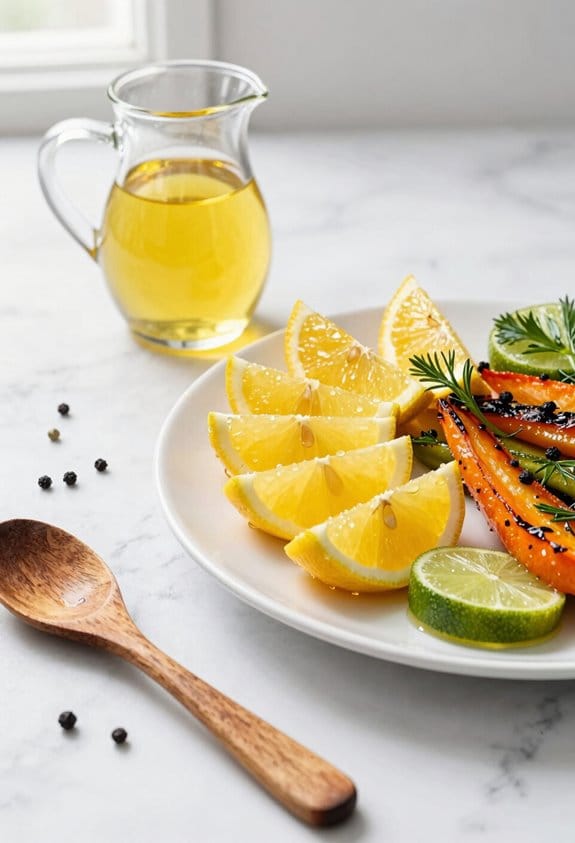
How can you make your meals pop without dumping more salt on them? One secret’s in the acid! Adding citrus, like lemons and limes, can really lift the flavors while you’re cooking. A quick splash of lemon juice right at the end can make a dish sing. Vinegars, such as balsamic or red wine, also do wonders, adding depth and a little zing.
Want a fast way to brighten up your meals? Try whipping together a simple salad dressing using vinegar and lemon juice. It’s a great companion to your low-sodium dishes and gives a refreshing, tangy kick. Plus, using these acids not only enhances flavor but helps keep your meals healthier—perfect for sticking to a low-sodium diet.
Incorporating fresh ingredients stored in airtight containers can help maintain their brightness and flavor longer.
So, why does this matter? Because you don’t have to rely on salt to enjoy truly delicious food. Get creative with those acids and see how they make your cooking come alive!
In short, don’t be afraid to play with flavors. What’s your favorite way to add brightness to a dish?
Creative Herb Combinations for Flavor Boosts
Tired of bland, low-sodium meals? Adding fresh and dried herbs can totally transform your dishes into something special. Mixing dried herbs like oregano, thyme, and basil gives you a robust flavor base. If you want a pop of freshness, sprinkle some parsley and cilantro right before serving—this little trick keeps those herbs vibrant and flavorful.
Ever thought about herb-infused oils? They’re such a simple way to get a rich taste without reaching for the salt shaker. And don’t shy away from experimenting with spice blends. A mix of cumin, paprika, and garlic powder can add a whole new depth to your meals. The best part? You can easily customize these blends to fit your tastes!
Now, a quick tip for you—make sure to store those dried herbs correctly, ideally in a cool, dark place. They stay potent for about 6-12 months, so it’s worth keeping track of your herbs and using them in time. For effortless meal prep, using a versatile chef knife can help you efficiently chop and mince herbs and spices, enhancing your cooking experience.
Creative Recipe Variations for Low-Sodium Meals
Are you tired of flavorless low-sodium meals? Trust me, you don’t have to miss out on taste just because you’re cutting back on salt. Spices can totally save the day. Think about using cayenne for heat, cinnamon for warmth, and allspice for that sweet touch—all perfect additions to your slow cooker recipes.
When you’re meal prepping, consider adding things like lemon juice or vinegar. These acidic ingredients really brighten up your dishes and make those spices pop. Ever notice how dried herbs like oregano and thyme seem to pack more punch when added early? They do! But save your fresh herbs, like parsley, to sprinkle on top at the end. They bring a vibrant, fresh flavor that liven things up.
Want to keep things exciting? Try creating your own spice blends! There are endless combinations to explore. Also, don’t overlook the power of unsalted citrus marinades for your proteins. A splash of these can boost flavor and moisture, making low-sodium cooking easy and enjoyable. Using kitchen appliances with multiple cooking functions like rice cookers can also help diversify your meal prep and maintain flavors without extra sodium.
Affordable Spices and Ingredients for Low-Sodium Cooking
Looking to add some kick to your low-sodium cooking without emptying your wallet? You’re not alone! Many of us want to keep flavor alive in our meals while being mindful of our sodium intake.
First off, checking out bulk spices at local specialty stores can be a treasure hunt for flavors. Focus on affordable spices like cumin, paprika, and garlic powder. These little guys can pack a punch when it comes to taste, and they won’t cost you an arm and a leg. Fresh herbs are another great option! They can really elevate your dishes and are super easy to grow right on your windowsill or pick up fresh from the store.
Now, here’s a handy tip: why not make your own spice blends? It’s simple and gives you full control over the flavors in your cooking. Mix together some common spices, and you’ll have a perfect blend for your slow cooker. The best part is you can tweak it to your liking.
Also, consider replacing salt with vinegar or citrus juice. They’re usually affordable staples that’ll brighten up your meals and add depth to your flavors. So, why does this matter? You can still enjoy tasty dishes while keeping it low-sodium!
To make meal prep even easier, consider using kitchen tools with multiple grating options to enhance the texture and flavor of your ingredients efficiently.
In the end, it’s all about finding what works for you. You don’t need fancy ingredients or pricey spices to make your meals exciting—just some creativity and a bit of passion. What’s your favorite low-sodium ingredient to enhance flavor? Happy cooking!
Simple Serving Suggestions to Elevate Your Meal
Ever feel like you’re stuck in a flavor rut when trying to keep meals low in sodium? It can be tough finding ways to spice things up without drowning your dishes in salt. Thankfully, there are several simple serving suggestions that can boost flavor without the added sodium.
Try this: Just before you dig in, drizzle some citrus juices or vinegars over your dishes. They add brightness and a fresh zing that can really lift a meal. If you’ve got fresh herbs like basil or cilantro lying around, don’t hold back on those either! They not only make your plate look pretty, but they can also elevate the taste. Remember to throw them on just at the end of your cooking for the best flavor.
Herb-infused oils are another trick worth trying. A light drizzle can pack a punch of flavor and really make a difference. And let’s not forget about spices! A little sprinkle of cayenne or garlic powder can completely transform your dishes. So, why does this matter? These tweaks can help you cook faster and enjoy tasty meals without all the sodium.
In the end, it’s all about getting creative with what you have on hand. Next time you’re in the kitchen, give these tips a go and see how they work for you! What’s your favorite way to add flavor without relying on salt? Using a manual sharpener to keep your knives sharp can make prepping these flavorful meals easier and safer.
Frequently Asked Questions
What Seasoning Tastes Like Salt but Is Not Salt?
Think of umami as the ocean breeze in our meals; seaweed flakes, nutritional yeast, and tamari sauce dance together, delivering that savory saltiness we crave without the sodium. Let’s explore these flavors in our cooking!
What Seasonings Are Good for a Low-Sodium Diet?
For a low-sodium diet, we should try herb blends, like Italian seasoning, and flavor boosting spices such as paprika or cumin. These seasoning alternatives really enhance taste without sacrificing our health or enjoyment.
How to Make Something Taste Salty Without Sodium?
We’ve discovered that umami flavor enhancers, like seaweed seasonings, combined with vinegar-based marinades and citrus zest alternatives, can elevate our dishes, making them taste salty without any sodium. It’s a game changer for our meals!
What Is a Salt-Free Seasoning for High Blood Pressure?
A great salt-free seasoning for high blood pressure includes herbs like basil and thyme. These herbs benefit our health, enhance flavor, and combined with potassium sources, they elevate our cooking techniques while reducing sodium intake.