As an Amazon Associate, we earn from qualifying purchases. Some links on this site are affiliate links at no extra cost to you. Our recommendations are based on thorough research and editorial judgment.

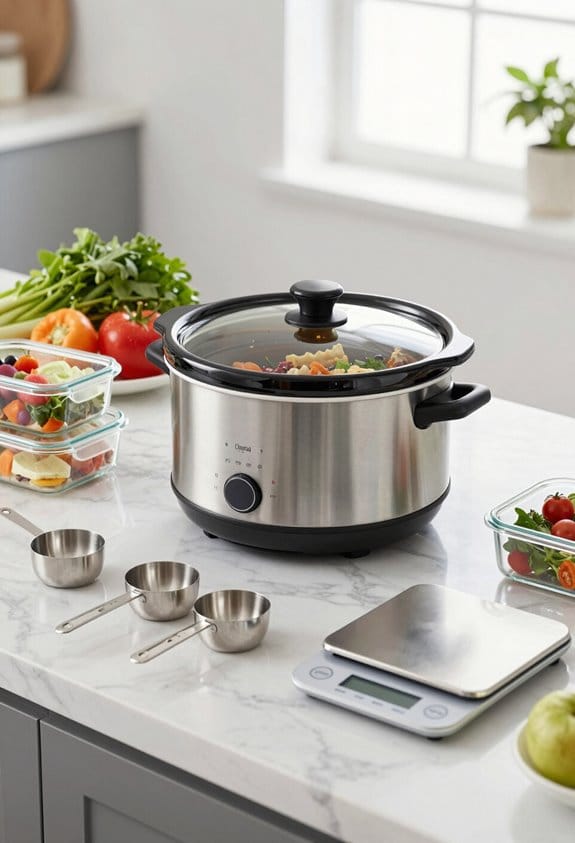
How to Convert Your Favorite Oven Recipes for the Slow Cooker

Ever think about how to enjoy your favorite oven recipes in the slow cooker? It can feel like a puzzle at first, but once you get the hang of it, you’ll love the convenience.
You may be interested


First, let’s tackle cooking times. If a recipe calls for 2-3 hours in the oven, you should plan for about 6-8 hours on low in the slow cooker. Finding that sweet spot can really make a difference in flavor and texture.
And, here’s the trick: don’t forget to cut down on liquids! Since slow cookers are awesome at trapping moisture, you’ll want to reduce your liquids by about 40-50%. It’s surprising how much liquid gets left behind; no one likes a watery dish, right?
When it comes to the ingredients, start by browning your meat if you can. It might seem like an extra step, but it really amps up the flavor.
Then, layer your hard vegetables like carrots and potatoes at the bottom, and save the delicate veggies for the end of cooking. This way, they won’t get mushy and will keep their nice texture.
So, why does this matter? Well, making these adjustments isn’t just about cooking times; it’s about getting those flavors just right.
The best part is that you can enjoy a hearty meal without the stress of last-minute preparations.
In short, figuring out how to convert your oven recipes for the slow cooker can make your cooking experience much easier and tastier. What recipe will you try first?
Key Takeaways
- Reduce liquid amounts by 40-50% when adapting oven recipes, as slow cookers retain moisture effectively.
- Substitute higher cooking temperatures (above 350°F) with lower settings; 2-3 hours in the oven converts to 6-8 hours on LOW.
- Brown meats before slow cooking to enhance flavor through the Maillard reaction for richer depth.
- Place hardy vegetables like potatoes and carrots at the bottom of the slow cooker for consistent cooking results.
- Incorporate dairy products like cream or cheese during the last 30 to 60 minutes to maintain desired texture.
Choose Recipes Ideal for Slow Cooking
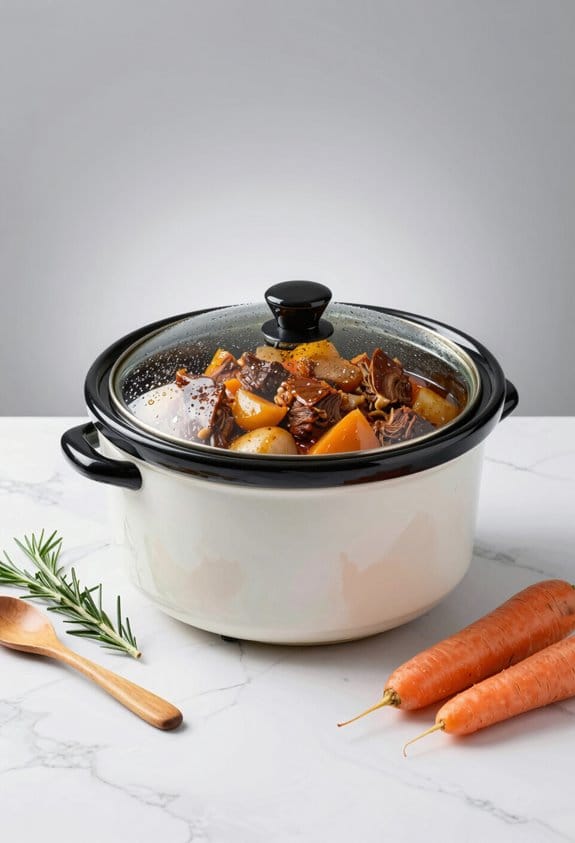
When it comes to slow cooking, you might wonder why some recipes just work better than others. The truth is, not all oven recipes convert nicely to a slow cooker. To get the most out of your slow cooker, it’s best to stick with dishes that shine with that low-and-slow method.
So, what kinds of meals are we talking about? Stews, soups, and casseroles make the perfect choices. These hearty dishes usually need longer cooking times—think an hour or more, which is just right for slow cooking. Plus, they often benefit from that gentle, even heat.
Here’s the trick: focus on recipes that use tougher cuts of meat. Cuts like pork shoulder or chicken thighs really thrive in a slow cooker, absorbing flavors beautifully and staying tender and juicy. Plus, higher-fat meats are ideal here because they stay moist and flavorful when cooked low and slow.
When you’re converting a recipe, check if it can be made unattended. That aspect is a bonus for slow cooking, allowing you to set it and forget it while you go about your day.
Using a slow cooker with a locking lid can make transport and cleanup easier, especially if you want to take your meal on the go.
In the end, slow cooking really can simplify your meals without sacrificing flavor. So, what’s cooking in your kitchen this week?
Understanding How Cooking Times Change for Slow Cooking
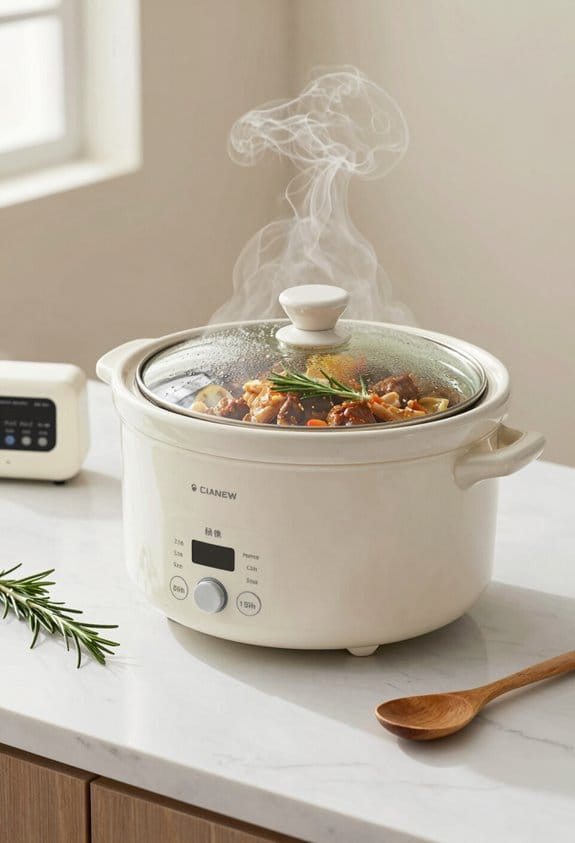
Understanding how cooking times change for slow cooking can really make a difference in your kitchen success. Ever started a recipe only to realize you’ll need to wait forever for it to be done? When it comes to slow cookers, recipes that normally need 2-3 hours in the oven are likely going to take around 6-8 hours on the LOW setting. If you’re short on time, crank it up to the HIGH setting, which typically cooks things in about 3-4 hours.
Here’s the trick: slow cookers don’t need preheating, and this can totally change how your dish turns out, especially depending on its starting temperature. This fact can throw off your timing if you’re used to traditional baking methods. Plus, keep in mind that different slow cookers can cook at different temperatures. So, if you’re switching recipes from the oven that typically cook above 350°F, get ready to make some significant adjustments to both the time and the method you’re using.
Frankly, it might take a bit of practice to get it just right, but you’ll get the hang of it. Why does this matter? Because understanding these little quirks can save you from dining disasters! The best part is that once you figure it out, your meals can be both delicious and easy. Additionally, choosing a slow cooker with adjustable temperature settings can help tailor cook times more precisely to your recipes’ needs.
Select Flavorful Cuts of Meat for Best Results
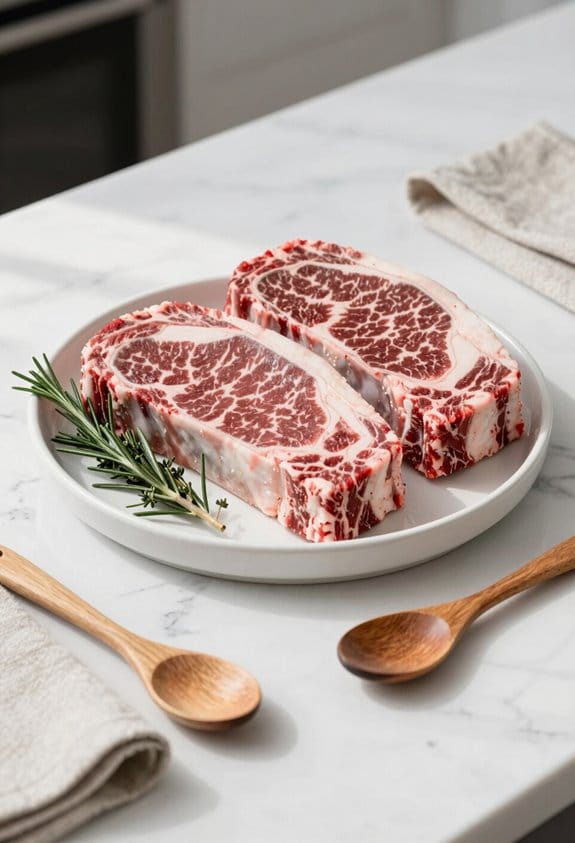
Choosing the right cuts of meat for your slow cooker is crucial for making meals that impress. You want cuts that have a bit of fat and plenty of connective tissue, which means pork shoulder, beef chuck, and oxtail are your best bets. These cuts break down beautifully over long cooking times, resulting in dishes that are both tender and packed with flavor.
Dark meat chicken, like thighs and drumsticks, is also great because its fat content helps keep it juicy. Now, here’s the trick: steer clear of lean cuts. They tend to overcook and turn into dry disappointments. Larger pieces work best since they allow the collagen to dissolve, enhancing the flavor and texture—trust me on that one.
When it’s time to serve, don’t forget to shred or chop that meat before plating. This simple step helps integrate it into your dishes, providing maximum flavor in every bite. So why does this matter? Because great cuts lead to great meals, and who doesn’t want that?
In the end, picking the right meat for your slow cooker really does make a difference. Many multi-cookers also offer slow cook functions that perfectly complement these cuts for optimal results. What’s your favorite cut to use when cooking?
Always Browning Meat for Optimal Flavor
Have you ever wondered why some slow-cooked dishes taste so much better than others? The secret often lies in a simple but crucial step: browning the meat before you toss it in the slow cooker.
Browning your meat on the stovetop or in the oven not only enhances its flavor but also adds a nice texture. This process is thanks to the Maillard reaction, which creates that lovely, caramelized crust we all crave. It’s especially important for cuts like pork shoulder or brisket. When you take the time to brown these, you’re not just cooking; you’re adding depth and richness to your meal.
Here’s the trick: when you brown the meat, it helps render the fat, keeping your soups and stews from turning into a greasy mess. Nobody wants a dish that feels heavy and lacking in flavor, right? If you skip this step, you might end up with something that tastes flat, missing those complex flavors that make slow cooking so comforting.
So, take a moment to sear that meat before it goes in the slow cooker. It might seem like an extra step, but it truly makes a difference. After all, who doesn’t want their meal to taste as amazing as it looks?
Additionally, incorporating a steaming method like bamboo steaming can be a great way to maintain flavors and nutrients when preparing accompanying side dishes.
In short, always brown your meat for a well-rounded flavor and texture. What’s your go-to slow-cooked dish?
Adjusting Liquid Quantities for Slow Cooking Success
Have you ever tried adapting a favorite oven recipe for your slow cooker, only to end up with a soupy mess? It’s frustrating, right? The secret isn’t just about throwing everything in the pot. Adjusting the liquid amounts is actually crucial for achieving that perfect slow-cooked dish.
When converting traditional recipes, you’ll want to scale back the liquid by around 40-50%. This is because slow cookers do a fantastic job of retaining moisture. So, if your original recipe has minimal liquid, always add at least 1/2 cup of water or broth. Why? Because it helps in keeping everything moist without drowning it.
For those recipes that call for a lot of liquid, don’t be afraid to cut back by a third. Too much liquid can make your vegetables mushy and your meat tough. It’s all about balance, really. Plus, if you find you have too much liquid at the end of cooking, it’s no big deal—you can always reduce it on the stove afterward.
Honestly, it takes a little trial and error, but once you get the hang of it, slow cooking can be your best friend in the kitchen. Slow cookers with programmable features can help you set precise cooking times to perfect your dishes every time. So, remember these tips and enjoy the ease of slow cooking! What’s your go-to recipe for the slow cooker?
When to Add Your Veggies and Dairy?
Ever wondered why your slow-cooked meals don’t hit the mark? The secret often lies in the timing of when you add your veggies and dairy.
When you’re just starting your dish, throw in those tough veggies like onions, potatoes, and carrots. They need time to soften and really develop their flavors. Honestly, if you skip this step, your meal could end up lacking that depth you’re looking for.
Now, delicate veggies—like peas, corn, and spinach—are a different story. You want to add these colorful additions about 30 minutes before the meal is done. This helps keep them vibrant and prevents them from turning to mush. And for broccoli and cauliflower, they can come in early if your recipe cooks for a short time. For longer dishes, mid-way is usually just fine.
And let’s not forget about dairy! If you’re using cream or cheese, toss those in during the last 30 to 60 minutes of cooking. This keeps them from curdling and helps maintain that creamy texture. So, what’s the takeaway? Timing matters more than you might think!
For precise straining or sifting of ingredients before adding them to your slow cooker, using a fine mesh sieve can make a significant difference.
The next time you’re prepping a slow-cooked meal, remember these tips. You’ll notice the difference and your taste buds will thank you! What veggie will you be adding first to your next dish?
Layering Ingredients for Even Cooking
When you’re using a slow cooker, ever notice how some dishes come out perfectly cooked while others seem to miss the mark? It’s all about how you layer your ingredients. Start with those hard vegetables—think potatoes, carrots, and onions—right at the bottom. They take the longest to cook, so it’s best to give them that time close to the heat.
Next, add your meat on top of those veggies. This isn’t just a random choice; all those delicious juices and fats will drip down, infusing everything with flavor. It’s pretty satisfying when you think about it.
Now, halfway through your cook time, toss in some tougher leafy greens like kale. They need a bit less time in the cooker. And if you’re planning to add delicate vegetables like peas or spinach, sprinkle those in during the last 30 minutes. You want to preserve their texture—no one likes mushy greens in their meal!
Another tip? Make sure to cut all your ingredients into uniform shapes. This small detail can make a big difference in cooking evenly. When everything is about the same size, you avoid having some pieces that are overcooked while others remain annoyingly crunchy. So, keep that in mind next time you’re prepping!
To ensure a mess-free cooking experience, consider using BPA-free slow cooker liners that help protect your slow cooker and make cleanup effortless.
In the end, layering your ingredients correctly can really elevate your slow cooker experience. What’s your favorite slow cooker recipe? Happy cooking!
Fixing Common Conversion Problems
Converting recipes for the slow cooker often leaves us scratching our heads, doesn’t it? It can feel overwhelming, especially when you’re trying to get that perfect dish on the table. The good news is, I’ve got some solid tips to streamline the process.
First off, remember that slow cookers are different from your conventional oven. Since they don’t allow for evaporation, you’ll want to cut back the liquid in your recipes by about 40 to 50%. This simple adjustment can prevent your dish from becoming a watery mess. Plus, if you’re following a recipe that calls for high cooking temperatures, switch it to low for better outcomes.
A little prep can go a long way, too. When it comes to meats and veggies, browning them on the stovetop beforehand enhances the flavors. It’s a step that adds depth and makes your dish really shine.
Now, let’s talk cooking time. If a recipe says it cooks in 2 to 3 hours in the oven, plan for about 6 to 8 hours on the low setting of your slow cooker. Don’t forget to keep your cooker filled to about two-thirds full—this helps ensure even cooking.
Using precise measurement tools when adjusting ingredient quantities can help maintain the balance in your recipes.
With these tricks up your sleeve, you’re well on your way to mastering the art of slow cooking. Cooking doesn’t have to be complicated if you take it step by step. What’s your go-to slow cooker recipe? Let’s chat about it!
Frequently Asked Questions
Can I Convert Baking Desserts for the Slow Cooker?
Absolutely, we can transform oven-baked desserts into slow cooker delights! By adjusting baking times, tweaking ingredient ratios, and mastering moisture control with layering techniques, we unfasten a domain of delectable dessert variations waiting to be explored.
Is It Safe to Leave the Slow Cooker Unattended?
Yes, we can safely leave the slow cooker unattended, but slow cooker safety is essential. Proper meal preparation and recipe adjustments reduce risks of kitchen accidents or fire hazards, allowing us to manage time effectively while cooking.
How Do I Prevent Food From Sticking to the Slow Cooker?
“A stitch in time saves nine!” To prevent sticking, we can use non-stick sprays, parchment paper, or cooking oils. Liner bags also help. Placing food properly and using ceramic inserts guarantees even cooking at proper temperatures.
Can I Use Frozen Ingredients in the Slow Cooker?
Yes, we can use frozen ingredients in the slow cooker! Just adjust cooking times, consider thawing methods, and enhance flavors with spices. Also, be mindful of food safety and make ingredient substitutions as needed.
What Are Some Common Slow Cooker Mistakes to Avoid?
We often overlook sauce consistency, overcooking meals, and ingredient layering. It’s essential we adjust recipe timing and cooking liquids properly, avoiding wrong temperature settings, to prevent common timing issues that can ruin our dishes.


