As an Amazon Associate, we earn from qualifying purchases. Some links on this site are affiliate links at no extra cost to you. Our recommendations are based on thorough research and editorial judgment.


The Difference Between Low and High Settings on Your Slow Cooker

Are you confused about whether to set your slow cooker to high or low? You’re not alone! It’s one of those common dilemmas we face in the kitchen.
You may be interested


Let’s break it down. When you set your slow cooker to high, the temperature rises to around 300°F. This usually means your meal will cook in about 3-4 hours. On the other hand, if you opt for the low setting, it cooks at roughly 200°F and takes around 7-8 hours.
So, if you’ve got a busy day ahead, the low setting is a great option that lets you toss in your ingredients and go about your day.
Now, if you’re working with tougher cuts of meat, the low setting is your best bet. The extended cooking time really helps break down the fibers, making the meat tender and flavorful. Plus, it gives all the ingredients time to mingle and enhance the overall taste.
So, why does this matter? If you’re in a time crunch, switching to high might be tempting, but keep in mind that it could affect the texture of your dish.
Here’s the trick: if you’re planning to enjoy a heartwarming stew or a satisfying roast, take the plunge with low. It’s all about that slow and steady approach to cooking.
But, if you’re short on time and need a meal fast, high will do the trick—just keep an eye on it to avoid any surprises.
In a nutshell, the choice between high and low settings depends on your schedule and the type of food you’re preparing.
What’s your go-to cooking method when you want a meal that feels like a warm hug?
Key Takeaways
- High setting cooks food at 270°F to 300°F in about 3-4 hours, while low setting maintains 170°F to 200°F over 7-8 hours.
- Tough cuts of meat become more tender and flavorful when cooked longer on the low setting compared to the high setting.
- Switching between settings mid-cooking can affect food safety and result in inconsistent textures and flavors.
- High setting may yield drier textures and less complex flavors due to faster cooking times, unlike low heat’s slow melding of flavors.
- Proper liquid management is crucial; excessive liquid can dilute flavors, especially on the lower cooking setting.
Understanding the Basics of Slow Cooker Settings
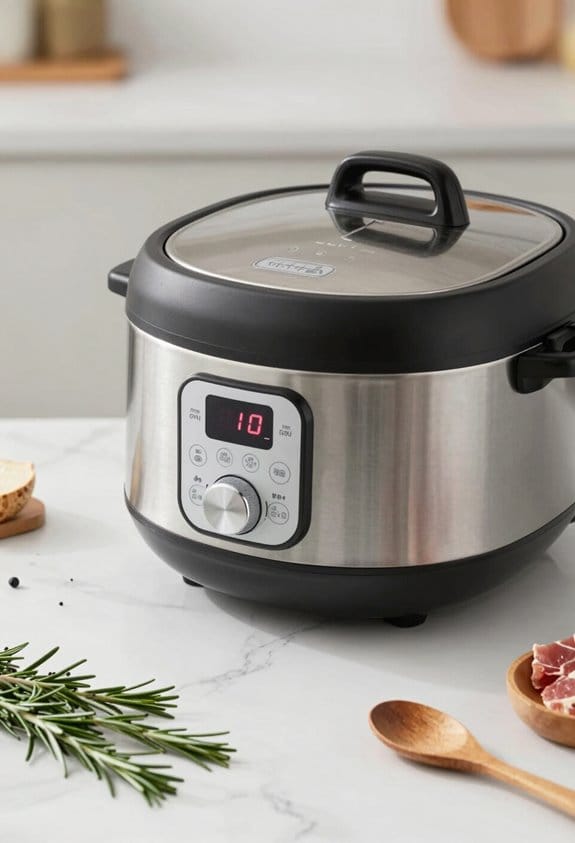
Ever wonder why your slow-cooked meals sometimes come out less than stellar? It could be due to not knowing the ins and outs of your slow cooker’s settings.
Here’s a quick rundown: modern slow cookers usually come with a high setting that gets the temperatures to about 270°F to 300°F, and a low setting that hovers around 170°F to 200°F. It can really make a difference in your cook times! Generally speaking, if you crank it up to high, you’re looking at around 3-4 hours to get that simmer going. On the low setting, though, you’re talking about a commitment of 7-8 hours.
So, why does this matter? Cooking on low for a longer period can lead to dishes that are not only more flavorful but also perfectly tender—especially if you’re working with tougher cuts of meat. You really don’t want to switch settings halfway through; that could throw off both food safety and the consistency of your dish.
Keep a watchful eye on your cooking temperature and check your recipe timings. It makes all the difference in whipping up delicious, fully-cooked meals that you can feel good about sharing. Many modern slow cookers also include programmable digital timers that help maintain precise cooking times and improve convenience.
What Are the Effects of High and Low Settings on Cooking Time?
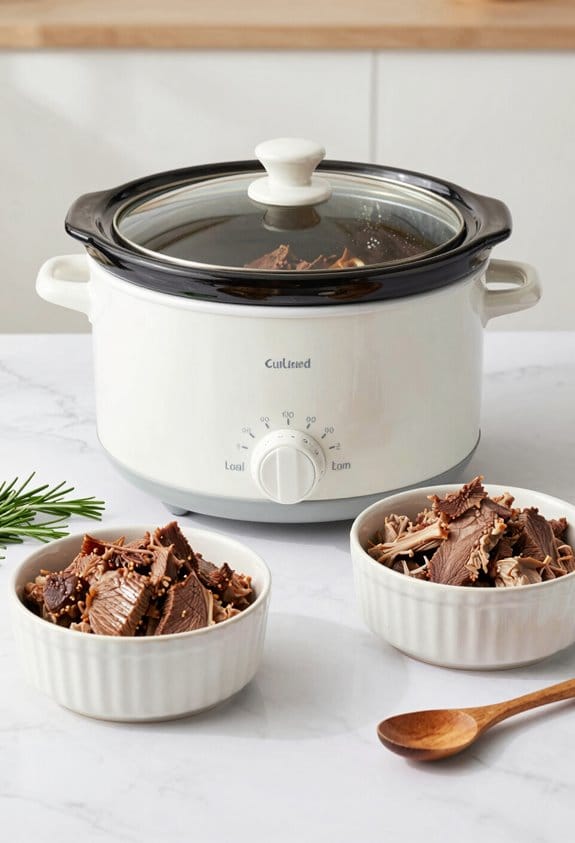
Have you ever wondered why some slow-cooker recipes take so long while others seem to cook up quicker? Understanding the high and low settings on your slow cooker can help you time things just right and enjoy those delicious meals sooner.
The big difference between the high and low settings comes down to temperature. When you set your slow cooker to high, it reaches around 300°F, which means your food is cooked in about 3-4 hours. On the other hand, the low setting is a gentler heat, hovering between 190°F and 200°F, and it stretches cooking time to about 7-8 hours. But wait, why is that important? This longer cooking time is great for tougher cuts of meat. Think about pork roast or chicken thighs—they need that extra time to break down the connective tissue, making them tender and juicy.
If you’re adjusting a recipe, here’s a handy tip: when switching from low to high, you can usually cut the cooking time in half. So, if a recipe calls for 8 hours on low, just try about 4 hours on high. It’s all about finding that sweet spot that works best for your schedule and taste buds.
Using a slow cooker with programmable countdown timers can add convenience and precision to managing these cooking times.
How Cooking Temperature Affects Flavor
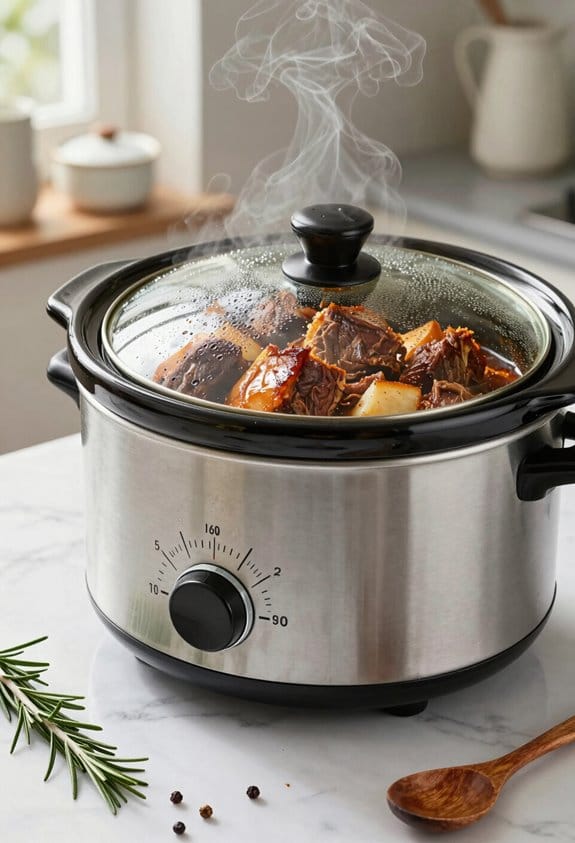
Have you ever wondered why some slow-cooked meals just taste better? Cooking temperature really affects flavor, especially when it comes to those hearty dishes that need a long time to simmer.
Using low heat is key here—it allows the ingredients to meld together over several hours. When you’re working with tougher cuts of meat, like chuck or brisket, cooking them slowly for 7 to 8 hours makes all the difference. They become incredibly tender, soaking up all those delicious flavors. On the flip side, cranking the heat up to high for a quick cook can save time but often sacrifices taste. You might end up with a dish that lacks complexity, and those flavors just don’t have time to blend. Plus, cooking at a high temperature often leads to a drier texture—definitely not what you’re aiming for.
So, here’s the trick: Whenever a recipe calls for low and slow cooking, stick to it! Trust me, the results are worth the wait. You’ll be rewarded with a meal that is juicy, flavorful, and full of character. Truth is, slow cooking is as much about patience as it is about flavor.
Next time you’re thinking about a dish, consider how long you’re willing to let it cook. Do you want that deep, rich taste that comes with time, or are you okay with a quicker but simpler flavor? It’s totally worth giving slow cooking a shot. Using devices with multiple cooking functions can further enhance your meal preparation experience by allowing versatility beyond just slow cooking.
Essential Food Safety Practices for Slow Cooking
When it comes to slow cooking, you might think it’s all about tossing ingredients in and forgetting about them until dinner. But, honestly, there are some food safety practices you really need to follow for a stress-free experience.
First off, using a meat thermometer is a must. It ensures that your meat, whether it’s ground beef or chicken, hits those safe internal temperatures, whether you’ve got your cooker on low or high. So, if you’re planning to get creative with your meals, don’t skip this step.
And let’s talk about frozen foods for a minute. You might be tempted to just throw those into the cooker straight from the freezer, but that can lead to trouble. They may not heat up fast enough, creating a perfect environment for foodborne illness. Not worth the risk, right?
Keep an eye on your cook times, too. If you’re using pre-cooked or washed ingredients, you’re in good shape. But if you’re working with raw foods, you want to make sure you’re monitoring everything closely. Set a timer or check in regularly to keep things on track.
The Keep Warm setting is handy, but here’s the trick: It’s not designed for cooking. It’s there to hold your food at a safe temperature after it’s cooked. So remember, it’s best to use it just for that purpose.
For added safety, choosing a slow cooker with an ETL or UL listing can ensure your appliance meets important safety standards.
How to Adjust Recipes for Temperature Settings
Adjusting recipes for different temperature settings can be a bit of a puzzle, right? You might be wondering how to make it work without ruining your meal. When you switch from a low to high setting, you generally want to cut the cooking time by about half. For example, if you’re cooking on low for 8 hours, you’re looking at just 4 hours on high.
But there’s a catch. Recipes that call for less than 3 to 4 hours on high, or 7 to 8 hours on low, just don’t hold up well with these changes. Why’s that? Well, slow cookers heat up faster on high, which can really change the texture, tenderness, and overall flavor of your dish. So when you see a recipe time listed out, it’s best to stick to it to keep everything balanced just right.
So, what’s the trick here? It’s all about understanding those time differences. Familiarizing yourself with them can really help, whether you’re in a rush or just choosing between settings. Nailing those cooking times makes your recipes shine through, no matter if you’re going high or low. Keep in mind that high settings typically operate at 300F to 350F, offering faster cooking but necessitating closer timing adjustments.
Tips for Achieving the Best Results With Your Slow Cooker
Are you tired of slow-cooked meals that just don’t hit the spot? Getting the most out of your slow cooker isn’t just about tossing things in and hoping for the best. Believe me, there’s a little art to it!
Start by layering your ingredients the right way. Place those hearty root vegetables at the bottom—they need a longer cooking time than everything else. If you’re using tougher cuts of meat, browning them before tossing them in can bring out amazing flavors.
Now, let’s talk about cooking time. Stick to the low setting for about 6-8 hours. This really makes a difference in making sure your meat becomes tender and flavorful. Switching to high can throw off the cooking time and mess with the texture—trust me, you don’t want that!
And what about liquids? It’s key to use the right amount. Most foods will release moisture as they cook, so be careful not to overdo it. You want your dish to shine in flavor, not get diluted.
Also, using a slow cooker with adjustable temperature settings can help you tailor the cooking process to your recipe’s needs.
Finally, finish your meals with a little something special! Adding fresh herbs or crispy toppings can really elevate your dish, making it not just tasty but also beautiful on the plate. So, why not give it a try next time you cook?
In short, layering, timing, measuring liquids, and adding those finishing touches will up your slow-cooking game. What’s your favorite dish to make in a slow cooker?
Frequently Asked Questions
Is It Better to Slow Cook on Low or High?
We believe slow cooking on low is better for flavor development and moisture retention. It maximizes ingredient absorption and energy efficiency, making it ideal for meal planning, while high’s quicker cooking time may compromise food safety and taste.
Is 4 Hours on High the Same as 8 Hours on Low in a Slow Cooker?
No, 4 hours on high isn’t the same as 8 hours on low. Think of it like brewing tea—temperature variations alter flavor development. For tender meats, planning with recipe adjustments is essential for moisture retention.
What Happens if You Cook on High Instead of Low in a Slow Cooker?
When we cook on high instead of low, we notice quicker cooking times but risk less flavor development, altered texture, and uneven ingredient breakdown. It can affect moisture retention, energy consumption, and nutritional impact in our recipes.
Is Meat More Tender on a Low or High Slow Cooker?
We’ve found that meat’s more tender on low settings, as longer cooking times enhance flavor development and moisture retention. Recipe adaptations for tougher cuts emphasize heat distribution and improve texture differences, making our dishes truly delectable.


