As an Amazon Associate, we earn from qualifying purchases. Some links on this site are affiliate links at no extra cost to you. Our recommendations are based on thorough research and editorial judgment.


Is Silicone Bakeware Safe at High Temperatures?

Is Silicone Bakeware Safe at High Temperatures?
You may be interested

Have you ever wondered if silicone bakeware can handle the heat when you’re whipping up your favorite treats? While it’s generally safe for baking, there are some things to keep in mind—especially with those higher oven temperatures. The FDA considers silicone food-safe up to 230°C (that’s 446°F), but here’s the trick: to avoid any worries about chemicals leaching out, it’s best to keep your baking temp at or below 175°C (347°F).
Always check the guidelines that come with your silicone bakeware. Each brand might have its own recommendations. And, if you want to avoid any mishaps, consider placing your silicone pans on a metal tray for added stability. Trust me, it makes a difference.
When it comes to caring for your silicone bakeware, remember this: hand washing is the way to go. A gentle soap and a soft sponge will keep your bakeware in tip-top shape. I’ve found that taking good care of it really prolongs its life and keeps it looking nice.
So, why does this all matter? Because a little bit of caution goes a long way in ensuring your baking experience is safe and enjoyable!
With these tips in mind, you’re ready to dive into the world of silicone bakeware. What’s the first treat you plan on making?
Key Takeaways
- Silicone bakeware is safe for use at temperatures up to 220°C (428°F) but risks chemical leaching increase above 175°C (347°F).
- FDA has classified food-grade silicone as safe, though low levels of synthetic rubber chemicals may leach when heated.
- Health Canada advises caution when using silicone cookware at high temperatures due to potential health risks.
- For optimal safety, place silicone bakeware on metal sheets and avoid using near open flames or heating elements.
- Regular maintenance and cleaning can prolong the life of silicone bakeware and enhance safety during use.
What Is Silicone Bakeware Made Of?

Ever tried baking with silicone bakeware and wondered what it’s really made of? You’re not alone. Many of us love using it because it’s flexible and makes baking a breeze, but knowing what it’s made from can help you choose wisely.
Silicone bakeware mainly consists of silicon and oxygen, and often has carbon in the mix too. This creates a type of synthetic rubber that can handle high temperatures, which means you don’t have to worry about it melting in the oven. The cool part? Good-quality silicone bakeware is food-grade, letting you bake without stress. It can take heat ranging from -60°C to +230°C (-76°F to +446°F), so it’s really versatile.
Now, let’s talk about that non-stick surface. No need to slather on extra oil or grease, which can keep those calorie counts down for all the health-conscious bakers out there. Safety studies have shown silicone is generally recognized as safe (GRAS), so you can feel good about letting your kids help in the kitchen with it. Just remember to pick silicone bakeware that’s free of fillers for the best experience. Silicone products often feature non-slip bases for enhanced stability during use, making them a practical choice for kitchen tasks.
Understanding the Risks of Chemical Leaching From Silicone Bakeware
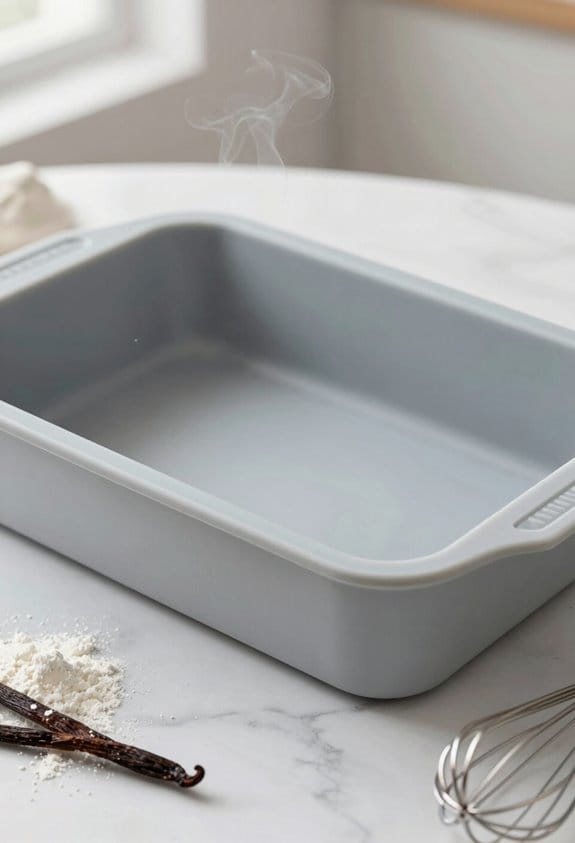
Ever found yourself reaching for your trusty silicone bakeware, only to wonder if it’s really safe for your health? Many of us love the convenience it offers, but there are some important considerations to keep in mind, especially when it comes to potential risks like chemical leaching.
Research indicates that silicone materials might release tiny amounts of synthetic chemicals under certain conditions, particularly when exposed to high temperatures or fatty foods. For instance, studies show that cooking at temperatures above 175°C can increase the likelihood of this happening. Interestingly, the Swiss Federal Office of Public Health did find that low levels of migration occur at 100°C, but it’s always better to err on the side of caution.
You might have seen that the FDA labels food-grade silicone as safe, which is reassuring. However, it’s worth noting that there aren’t many comprehensive studies on the long-term effects of using silicone bakeware. Some compounds found in silicone could potentially act as endocrine disruptors. So, why does this matter? It’s important to stay informed so you can make choices that align with your values about health and safety.
If you’re planning to use silicone bakeware, consider these tips:
- Always check cooking temperatures; try to keep it below 175°C when possible.
- Avoid cooking fatty foods in silicone at high temps.
- Store and clean your silicone bakeware properly to extend its life.
Choosing heat-resistant materials and ensuring proper use can help minimize potential risks associated with silicone bakeware.
At the end of the day, being aware of these risks allows you to enjoy your baking without unnecessary worries. It’s all about making informed decisions that feel right for you. What steps are you willing to take to ensure safe baking in your kitchen?
FDA Insights on Silicone Cookware Safety

Cooking with silicone cookware can be a bit of a mixed bag when it comes to safety. You might wonder, is it really safe for food? Well, the FDA has classified silicone dioxides as safe for food-grade materials since 1979, which is a good sign. But here’s the catch: some research suggests that low levels of synthetic rubber chemicals might leach into your food, especially when cooking fatty dishes.
A study from Switzerland showed that while the transfer of these compounds was pretty low at 100°C, things changed when they cranked the heat up to 175°C or higher. While Health Canada doesn’t flag any major hazards linked to silicone cookware, they do recommend being cautious at high temperatures.
So, what does all this mean for you in the kitchen? First off, it’s smart to pay attention to how you use silicone items. For example, try not to cook or bake at extremely high heats for long periods.
Truth is, there are still ongoing debates about certain silicone components known as siloxanes bringing up concerns as potential endocrine disruptors. Because of this, more research is definitely needed.
In short, while silicone cookware has an overall good reputation for safety, it’s worth keeping an eye on how hot you go with it. Are you feeling more informed about using silicone in your cooking? Additionally, choosing products made from high-quality materials like stainless steel and silicone can help ensure durability and safe use in the kitchen.
How High Temperatures Affect Silicone Bakeware Safety
Cooking with silicone bakeware is pretty popular these days, but have you ever wondered about how high temperatures affect its safety?
Silicone bakeware can handle a decent temperature range, from -60°C to +230°C (-76°F to +446°F). But here’s the catch: when you start pushing the heat above 175°C (347°F), there’s a chance that some synthetic chemicals could leach into your food, especially if you’re baking with fattier items. The FDA says these materials are safe, which is reassuring, but it doesn’t hurt to be cautious.
So, what’s the best way to use your silicone bakeware safely?
- Avoid exposing it directly to open flames or heating elements.
- Always check your recipes to ensure the temperatures stay within that safe range.
Additionally, silicone steamers are prized for their flexibility and safety, making them a popular choice for cooking at various temperatures.
Frankly, while silicone bakeware has its benefits, being mindful of these temperature guidelines is key to maintaining the safety of your food. This knowledge can make your baking experience a lot more enjoyable. So next time you reach for your trusty silicone pans, just remember to keep an eye on the heat!
How do you feel about using silicone bakeware now?
Practical Tips for Safe Use of Silicone Bakeware
Have you ever struggled with your bakeware and ended up with a messy kitchen? Silicone bakeware can be fantastic, but to get the most out of it, there are some practical tips you should keep in mind.
First off, always check the manufacturer’s guidelines for the maximum temperature—it’s usually around 428°F (220°C). You definitely don’t want to exceed that and risk ruining your favorite bakeware or, worse, your baked goods. When you’re using silicone, try placing it on a metal baking sheet. This trick adds a bit of stability and helps prevent any unfortunate spills while you’re handling it.
When it comes to cleaning, hand washing is the way to go. Just use some mild soap and make sure to dry it completely before putting it away. This will keep the non-stick properties intact, and trust me, it makes life easier. So, what about those pesky open flames or heating elements? Just steer clear of using silicone bakeware near those, as it could lead to melting and a real mess.
Lastly, if you’re looking for an extra boost in the non-stick department, consider lightly greasing the interior before you pour in your batter. It can make a difference with certain recipes.
Proper care and maintenance, such as hand washing, are essential to extend the life and performance of your kitchen tools.
In short, with a little care, your silicone bakeware can last a long time and make your baking adventures much smoother. So, what’s your favorite silicone bakeware creation?
Alternatives to Silicone Bakeware for High-Temperature Cooking
Ever find yourself frustrated with silicone bakeware that just doesn’t hold up to high heat? You’re not alone! While it’s a popular choice, there are plenty of alternatives that might be better suited for those intense cooking sessions.
Take cast iron cookware, for instance. It’s incredibly tough and distributes heat like a pro, which makes it perfect for those bubbling casseroles. You might be surprised at how well it performs, especially if you love that crispy, golden-brown finish on your dishes.
Then there’s stainless steel. It’s a solid choice that doesn’t react with food, so you can use it at high temperatures without worrying about warping. This durability means you’ll have pieces that last through countless meals.
Have you considered enamel-coated cast iron? It combines the best of both worlds: the strength of cast iron with a food-safe coating. It’s super versatile and can handle just about anything you throw at it in the oven.
Ceramic cookware is another great option. It’s eco-friendly and non-toxic, keeping your meals safe as they bake away at those high temps. You’ll love how it can transition beautifully from oven to table, making dinner a little more special.
Finally, let’s not overlook glass baking dishes. They resist thermal shock, so you can move them easily from the oven to the table without stress. Plus, they’re perfect for a variety of recipes, adding a nice touch to your kitchen arsenal.
Using durable tools with high-quality steel blades in your kitchen can also improve your cooking experience by ensuring better precision and longevity.
Tips for Maintaining the Quality of Silicone Bakeware
How often do you find yourself dealing with worn-out, sticky bakeware? If you’ve got some silicone bakeware in your kitchen, you’re probably wondering how to keep it looking and working like new. Thankfully, a few simple tips can really help.
First off, try hand washing your silicone bakeware with mild soap. It might be tempting to toss it in the dishwasher, but those high temperatures and harsh detergents can mess with the material. After you wash, make sure to dry it thoroughly to avoid any tackiness or discoloration; nobody wants sticky bakeware!
When it comes to storage, think about laying your bakeware flat or rolling it up, but definitely avoid any bends or folds. A metal tray can provide extra stability and help you achieve even cooking when you’re baking. So, why does this matter? Well, when you take good care of your bakeware, it can have a longer life and make your baking adventures way more enjoyable!
Also, keep in mind that abrasive sponges can ruin those precious non-stick properties. Instead, just stick to soft cloths or non-abrasive sponges.
Choosing kitchen tools with durable materials can enhance their longevity, much like silicone bakeware benefits from proper care.
The best part is, by following these maintenance tips, you’ll be able to ensure your bakeware stays in excellent shape for years to come. So, what’s your favorite recipe to make with your silicone bakeware?
Frequently Asked Questions
At What Temperature Does Silicone Release Toxins?
Is it worth wondering at what temperature silicone releases toxins? Typically, concerns arise above 428°F. While silicone’s heat resistance is notable, we should follow usage guidelines to guarantee food safety and maintain baking performance.
What Is the Maximum Temperature for Silicone Bakeware?
Silicone bakeware typically withstands temperatures up to 428°F, ensuring excellent heat resistance and baking performance. For ideal silicone durability and oven safety, let’s prioritize temperature stability and follow maintenance tips for extended product lifespan and kitchen efficiency.
Does Silicone Release Chemicals When Heated?
Yes, silicone can release chemicals when heated, especially at high temperatures. Despite its baking versatility and heat resistance, we should consider food safety and cookware comparisons, ensuring proper usage and maintenance for ideal durability and odor retention.
What Temperature Is Too Hot for Silicone?
We believe temperatures above 450°F can challenge silicone’s heat resistance. With sturdy silicone bakeware advantages, we’ll explore silicone durability tests, cooking tips, and care instructions to guarantee we bake safely and effectively every time.


