As an Amazon Associate, we earn from qualifying purchases. Some links on this site are affiliate links at no extra cost to you. Our recommendations are based on thorough research and editorial judgment.


Is Pressure Cooking Healthy? How It Affects Nutrient Retention

Ever wonder why so many people are raving about pressure cooking? It’s not just a trend—it actually keeps your meals healthy and packed with nutrients. Did you know that for many foods, pressure cooking can preserve around 90-95% of the nutrients? That’s a huge difference compared to boiling, which can leach away 25-60% of what you’ve got in your ingredients!
You may be interested


One of the best perks of pressure cooking is the quick cooking time. For instance, black beans can be cooked in about 15 minutes! This not only locks in flavor but also helps maintain the nutritional value that we often lose in longer cooking methods.
And here’s a neat trick: because you use minimal liquid, most of those nutrients stay right in your food.
Are you a fan of flavorful sauces? Don’t throw away that leftover cooking liquid! It’s a goldmine for creating delicious and nutritious sauces. Just think about it—cooking can be both healthy and flavorful with just a little bit of planning.
So, if you haven’t tried pressure cooking yet, maybe it’s time to dive in. It’s a simple way to keep meals not only quick but also nourishing. What’s stopping you from exploring the world of pressure cooking?
Key Takeaways
- Pressure cooking retains about 90-95% of nutrients, significantly better than boiling which can lose 25-60% of nutrients.
- Cooking black beans under pressure boosts antioxidant levels six times compared to boiling methods.
- Short cooking times and minimal liquid used in pressure cooking enhance nutrient retention and flavor.
- Pressure cooking can kill harmful bacteria, making meals safer while preserving essential vitamins.
- Utilizing leftover cooking liquid as a sauce can reclaim and enhance nutrients in your meals.
How Pressure Cooking Preserves Nutrients
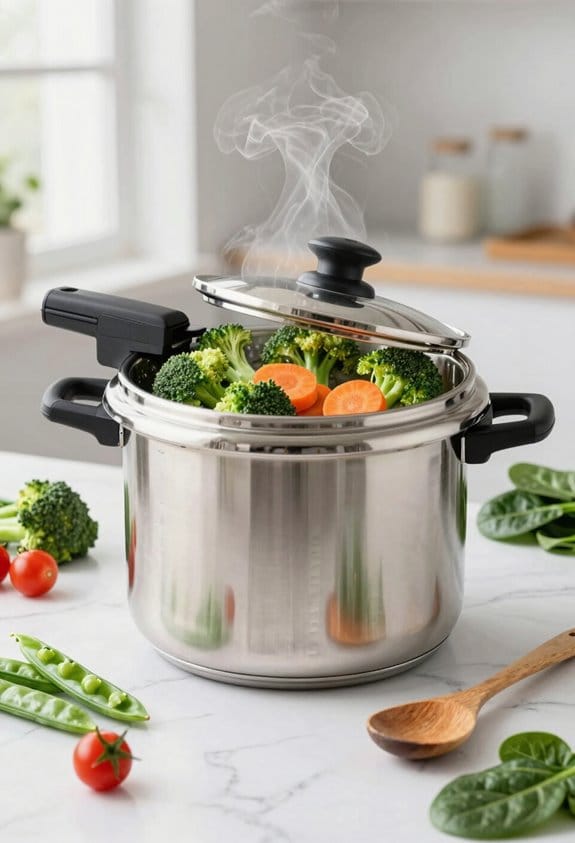
Have you ever wondered why some cooking methods seem to zap the life out of your veggies? It’s a frustrating situation, and it turns out that pressure cooking can be the answer to keeping those nutrients intact. When you pressure cook, you’re working with higher temperatures and shorter cooking times, which means more vitamins and minerals are saved.
For instance, cooking black beans under pressure for just 15 minutes can give you six times the antioxidants compared to the traditional boiling method. Isn’t that wild? And it doesn’t stop there—take spinach, for example. If you cook it in a pressure cooker for only 3.5 minutes, you’ll lose far fewer nutrients than if you were to boil it for 8 minutes. This allows you to preserve important nutrients like vitamin C.
So, what’s the takeaway here? If you’re looking to make your meals more nutritious without a ton of fuss, consider using a pressure cooker. It’s quick, efficient, and a simple way to boost your health. You might just find that it makes a big difference in the meals you serve! Using airtight and leak-proof designs for storing your cooked meals can further help maintain their freshness and nutritional value.
Give it a try—your body will thank you!
Debunking Myths: Does High Heat Really Kill Nutrients in Cooking?
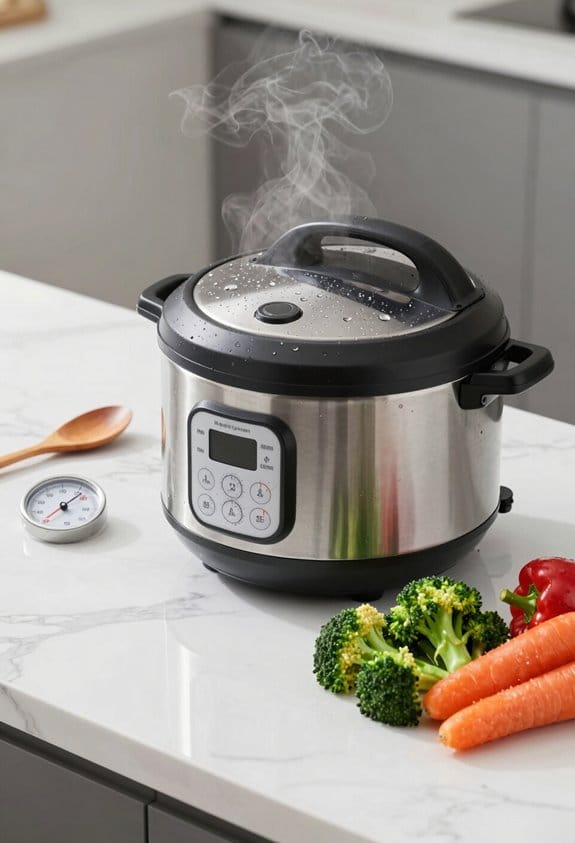
Have you ever worried that cooking at high heat might destroy the nutrients in your food? It’s a common concern, but let’s dive into the facts.
When you use a pressure cooker, you’re not just saving time; you’re also keeping most of those important nutrients intact. Studies show that pressure cooking retains about 90 to 95 percent of nutrients, which is much better than boiling, where you might lose anywhere from 25 to 60 percent. The secret is in the steam and high pressure, which cooks your food quickly without letting it spend too long at high temperatures that can break down sensitive vitamins.
So, what’s the takeaway here? Cooking liquids play a role too. They can actually help maintain and even boost nutrient retention. High heat doesn’t have to be your enemy in the kitchen; instead, think of pressure cooking as a way to create a healthier meal without sacrificing those vital nutrients. Honestly, with the right methods, you can enjoy delicious food that’s also good for you. Using pressure cookers with multiple cooking functions can further enhance the versatility and health benefits of your meals.
How Does Pressure Cooking Compare to Other Cooking Methods?
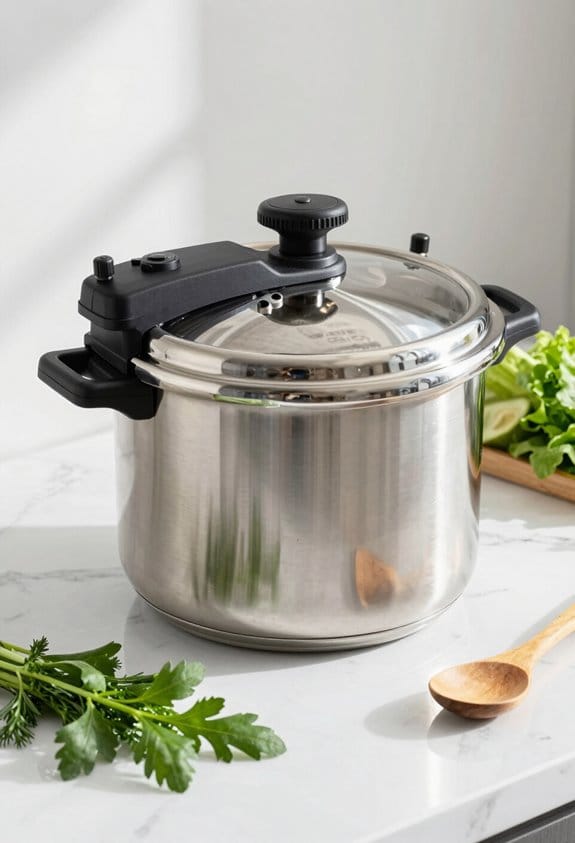
Have you ever wondered why your meals sometimes lack that vibrant flavor or nutrient punch? It turns out that the cooking method you choose can make a huge difference. Pressure cooking stands out for one key reason: nutrient retention. It keeps about 90-95% of nutrients intact. Compare that to boiling, which hangs around 40-75%, or even steaming and roasting, which manage to keep about 90%. So, if you’re looking to boost the health benefits of your meals, considering how you cook matters.
Here’s the trick: using less cooking liquid and cutting down on cooking times not only saves you time but also enhances the health benefits. For instance, cooking black beans in a pressure cooker can yield six times more antioxidants than boiling them. And did you know that carrots can nearly double their antioxidant value when pressure cooked? This means that whether you’re dealing with dried beans or fresh veggies, pressure cooking can really help you make the most of what you eat.
Honestly, if you’re aiming to pack more flavor and health into your meals, it’s worth exploring pressure cooking. It can be a surprisingly simple way to elevate your everyday dishes. So, what do you think? Ready to give it a shot and see the difference for yourself? Additionally, just like advanced fuzzy logic technology in rice cookers improves cooking precision, pressure cookers offer precise control over cooking to maximize nutrient retention.
Health Benefits of Pressure Cooking
Ever feel like you’re missing out on the real benefits of your meals? Pressure cooking can really change that. This method helps you keep about 90 to 95 percent of nutrients from your food. That’s a big deal since traditional boiling or roasting can strip away some of those essential vitamins and minerals. Plus, cooking time is cut down, which means even more nutrients stay in your meals.
Here’s the trick: pressure cooking can actually boost antioxidant levels! Take black beans, for example. When you pressure cook them, they can have six times more antioxidants compared to other cooking methods. That’s a simple way to get the most health benefits from your food.
Another plus is that pressure cooking can kill harmful bacteria. That alone makes your meals safer, which is something we all want, right? And let’s not overlook the cooking liquid; instead of tossing it out, try using it in sauces or gravies. You’ll reclaim those dissolved nutrients and add extra flavor to your dishes.
Additionally, modern electric pressure cookers offer multiple cooking functions and include safety mechanisms that ensure your meals are cooked efficiently and securely.
So, why does this matter? We’re not just cooking; we’re cooking in a way that boosts our health and flavors. If you’re ready to up your cooking game, give pressure cooking a shot.
To sum it up, it’s a smart way to prepare meals fast while keeping them healthy. What are you thinking about trying in a pressure cooker next?
Practical Tips for Getting the Most Nutritional Value From Pressure Cooking
Are you making the most of your meals? When it comes to getting good nutrition, pressure cooking can really help. You’re already ahead of the game by retaining about 90 to 95 percent of nutrients; that’s impressive! But if you want to take it a step further, consider using minimal liquid. It sounds simple, but it’s true—less water means nutrients won’t be lost in the cooking process. And don’t forget to use that liquid in sauces to add extra flavor to your dishes!
Let’s chat about cook time. Did you know that cooking black beans for just 15 minutes can boost their antioxidant levels significantly? It’s a quick win! For veggies like spinach, just 3.5 minutes in the pressure cooker can have a big impact on their nutritional value. Isn’t that neat?
The best part is mixing in a variety of nutrient-rich ingredients. Not only does it enhance the flavor and texture, but it also brings attention to how important the right cooking methods can be. So, why does this matter? It’s all about getting the most goodness out of the food you eat.
To wrap it up, pressure cooking can really optimize your meals with a bit of know-how. Why not experiment a bit? You might just find some new favorites! For even more convenience and efficiency in meal prep, consider using multifunctional kitchen appliances like the Ninja 12-in-1 PossibleCooker PLUS that combine pressure cooking with other cooking modes.
Frequently Asked Questions
Does Pressure Cooking Retain More Nutrients?
Absolutely, pressure cooking retains more nutrients! Its benefits include reduced cooking time, enhanced flavors, and improved meal prep efficiency. Plus, it minimizes texture changes while being an environmentally friendly cooking method that supports nutrient preservation.
What Is the Best Cooking Method for Nutrient Retention?
Think of cooking as a dance; steaming vegetables and microwaving rice lead gracefully in nutrient retention. Baking potatoes and poaching eggs follow, while sautéing greens can stumble, leaving boiling pasta and grilling fish behind.
Does Pressure Cooking Beans Reduce Nutrients?
No, pressure cooking beans doesn’t reduce nutrients. In fact, it enhances flavor preservation, aids nutrient absorption, and improves health benefits, all while addressing digestibility issues when we monitor our cooking times and bean preparation methods.
What Could Be Possible Reason for Nutrients May Get Lost in a Pressure Cooker?
Nutrient loss in a pressure cooker can happen due to high temperature and cooking time. The steam release affects food texture, while water solubility of certain vitamins may lead to their degradation at elevated pressure levels.


